Why go
The moment your boat noses out of the Kilim River Tourism Jetty and under the limestone bluffs, you understand why this stretch of northeast Langkawi carries UNESCO Global Geopark status. Grey karst towers, pocked and streaked with mineral stains, rise straight out of the mangroves; hornbills clatter overhead; and the water beneath you turns from muddy brown to a strange jade-green where the river meets the Andaman Sea.
Kilim Geoforest Park isn’t a single site you walk through. It’s a network of tidal channels, mangrove boardwalks, limestone caves, and open lagoons that you experience mostly from a boat, with a few stops on foot. At a 4.6 rating from nearly 6,800 reviews, it’s firmly on the Langkawi must-do list, and it earns that reputation on scenery alone.
Getting there
Kilim sits on the northeastern coast of Langkawi, roughly a 30-40 minute drive from the main tourist strip at Pantai Cenang, and closer still, about 20 minutes, if you’re coming from Kuah town or the Langkawi Cable Car base in Oriental Village. Most visitors arrive by rented car, Grab, or hotel-arranged transfer straight to the Kilim River Tourism Jetty, the departure point for every boat tour.
There’s no public bus route built for tourists here, so you’ll want your own wheels or a pre-booked pickup. Boat tours are run cooperatively by local operators at the jetty and typically run around two hours, covering the mangrove channels, a fish-feeding stop, an eagle-watching zone, and the Bat Cave or Crocodile Cave depending on the route and tide.

What to see and do
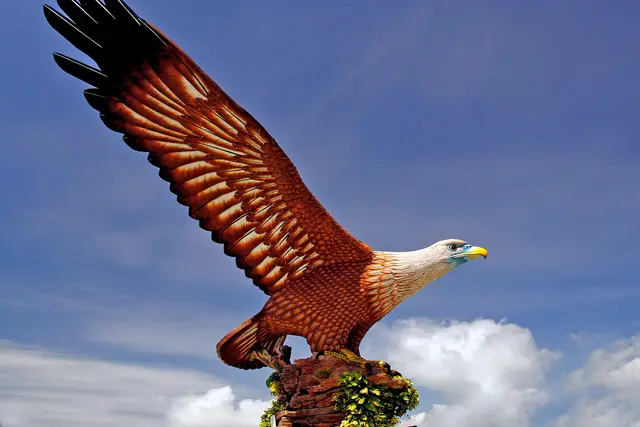
The standard mangrove tour threads through narrow tidal creeks where the forest closes in overhead, roots knuckling down into the mud on both sides. Boats slow at a floating fish farm where you can watch, and sometimes hand-feed, big groupers and the occasional monitor lizard patrolling the pontoons nearby. From there, most routes swing past a limestone cave you can enter briefly by torchlight, and out into open water at Hole in the Wall or the wider lagoon, where sea eagles wheel low over the boats in late afternoon, drawn by fish scraps tossed by the guides.
Many tours end at the floating restaurant moored mid-river, a stilted, pontoon-based seafood spot where you eat with the mangrove line as your view. Expect a straightforward, unfussy meal rather than a fine-dining one. If you have half a day rather than two hours, ask about combining the river tour with kayaking through the calmer channels, a quieter way to notice the fiddler crabs and mudskippers you’ll otherwise glide past.
When to go
Mornings, roughly 9am to 11am, give you smoother water, cooler air, and the best light for photographing the karst walls before the midday haze sets in. Afternoons bring more boat traffic and choppier water as the wind picks up. Tides matter too. Some cave entries and shallower creeks are only accessible at certain tide levels, so operators may adjust the route on the day.
Malaysia’s dry season, roughly November through March, generally offers the most reliable weather, though Kilim runs tours year-round; the mangroves are a rainforest ecosystem, so a passing shower is always possible.
How to visit like a local
Because Kilim is genuinely one of the most popular excursions on the island, the jetty gets crowded fast once tour buses arrive mid-morning, booking the first available slot or arriving right at opening keeps you ahead of the main wave of boats jostling for the same fish-feeding and cave spots. Pay for tours and the floating restaurant in cash or by card at the jetty counters; prices vary by operator and boat size, so it’s worth comparing two or three booths rather than taking the first offer, and confirming what’s included (fish feeding, cave stop, eagle watching) before you pay.
Life jackets are provided and expected to be worn the whole trip. Don’t skip this even in calm water. The most common visitor mistake is treating it as a passive photo cruise: ask your boatman questions about the geology and mangrove ecology, since most are locally trained guides who know the tidal patterns and wildlife intimately and will happily point out things you’d otherwise miss, like camouflaged kingfishers or the different mangrove species by their root structure.
Bring a dry bag or waterproof phone case, spray comes over the bow more than you’d expect once you’re in open water near Hole in the Wall.
Frequently asked questions
How do I get to Kilim Geoforest Park?
Head to the Kilim River Tourism Jetty in Mukim Kampung Kilim, about a 30-40 minute drive from Pantai Cenang or 20 minutes from Kuah town/the Cable Car base. Most visitors arrive by rental car, Grab, or a hotel-arranged transfer, then join a boat tour from the jetty.
How long does a Kilim mangrove tour take?
The standard boat tour runs about two hours, covering mangrove channels, a fish-feeding stop, a limestone cave, and open-lagoon eagle watching. Add extra time if you want to kayak or eat at the floating restaurant.
When is the quietest time to visit?
Roughly 9am to 11am brings cooler air, smoother water, and fewer boats, before the mid-morning tour groups arrive. Afternoons get busier and choppier as wind picks up.
What's the best time of year to go?
November to March is Langkawi's drier season and generally gives the most reliable weather, though tours run year-round since Kilim is a rainforest ecosystem and rain is always possible.
Is Kilim Geoforest Park good for kids or non-swimmers?
Yes — you stay on the boat for most of the tour, life jackets are provided and required, and the pace is gentle. The cave stop and fish-feeding are usually the highlights for younger visitors.
Plan your trip to Langkawi
Malaysia eSIM & staying connected →
Some links above are affiliate links — if you book through them, Wander Atlas earns a small commission at no extra cost to you. It's how we keep every guide free.