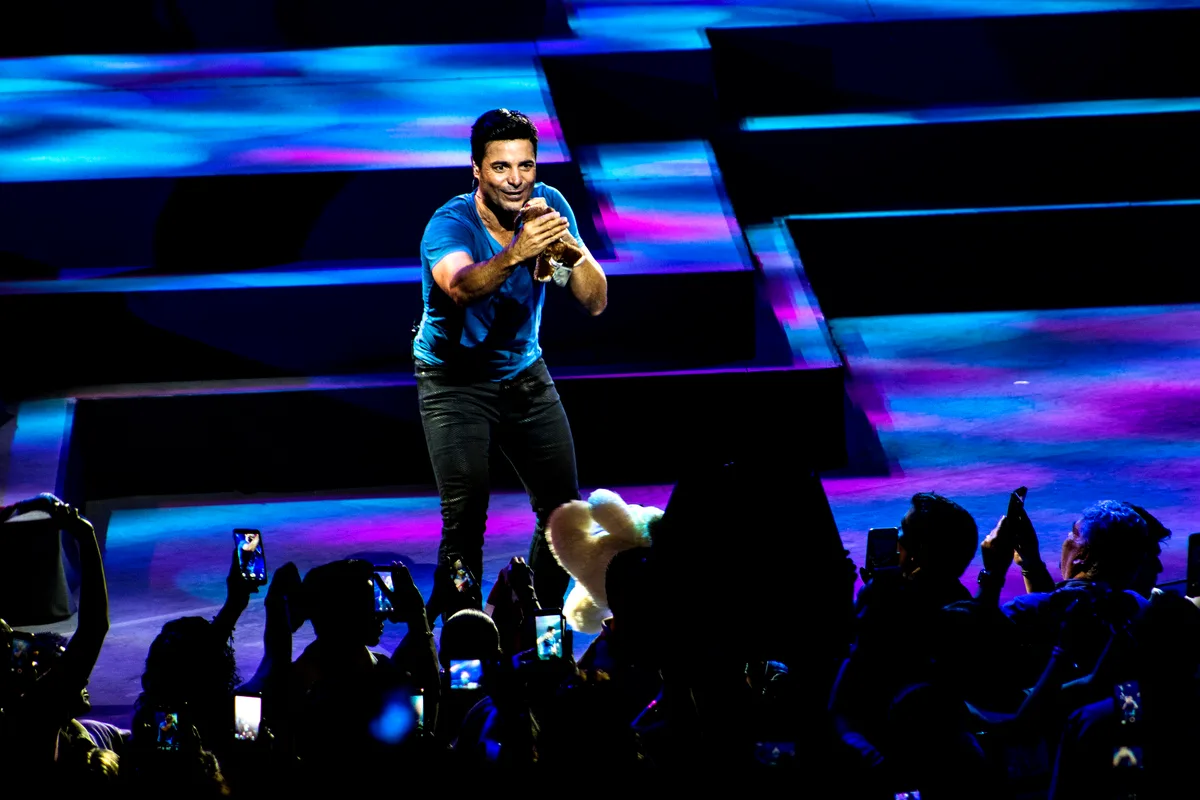
Picture tens of thousands of people singing “Torero” back at a man who has been dancing on stages since the 1980s. That is the promise of Chayanne at Estadio Nacional. The Puerto Rican singer plays Lima’s national stadium on Wednesday, December 2, 2026, in a city that has loved his romantic ballads for decades.
Why Lima turns out for Chayanne
Chayanne’s appeal crosses generations. Born Elmer Figueroa Arce in Puerto Rico, he started as a boy in the group Los Chicos. He then built a solo career on two things at once: big romantic ballads and sharp, athletic choreography.
His catalogue gives a stadium a lot to sing along to:
- “Torero” and “Salomé” for the dance-floor end of the night
- “Dejaría todo” and “Un siglo sin ti” for the slow, lighters-up stretch
- “Tiempo de vals”, which many couples treat as their wedding song
- “Provócame” and “Atado a tu amor” for fans who grew up in the late 1980s and 1990s
In Peru his audience runs from teenagers to grandmothers, and they often come together. Expect family groups in matching shirts and old friends who first heard these songs on cassette.
Estadio Nacional, up close
This is Peru’s national football ground. It is a large concrete bowl near the centre of Lima, and the national team plays its home matches here. The stands carry the compass names Peruvians use for every event: Occidente on the west side, Oriente on the east, and Norte and Sur behind the goal ends.
For concerts, the pitch becomes standing or seated “campo” zones in front of the stage. The tiered stands then hold the seated sections. The stadium sits within a short walk of Parque de la Reserva and its Circuito Mágico del Agua fountain park. The area around it is mostly wide avenues and government buildings rather than restaurants.
A Wednesday night in Santa Beatriz
The date is the thing to plan around. December 2 is a working Wednesday, and the stadium sits beside the Vía Expresa (Paseo de la República), one of the city’s busiest north–south corridors. Late afternoon traffic along it, and along Avenida Javier Prado further south, regularly slows to a crawl.
That is why many concertgoers skip cars altogether. The Metropolitano rapid bus runs down the middle of the Vía Expresa in its own lane and stops at Estadio Nacional station, right beside the venue. It links directly with Miraflores and Barranco to the south and with central Lima to the north.
Weekday shows also shape the end of the night. Plenty of fans take the next morning off. Others stay in Miraflores or San Isidro so the ride back is short.

Tickets and choosing a zone
Tickets for this show are sold through its authorised ticket seller. Prices vary by zone, and the seller’s page lists the current prices; this guide prints none. Peruvian stadium concerts are usually split into tiers, from premium pitch sections closest to the stage to the higher stands.
What each choice tends to mean in practice:
- Pitch (campo) zones: closest to the choreography, longer to get in and out
- Occidente: the main grandstand, generally the more comfortable seated option
- Oriente and the ends: a wider view of the stage production, further from the action
Tickets offered by sellers outside the stadium gates are where counterfeit tickets turn up at big Lima shows. Most fans buy only through the official seller.
Getting through the gates the Lima way
Stadium crowds in Lima follow some settled habits. Knowing them saves you friction at the door.
Queues form by zone. Each section has its own entrance, and gate signs use the Occidente, Oriente, Norte and Sur names, so it helps to know your side of the stadium before you walk around the outside. Security searches are thorough at large events here. Fans usually bring little more than a phone, ID and a small bag.
On payment, most Limeños carry a mix of soles in small notes and their phone. Yape and Plin, the local mobile-payment apps, are everywhere, but street vendors near the stadium often want cash. Vendors outside sell glow sticks, bandanas and Chayanne shirts. Buying one is part of the ritual for many fans.
Inside, Peruvian audiences are loud and word-perfect. Phone torches come out for the ballads. Spanish fills every chant, so even a few chorus lines learned in advance pull you into the crowd.
After the encore: leaving Estadio Nacional
Leaving a full stadium takes time, and the exit is the most crowded part of the night. Ride-hailing apps such as Uber, Cabify and InDrive are widely used in Lima. Right after a concert, though, surge pricing and gridlock on the surrounding avenues are common.
Many attendees walk a few blocks away from the stadium before requesting a car, toward Avenida Arequipa or deeper into Santa Beatriz. Others take the Metropolitano back south. Groups heading to the same district often share a single ride.
Making a day of it in Lima
The concert can anchor a fuller day. Early December is the start of Lima’s summer. The grey winter garúa has usually lifted, and evenings are mild enough for light layers.
A few ways visitors fill the hours:
- Parque de la Reserva: the fountain park beside the stadium, best after dark when the fountains are lit
- Miraflores: cliff-top walks along the Malecón and a ceviche lunch, since cevicherías traditionally serve at midday
- Barranco: the Puente de los Suspiros and the old seaside streets, a short Metropolitano ride from the stadium
- Historic centre: the Plaza Mayor and the Cathedral of Lima, north along the same bus line
Lima’s food scene is strong reason enough to arrive a day early. Many out-of-town fans base themselves in Miraflores for that reason. They eat well before the show and are close to the stadium by bus.
Frequently asked questions
When and where is Chayanne playing in Lima in 2026?
Chayanne performs at Estadio Nacional in Lima on Wednesday, December 2, 2026. The stadium is in the Santa Beatriz area beside the Vía Expresa (Paseo de la República), close to Parque de la Reserva.
What's the easiest way to get to Estadio Nacional?
The Metropolitano rapid bus stops at Estadio Nacional station on the Vía Expresa, right beside the stadium, with direct links to Miraflores, Barranco and central Lima. Taxi apps such as Uber, Cabify and InDrive also work, but weekday rush-hour traffic on the surrounding avenues is heavy.
Where are tickets sold and how much do they cost?
Tickets are sold through the show's authorised ticket seller, which lists the current prices for each zone. Prices vary from pitch sections to the upper stands. Tickets offered outside the stadium gates are where counterfeits circulate at big Lima shows.
Which part of Lima is best to stay in for the concert?
Miraflores is the most popular base. It is on the Metropolitano line to Estadio Nacional and full of restaurants and hotels. Barranco and San Isidro are also convenient.
What's the weather like in Lima in early December?
Early December is the start of Lima's summer. The grey winter drizzle has usually cleared, and evenings at an open-air stadium are generally mild. A light layer is enough for most people.
Plan your trip to Lima
Peru eSIM & staying connected →
Some links above are affiliate links — if you book through them, Wander Atlas earns a small commission at no extra cost to you. It's how we keep every guide free.
Related guides
 event
BABYMETAL World Tour 2026: Dates, Tickets & Venue (Lima)
 event
Dimash Qudaibergen Dimensions World Tour: Dates, Tickets & Venue (Lima)
 event
Eros Ramazzotti - Una Historia Importante World Tour: Dates, Tickets & Venue (Lima)
 event