A family address since 1535
From Jirón de la Unión, the pedestrian shopping street, it barely looks like a museum. You see a colonial facade and a heavy wooden door among shopfronts, half a block from the Plaza de Armas. Behind that door is one of the oldest houses in the Americas still owned by the family that first received it.
Francisco Pizarro granted the plot in 1535, the year he founded Lima. It went to Jerónimo de Aliaga, one of the conquistadors who rode with him. Aliaga’s descendants have held it ever since, generation after generation. Pizarro’s own palace stood a few steps away, where the Government Palace stands today.
Inside the house
The tour takes you through rooms that look lived in, because they still belong to a family. They are not glass cases. Earthquakes struck Lima repeatedly, the 1746 quake hardest, so much of what you see is later rebuilding laid over the original plan. That layering is part of what you come for.
Look out for:
- Carved wooden balconies, the enclosed Lima style that also lines streets around the plaza
- Colonial and republican furniture and family portraits arranged across the reception rooms
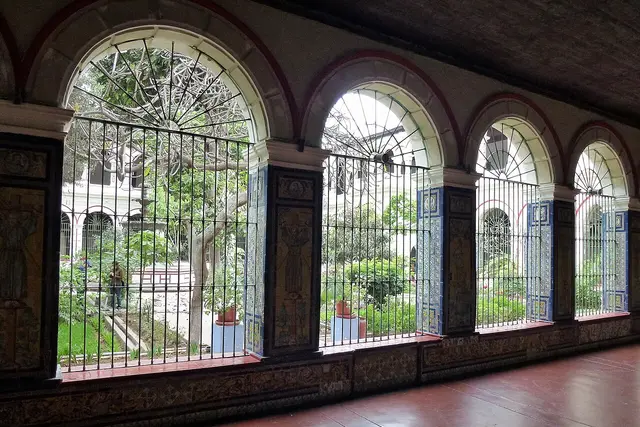
- The interior patio, which the rooms open onto in the usual colonial way
- Traces of the older site: tradition holds the house sits over a pre-Hispanic shrine linked to Taulichusco, the local lord before the Spanish arrived
Your guide fills in the family history room by room. That story matters more than any single object here, so ask questions as you go.

Booking a guided visit
You can’t simply walk in off the street. Visits run as guided tours, so the usual approach is to book ahead.
- Reserve in advance. Use the house’s official channels or a Lima tour operator that includes it. Don’t count on turning up at the door and getting in.
- Check the price when you book. The cost is set by whoever arranges the tour, so confirm it at that point rather than at the door.
- Fit it into the hours. Google currently lists 10am–4pm every day. Historic houses can change their schedule, so confirm when you book and aim to start well before 4pm.
- Behave as you would in someone’s home. Ask before taking photos in each room and don’t touch the furniture. The family’s privacy limits which rooms you can enter.
- Carry some small change in soles. Shops and cafés on Jirón de la Unión take cards more and more, but small purchases and tips for guides still tend to be in cash.
Why so few people know it
Most visitors to central Lima head for the Cathedral, the San Francisco catacombs and the changing of the guard. They walk straight past this door. Because visits are booked rather than drop-in, the house never fills the way the big sights do.
What you get for the extra planning is unusual. You see a colonial interior that is still a family home, explained by someone who knows the family’s history. Few places in Lima offer that.
Getting to Jirón de la Unión
The house sits in the Cercado de Lima, the historic centre, and the Plaza de Armas is your landmark. Jirón de la Unión runs from the plaza’s corner toward Plaza San Martín. Number 224 is at the plaza end, close to the Government Palace.
From Miraflores or Barranco, a taxi or ride-hail takes anywhere from half an hour to much longer, depending on traffic. The Metropolitano bus also runs to the centre, and from there it’s a short walk to the plaza. Tell your driver “Plaza de Armas, Jirón de la Unión” and walk the last few metres.
Pairing it with the rest of the centre
Allow about an hour for the house tour. Then build a half or full day from the streets around it, all within a few minutes’ walk:
- Plaza de Armas, with the Cathedral of Lima and the Archbishop’s Palace and its carved balconies
- Palacio de Gobierno, whose midday changing of the guard draws a crowd at the railings
- Basilica and Convent of San Francisco, with its catacombs, a few blocks east
- Plaza San Martín, at the far end of Jirón de la Unión, past the old cinemas and shopfronts
Book the house for the morning and you’ll still have the afternoon for the plaza and San Francisco. That way you aren’t rushing any of them.
Frequently asked questions
Can I just walk into Casa de Aliaga?
Don't count on it. Visits run as guided tours, so book ahead through the house's official channels or a Lima tour operator that includes it.
What are the opening hours?
Google currently lists 10am–4pm every day. Historic houses can change their schedule, so confirm the time when you book, and start well before 4pm.
How long does a visit take?
The guided tour takes about an hour. Most people pair it with the Plaza de Armas, the Cathedral and San Francisco for a half or full day in the centre.
Where exactly is it?
At Jr. de la Unión 224 in Lima's historic centre, half a block from the Plaza de Armas and close to the Government Palace.
Did Francisco Pizarro live here?
No. Pizarro granted the plot in 1535 to Jerónimo de Aliaga, one of his conquistadors, and Aliaga's descendants still own it. Pizarro's own residence stood where the Government Palace is now, a few steps away.
Plan your trip to Lima
Peru eSIM & staying connected →
Some links above are affiliate links — if you book through them, Wander Atlas earns a small commission at no extra cost to you. It's how we keep every guide free.