Museum of European and Mediterranean Civilisations: Marseille Travel Guide
When to visit France: month-by-month weather, crowds and holidays →
✓ Facts verified via Google Places · Sep 11, 2026
At a glance
Live foot-traffic data via BestTime.app
How this guide is made
Produced with AI assistance and reviewed against live data sources. Facts such as hours, ratings, and location come from Google Places; images are licensed or public domain. Details can change — please verify before visiting. Editorial policy
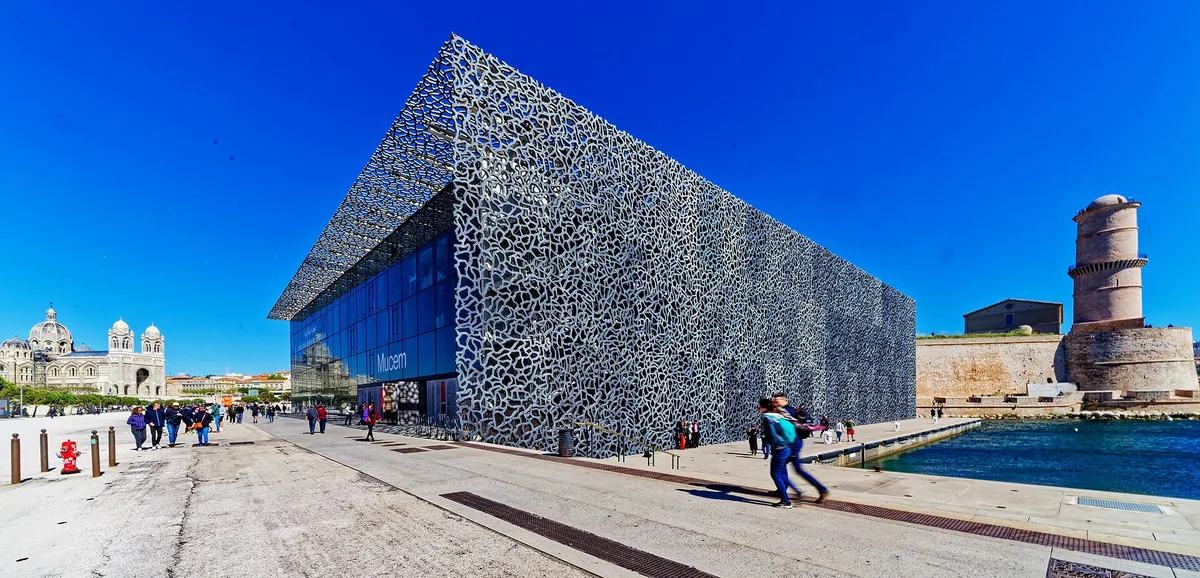
You see MuCEM before you reach it. The black concrete lace screen wraps the cube-shaped building like a shipping crate dipped in ironwork, and the whole thing seems to float at the edge of the J4 esplanade, sea on three sides. Walk out from the Vieux-Port and the Mediterranean just opens up in front of you, container cranes down the coast, ferries sliding toward Corsica and North Africa, the fort walls of Saint-Jean opposite.
This is Marseille’s port announcing itself as a museum, and the building alone justifies the trip before you’ve bought a ticket.
Why go
Opened in 2013 when Marseille was European Capital of Culture, MuCEM is the first French national museum devoted entirely to Mediterranean civilisation, not just France, but the whole basin: North Africa, the Levant, Southern Europe, three thousand years of trade, migration, religion and food pressed into one building. The permanent galleries move through olive oil and grain routes, ancient agriculture, the birth of citizenship and monotheism, and the tangled, often violent modern history of the sea’s shores.
Temporary exhibitions upstairs tend to be sharper and more contemporary, recent themes have ranged from migration to fashion to popular uprisings.
Getting there
MuCEM sits at 1 Esplanade J4, right where the Vieux-Port meets the sea. The easiest approach is on foot: from the Vieux-Port metro station (lines 1 and 2), it’s about a 10–15 minute walk along the harbor past the Cathédrale de la Major. Tram line 2 also stops nearby at Sadi Carnot or République, and several bus lines terminate close to the esplanade. Driving in is possible but parking near the Panier and Vieux-Port fills fast, especially on weekends. The walk from the metro is genuinely the better option.

What to see
Start with the permanent “Galerie de la Méditerranée,” which unfolds chronologically and thematically across the J4 building’s upper level. Go slowly through the section on the invention of agriculture and the domestication of the vine and olive, it grounds everything that follows. Don’t skip the footbridge that leads from the rooftop terrace across to Fort Saint-Jean; it’s included in most ticket types and it’s one of the best free-feeling views in the city, arcing over the water with the cathedral and Notre-Dame de la Garde visible in either direction.
Fort Saint-Jean itself, a 12th–17th century fortress the museum now incorporates, has gardens and towers worth the extra half hour. Back inside J4, the rooftop terrace restaurant and the ground-floor bookshop are both worth ten minutes even if you’re not eating.
When to go
The museum draws a genuinely large crowd. It’s one of the most-visited cultural sites in southern France, and weekends tend to be the busiest, with queues building at the ticket desks and lines-of-sight through the galleries getting crowded. If your schedule allows it, evenings tend to be calmer, when the light through the lace facade turns gold and the terraces empty out.
If you can only come at midday on a Saturday or Sunday, get there right as it opens rather than mid-afternoon.
How to visit like a local
Buy your ticket online in advance where possible to skip the ticket-counter line, and go straight for the evening slot if your itinerary allows. The 6–9pm window is quieter and also the best time to watch the sun drop over the harbor from the rooftop terrace. Locals tend to treat MuCEM as much as a place to walk through and sit outside as a museum to tour end to end; it’s entirely normal to cross the footbridge to Fort Saint-Jean, wander the gardens, and only pop into one or two galleries rather than the whole permanent collection.
Payment is standard card-and-contactless across ticket desks, café and bookshop, so cash isn’t necessary. The mistake first-time visitors make is treating this as a quick add-on to the Vieux-Port stroll, give it a genuine two to three hours, since the fort, the bridges and the terraces are as much the experience as the galleries themselves.
Nearby
The Panier district, Marseille’s oldest neighborhood, is a five-minute walk north through narrow lanes and street art. Cathédrale de la Major, the vast 19th-century cathedral, sits right between MuCEM and the Panier. The Vieux-Port itself, with its fish market and ferry rides out to the Frioul islands, is directly adjacent.
Frequently asked questions
How do I get to MuCEM from central Marseille?
Take metro line 1 or 2 to Vieux-Port station, then walk about 10–15 minutes along the harbor and past the Cathédrale de la Major to the J4 esplanade. Tram line 2 (Sadi Carnot or République stops) also gets you close.
When is MuCEM least crowded?
Both on weekdays and weekends, the 6pm–9pm window is the quietest time to visit. Weekends from 11am to 6pm are the busiest, so if that's your only option, arrive right at opening.
How long should I spend at MuCEM?
Plan on two to three hours to see the permanent galleries, cross the footbridge to Fort Saint-Jean, and walk the fort's gardens and towers. Add extra time if a temporary exhibition interests you.
Is Fort Saint-Jean part of the museum?
Yes — it's connected to the main J4 building by a footbridge and is generally included with a MuCEM ticket. It's worth crossing even if you're short on time, for the views alone.
What's nearby if I want to extend the visit?
The Vieux-Port is right next door with its fish market and boat trips to the Frioul islands, and the Panier district, Marseille's oldest quarter, is a short walk north.
Plan your trip to Marseille
Some links above are affiliate links — if you book through them, Wander Atlas earns a small commission at no extra cost to you. It's how we keep every guide free.
Related guides
 attraction
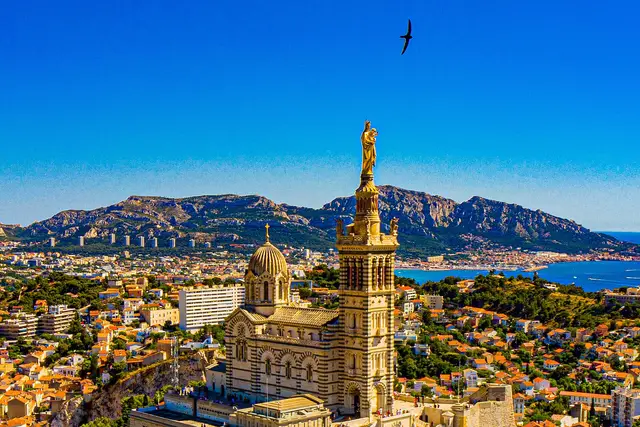
 Notre-Dame de la Garde: Marseille Travel Guide
 attraction
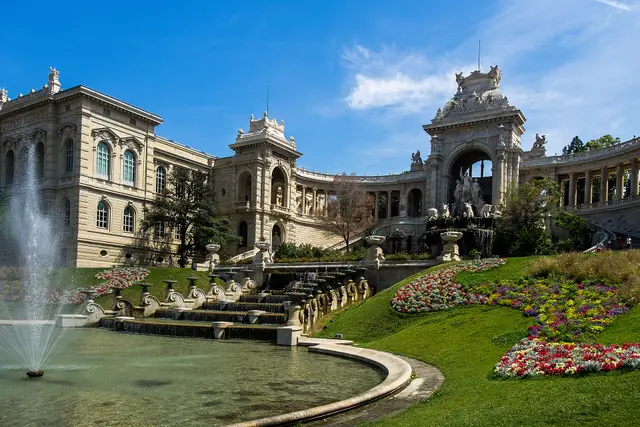
 Palais Longchamp: Marseille Travel Guide (4.6★)
 attraction
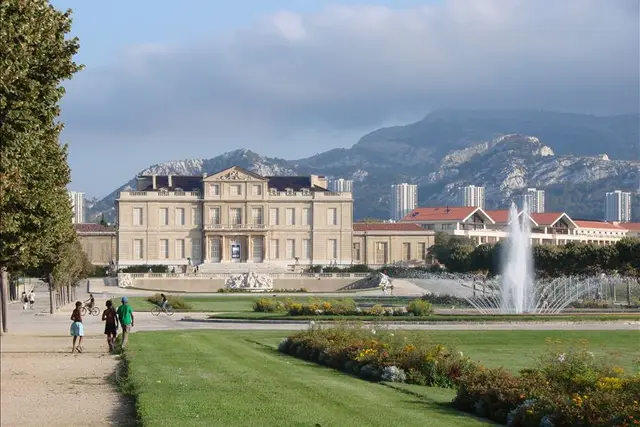
 Parc Borély: Marseille Travel Guide (4.5★)
 attraction