Palais Longchamp: Marseille Travel Guide (4.6★)
When to visit France: month-by-month weather, crowds and holidays →
✓ Facts verified via Google Places · Sep 11, 2026
At a glance
Live foot-traffic data via BestTime.app
How this guide is made
Produced with AI assistance and reviewed against live data sources. Facts such as hours, ratings, and location come from Google Places; images are licensed or public domain. Details can change — please verify before visiting. Editorial policy
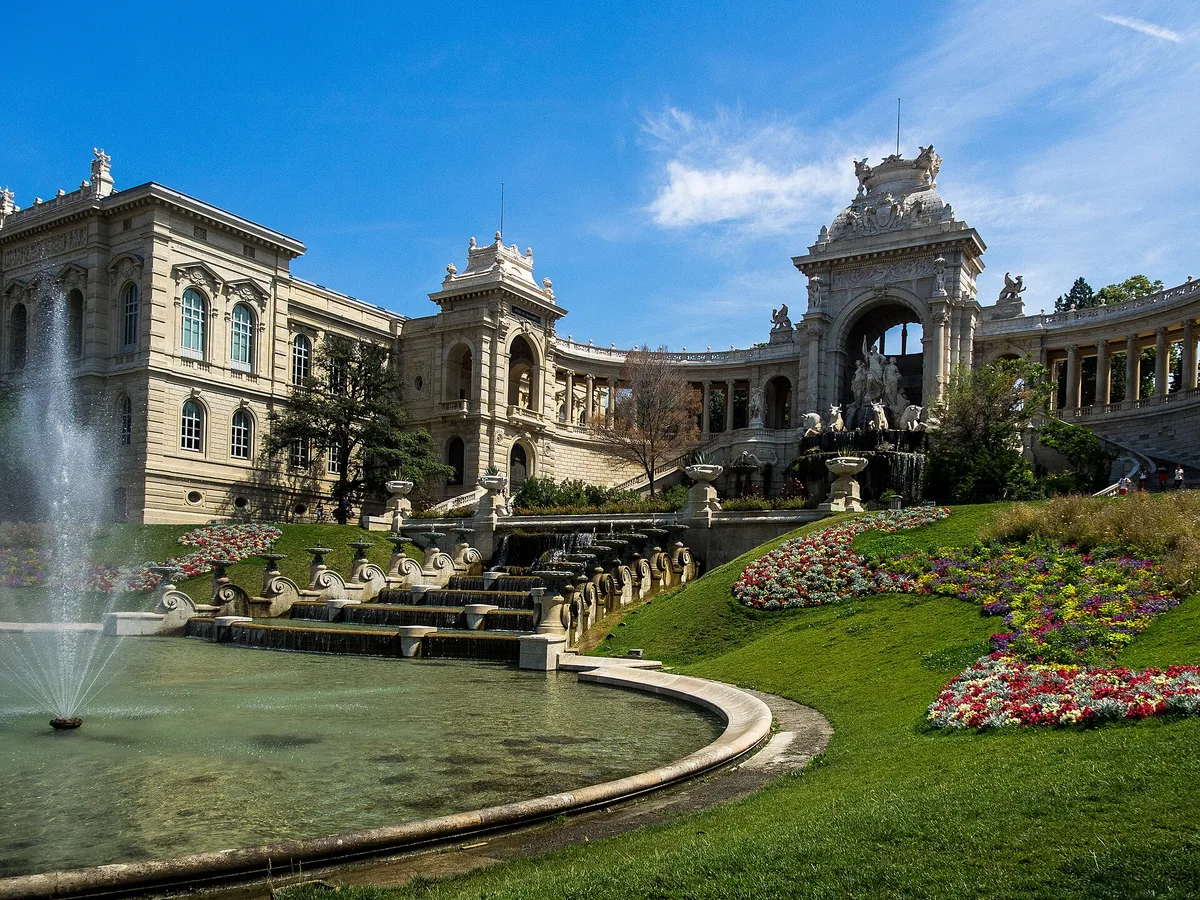
You see the towers before you see the building. Walking up Boulevard Longchamp from the Cinq Avenues métro stop, the street narrows between plane trees, then suddenly opens onto a wide gravel plaza and there it is: two curved stone wings sweeping toward each other like open arms, water crashing down the middle in a stepped cascade, bronze bulls glinting on the parapet above. It’s a strange, theatrical thing to find in the middle of a residential neighborhood, and that’s exactly the point. This was built to be seen.
Why it exists
Palais Longchamp isn’t a palace in the royal sense. It’s a monument to plumbing. Marseille suffered brutal droughts and a devastating cholera epidemic in the 1830s, so the city commissioned a canal from the Durance River, and when the water finally arrived in 1839 they decided the reservoir that received it deserved a triumphal backdrop. Architect Henri Espérandieu, the same man behind Notre-Dame de la Garde’s basilica, spent decades designing this water temple, and it wasn’t finished until 1869.
The colonnade you’re looking at conceals functioning cisterns; the cascade tumbling down the central steps is, structurally, the climax of a municipal engineering project dressed up as a Second Empire fantasy.
What you’ll actually see
Stand at the base of the fountain and look up: the central pavilion is crowned with a statue of a woman flanked by bulls and cattle, symbolizing the Durance’s water nourishing Provençal agriculture. Water sheets down the stone in wide, shallow steps rather than a single dramatic drop, so the sound is more a steady hiss and gurgle than a roar, pleasant to sit near on a hot afternoon, especially from the shaded benches lining the plaza.
Behind each colonnaded wing sits a museum. To the left, the Muséum d’Histoire Naturelle houses taxidermied wildlife and a respected paleontology collection; to the right, the Musée des Beaux-Arts holds Provençal and French painting, including works by Pierre Puget, the sculptor Marseille reveres as its own. Both museums charge a modest entrance fee and are worth 45 minutes to an hour each if you’re into either subject. The grounds and fountain themselves cost nothing.
Behind the palace, the park unfolds into a genuine city green space with a small zoo-era layout (long since de-animalized), shaded paths, a carousel that runs seasonally, and views back toward the towers that are easy to miss if you only approach from the front.

Getting there
The palace sits at the top of Boulevard Longchamp in the 4th arrondissement, a 15–20 minute walk uphill from the Vieux-Port. The easiest approach is by métro: take Line 1 to Cinq Avenues Longchamp station, which puts you almost at the front gate. Buses also stop nearby along Boulevard Longchamp if you’d rather not walk the incline. If you’re coming from the Canebière or the Old Port on foot, the walk itself is worthwhile, you climb gradually through a mixed residential and shopping district before the boulevard’s trees part and the fountain appears.
When to go
Crowds here move differently on weekdays than weekends, but the pattern is worth knowing either way: the calmest stretch, both Saturday–Sunday and midweek, runs from 8am to 10pm, while weekend visits get noticeably busier between 10am and 6pm, when local families, wedding photographers, and tour groups converge on the plaza at once. If you want the fountain steps and colonnade to yourself for photos, arrive close to 8am. The light is softer then too, raking low across the stonework rather than glaring off the white stone at midday.
How to visit like a local
Treat Palais Longchamp as a park you pass through, not a ticketed sight you queue for (that’s how Marseillais use it, cutting across the plaza on a walk or sitting on the fountain steps with a coffee. There’s no booking system and no line to speak of; you simply walk up. If you do want a museum, pay at the door in cash or card) prices are modest and change occasionally, so don’t rely on a fixed number, just budget a few euros.
The biggest mistake visitors make is treating it as a quick five-minute photo stop and missing the park behind it, where the shade and benches are genuinely more pleasant than the sun-baked front plaza in summer. Come at golden hour if you can’t manage the early morning slot; the stone catches warm light beautifully and the crowds have usually thinned by then too.
Frequently asked questions
Is Palais Longchamp free to visit?
Yes — the plaza, fountain, colonnade, and surrounding park are free to walk around. Only the two museums inside (Musée des Beaux-Arts and Muséum d'Histoire Naturelle) charge a small entrance fee.
How do I get to Palais Longchamp?
Take Métro Line 1 to Cinq Avenues Longchamp station, which lets out almost at the front gate. It's also a 15–20 minute uphill walk from the Vieux-Port along Boulevard Longchamp.
When is the best time to visit to avoid crowds?
The calmest window is 8am–10pm on both weekdays and weekends. Weekends get busy between 10am and 6pm, so aim for a morning visit around 8–9am if you want quiet photos.
How long should I plan to spend there?
Seeing the fountain, colonnade, and plaza takes 30–45 minutes. Add 45 minutes to an hour for each museum, and extra time if you want to wander the park behind the palace.
What's nearby worth combining with a visit?
The Cours Julien district, with its street art and cafés, is a walkable 20-minute stroll south, and La Canebière and the Old Port are both reachable on foot or via the same métro line.
Plan your trip to Marseille
Some links above are affiliate links — if you book through them, Wander Atlas earns a small commission at no extra cost to you. It's how we keep every guide free.
Related guides
 attraction
 Museum of European and Mediterranean Civilisations: Marseille Travel Guide
 attraction
 Notre-Dame de la Garde: Marseille Travel Guide
 attraction
 Parc Borély: Marseille Travel Guide (4.5★)
 attraction