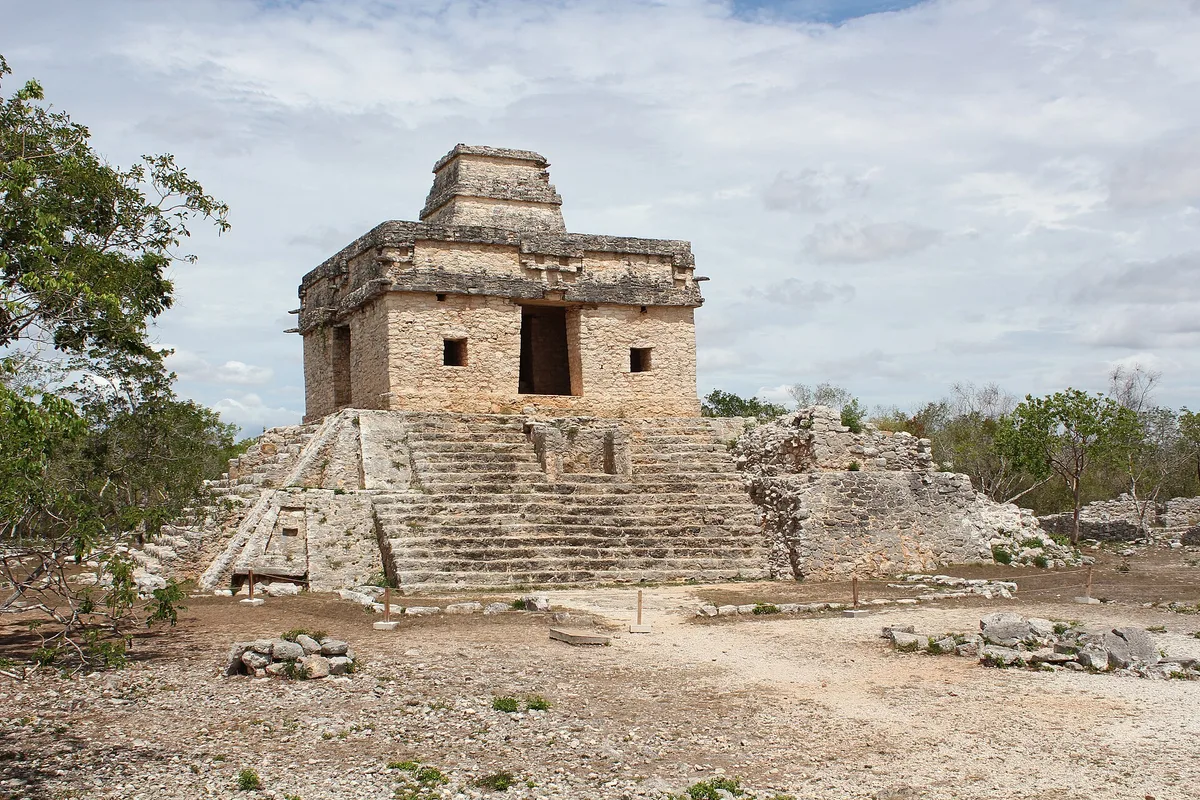
A city laid out along a white road
Dzibilchaltún runs east to west along a sacbé. This is a raised Maya causeway paved in pale limestone, and it still links the main plaza to the Temple of the Seven Dolls. People lived here for well over a thousand years, from before the Classic period up to the Spanish conquest. That makes it one of the longest-occupied settlements in the northern Yucatán.
The temple gets its name from seven small clay figurines found inside it. Its doorways line up with the sun. On the spring and autumn equinoxes, the sunrise appears framed in the central door. Those mornings draw large crowds and special early access.
In the main plaza a different period shows up: a Spanish open chapel (capilla abierta), built from stone taken from the Maya structures. Seeing the friars’ chapel sit inside a Maya ceremonial square explains the conquest more clearly than any panel.
The cenote and the museum
Cenote Xlacah sits beside the plaza. It is an open, lily-fringed sinkhole, deep at one end, and visitors have long been allowed to swim in it. Rules change, so ask at the entrance whether it is open for swimming when you go.
- Bring a swimsuit and a towel
- Skip ordinary sunscreen before swimming; cenote rules generally ask for none or biodegradable only
- Leave the plaza for last if you want to swim off the heat
The Museo del Pueblo Maya is near the visitors center. It holds carved stone and artefacts from sites across the Yucatán. The gift shop is in the visitors center too.
Getting out from Mérida
The site is a short drive north of Mérida’s centre on Highway 261 toward Progreso. It is signposted at the turnoff, and the drive usually takes under half an hour.
- Car or ride-hailing: the simplest option. Book your return in advance, because phone signal and passing taxis are limited out here.
- Colectivo: shared vans run from central Mérida toward Chablekal and Dzibilchaltún. Ask locally for the current departure point.
- Tour: many Mérida operators pair the site with Progreso beach on a half-day trip.
Beating the heat and the buses
The site is well visited, and the grounds have very little shade between the plaza and the temple. Gates open at 8:00 AM every day of the week. Arriving then gives you cooler stone and fewer people, before tour vans come in from Mérida mid-morning. Last practical entry is well before the 4:00 PM close if you want time for the cenote.
- Pay at the visitors center. Admission is set by the national heritage body INAH, and there is often a separate state charge as well. Current rates are posted at the ticket window, and carrying some pesos in cash helps.
- Walk the sacbé on foot. The causeway between the plaza and the temple is about a kilometre of open limestone, so bring water and a hat.
- Stay off the temple. Climbing is restricted on several structures, so follow the rope lines and the custodians’ whistles.
- Equinox visits: expect queues before dawn and check INAH announcements for special hours.
A morning visit, a swim and lunch back in Mérida fit comfortably into half a day.
Frequently asked questions
How far is Dzibilchaltún from Mérida?
About 15 km north of the centre, off Highway 261 toward Progreso. By car or ride-hailing it usually takes under half an hour. Colectivos also run from central Mérida toward Chablekal and Dzibilchaltún.
What are the opening hours?
The site is open every day from 8:00 AM to 4:00 PM. Arrive early to beat the heat and leave time for the cenote.
Can you swim in the cenote at Dzibilchaltún?
Cenote Xlacah has traditionally been open for swimming. Rules change, though, so confirm at the entrance. Bring a swimsuit and skip non-biodegradable sunscreen.
How long should I spend there?
Two to three hours is enough for the plaza and open chapel, the walk along the sacbé to the Temple of the Seven Dolls, a swim in the cenote and the Museo del Pueblo Maya.
What happens at the equinox?
On the spring and autumn equinoxes, the rising sun appears framed in the central doorway of the Temple of the Seven Dolls. Crowds are large on those mornings, so check INAH announcements for special access hours.
Plan your trip to Merida
Mexico eSIM & staying connected →
Some links above are affiliate links — if you book through them, Wander Atlas earns a small commission at no extra cost to you. It's how we keep every guide free.