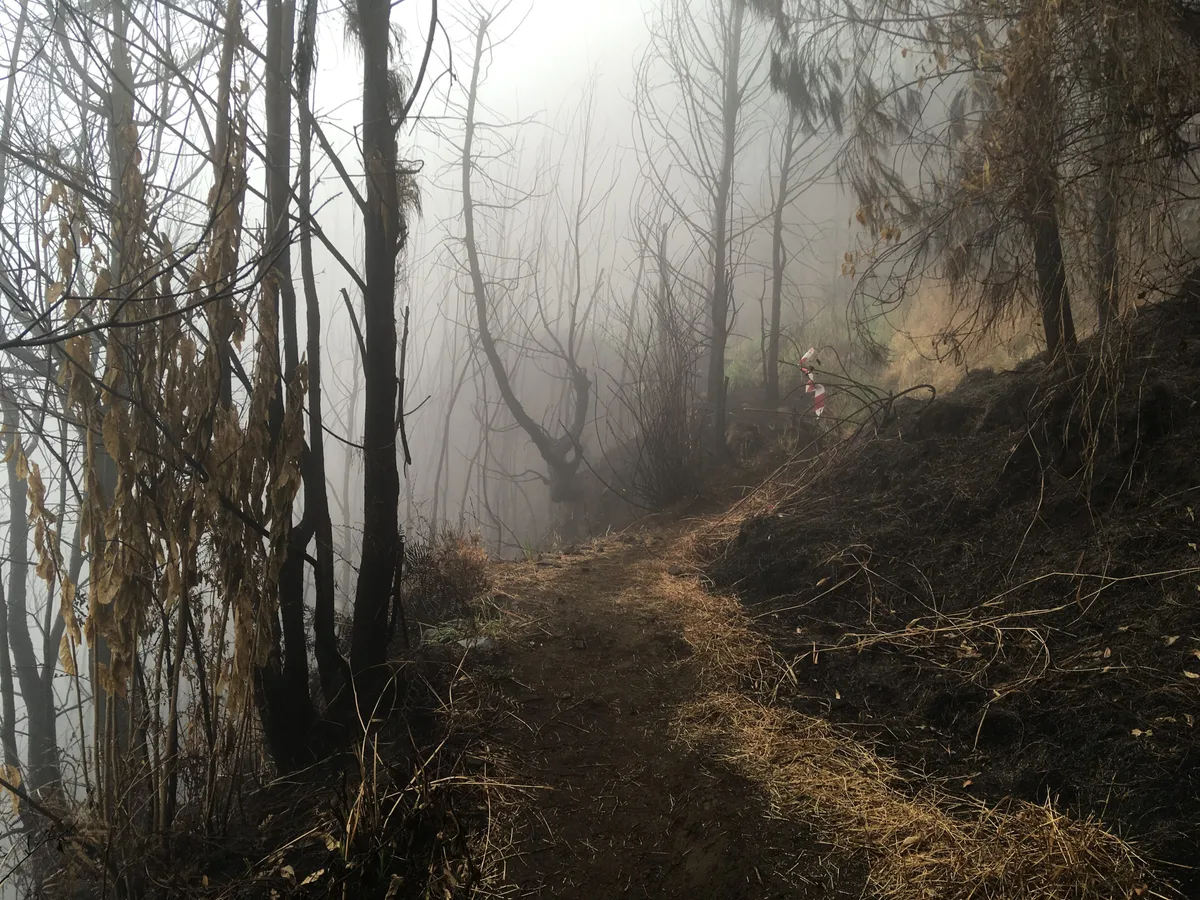
A ledge above the sand sea
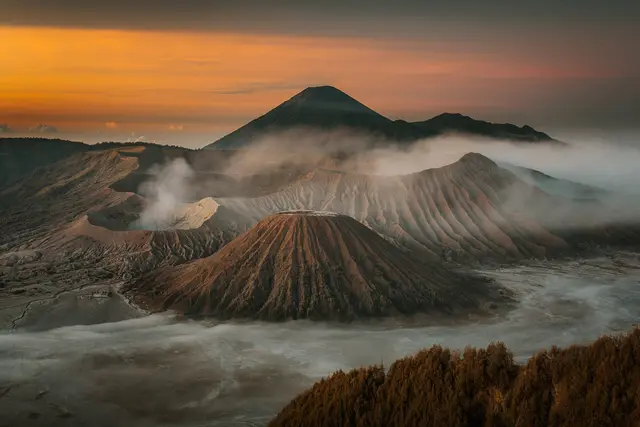
From here you look across the Bromo caldera. Below you lies the Sea of Sand, the flat grey floor of the old caldera. Out of it rises the steaming cone of Bromo, with the ribbed, extinct cone of Batok beside it. On a clear morning Semeru, Java’s highest volcano, stands behind both and often puffs out a plume.
King Kong Hill is one of several viewpoints on the caldera’s edge. It sits above Cemoro Lawang in Ngadisari, Sukapura district, in Probolinggo regency. It has a reputation for showing much the same panorama as the more famous Penanjakan, but from closer in and lower down, so the cones look bigger in the frame.
It is well rated and well known. Don’t expect a quiet, undiscovered perch at dawn.
Reaching Cemoro Lawang
Every route ends in the same village. Cemoro Lawang is the last settlement before the caldera. It is lined with guesthouses and jeep operators, and most people sleep here so they can start before dawn.
- From Surabaya: Juanda International Airport is the main gateway. Head to Probolinggo by bus or train, then go up the mountain road.
- From Probolinggo: shared minibuses and private drivers run up to Cemoro Lawang. The minibuses usually wait until they fill up.
- From Malang: many tour jeeps start from the Malang side and enter the park from the west instead.
You are entering Bromo Tengger Semeru National Park, so you need a park ticket. Fees and booking rules have changed over the years. Check the official park website or the checkpoint before you travel, not an old forum post.
The walk along the caldera rim in the dark
This is what sets King Kong Hill apart from Penanjakan. You can walk to it. A path leaves Cemoro Lawang and follows the rim, climbing gradually. Most walkers allow roughly an hour, depending on fitness and how often they stop in the thin air.
You walk by headtorch. The trail is earthy and gets dusty in the dry months. In places you share it with motorbikes and jeep tracks, so step aside when you hear an engine. Leave early enough to reach the top before the sky starts to lighten. Arriving out of breath at the last minute wastes the slow blue hour before sunrise.
Prefer not to walk? Jeep tours bundle the viewpoint into a sunrise loop, and motorbike taxis from the village will drop you near the top.
Getting the view without the 7am crush
Timing matters more here than almost anywhere on the rim. BestTime’s forecast of typical foot traffic puts the weekend peak at 7am–8am. That is the hour after sunrise, when the jeep crowds have taken their photos and everyone starts moving at once.
On weekends, try not to arrive or leave during that window. Be in place well before dawn and stay put until the rush clears, or skip sunrise altogether.
The quiet hours are generous:
- Weekdays: usually calmest 1pm–3pm, and again 6pm–11pm.
- Weekends: usually quiet from 12pm to 11pm.
An early-afternoon visit gives up the sunrise colour. In return you get the sand sea mostly to yourself, with sharp shadows on Batok’s ridges whenever the cloud stays away.
Sharing the rim with jeeps and Tengger horsemen
Cemoro Lawang belongs to the Tengger people. Many of them make their living from the morning traffic. Knowing how things work saves friction.
- Jeeps are hired for the whole vehicle, so solo travellers often team up in the village the evening before to split the cost. Agree on the exact stops, including King Kong Hill, before you set off.
- Horse riders wait near the caldera floor and offer rides across the sand. A firm, friendly “tidak, terima kasih” (“no, thank you”) is fine. Agree on any price clearly before you mount.
- Cash in rupiah is the norm for small purchases, rides and the stalls selling hot drinks. Don’t count on card machines.
- Ceremonies: Bromo is sacred to the Tengger. If you see offerings or prayers, especially around the Yadnya Kasada festival, keep your distance and don’t fly a drone over them.
The viewpoint itself has no ticket booth and no seats. You simply find a spot along the edge. Arrive early, claim a patch of rim, and don’t stand in front of someone who has been waiting since before dawn.
After the light: down to the crater
Most people head down once the sun is up. From Cemoro Lawang a track drops onto the Sea of Sand. You can cross it on foot, by jeep or on horseback to the foot of Bromo.
A staircase climbs to the crater rim, where you can look into the steaming vent. Pura Luhur Poten, the Tengger Hindu temple, stands on the sand near the base. Many jeep loops also stop at the savanna and the “whispering sand” area on the far side of the caldera.
Give the whole morning, viewpoint plus crater, about four to six hours. Sunrise alone takes two to three hours including the walk.
What to carry at caldera height
Cemoro Lawang sits at roughly 2,000 metres. Before dawn it is cold enough to surprise anyone who has just come from steamy Surabaya.
- A warm layer, a hat and gloves. Most of the waiting happens while you stand still.
- A headtorch, so your hands are free on the uneven rim path.
- A buff or mask for the volcanic dust, which is worse on the sand and the crater stairs.
- Water, plus snacks if you are walking up.
- A lens cloth, because grit settles on everything.
The dry season, roughly May to October, usually brings the clearest dawns. In the wet months, cloud can fill the caldera completely, and that is lovely in its own way. Bromo’s activity level also changes, and the authorities sometimes close the crater area. Check current alerts before you plan the descent.
Frequently asked questions
When is the quietest time to visit King Kong Hill?
BestTime's forecast of typical foot traffic shows weekdays are usually calmest 1pm–3pm and 6pm–11pm. On weekends it is usually quiet from 12pm to 11pm. Avoid 7am–8am on weekends, which is typically the busiest hour.
How do I get to King Kong Hill from Cemoro Lawang?
You can walk the path that follows the caldera rim from the village, which takes roughly an hour by headtorch before dawn. Otherwise, book a jeep sunrise tour or take a motorbike taxi from Cemoro Lawang.
Is King Kong Hill better than Penanjakan for sunrise?
It shows a similar panorama of Bromo, Batok and Semeru over the Sea of Sand, but from closer and lower down, and you can reach it on foot from the village. Penanjakan is higher and further away, and jeep tours usually reach it in the dark.
Do I need a ticket?
The viewpoint lies within Bromo Tengger Semeru National Park, so you need a park entry ticket. Fees and booking rules change, so check the official park website or the checkpoint for current details.
How long should I plan for?
Allow two to three hours for the sunrise at King Kong Hill, including the walk from Cemoro Lawang. Add a few more hours if you plan to cross the Sea of Sand and climb to Bromo's crater afterwards.
Plan your trip to Mount Bromo
Indonesia eSIM & staying connected →
Some links above are affiliate links — if you book through them, Wander Atlas earns a small commission at no extra cost to you. It's how we keep every guide free.
Related guides
 attraction
Sea of Sand Bromo: Mount Bromo Travel Guide (4.8★)
 attraction
Pura Luhur Poten Gunung Bromo: Mount Bromo Travel Guide
 hidden gem
Penanjakan Bromo: Mount Bromo Travel Guide (4.8★)
 hidden gem