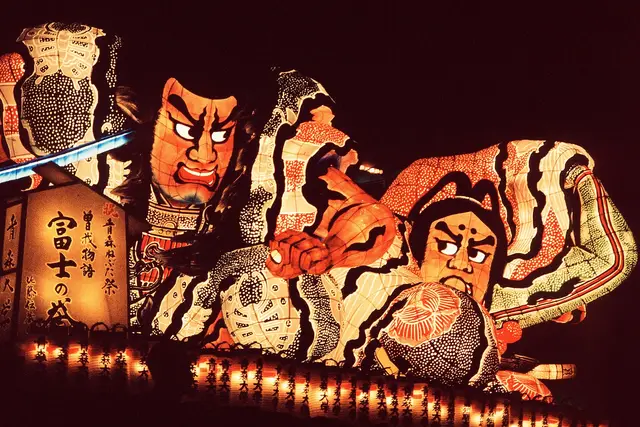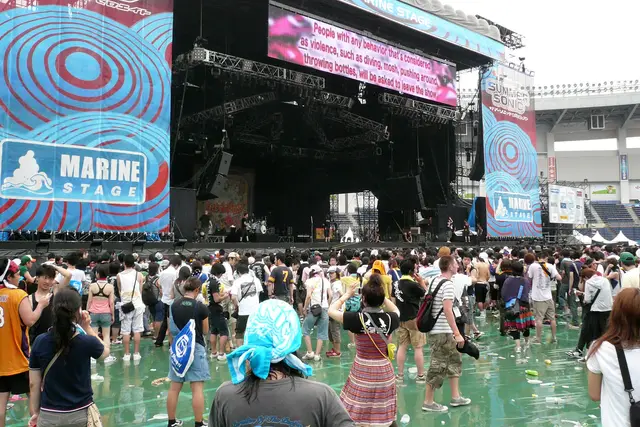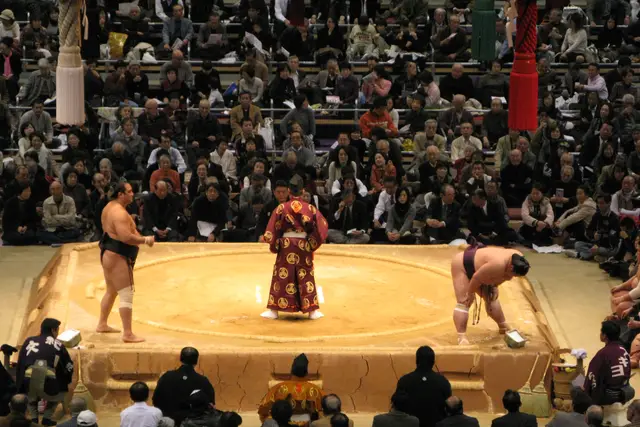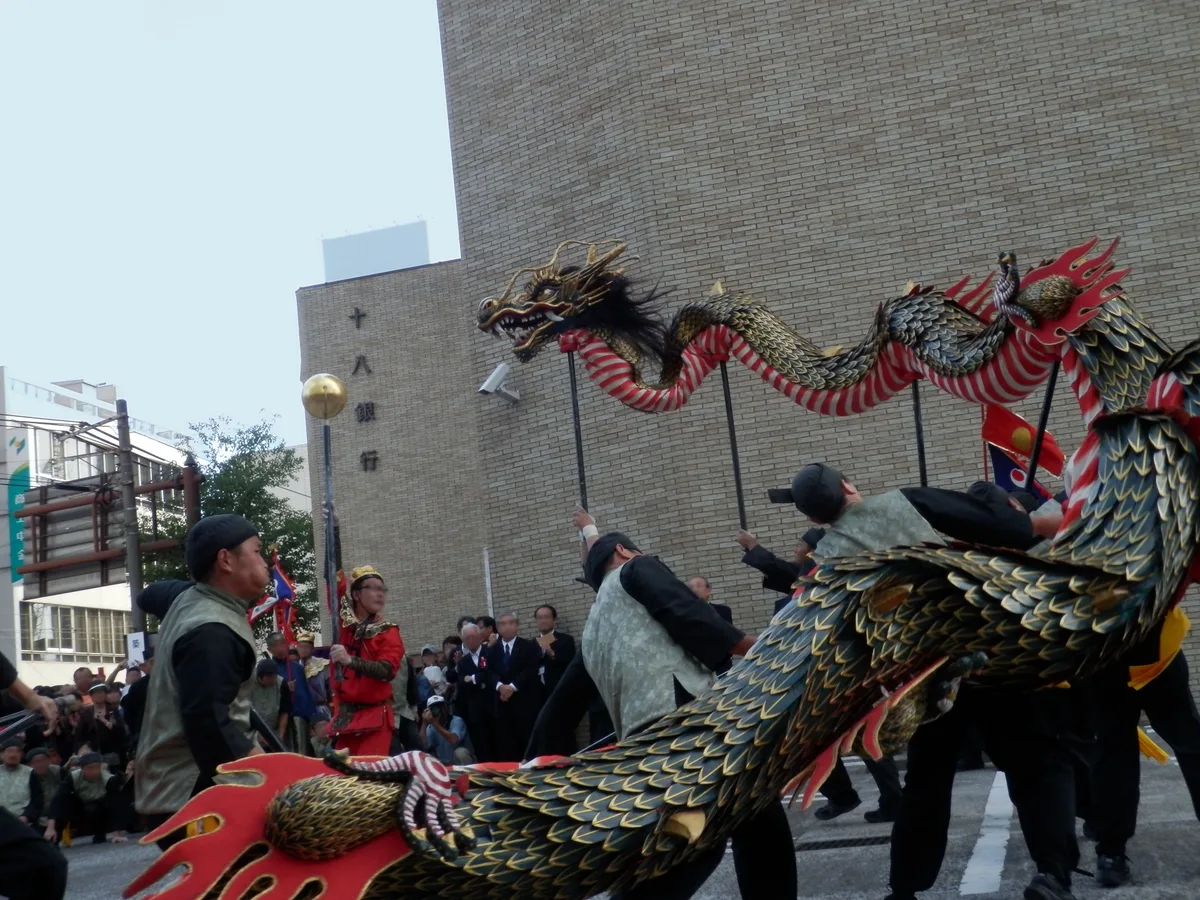
Nagasaki Kunchi is not one show in one place. It moves through the city over three days, October 7-9, 2026, shifting between Suwa Shrine, the Otabisho resting shrine near the covered arcade, and the open-air Kokaido Plaza stage, each with its own crowd and its own angle on the same performances.
What the festival actually is
Kunchi means “the ninth day,” a nod to the old lunar-calendar date the festival once fell on, and it has run in some form since the 1600s. What makes it distinct among Japanese autumn shrine festivals is the mix baked into the performances themselves.
Nagasaki spent centuries as Japan’s one open port to the outside world, and Kunchi’s dances show it. You’ll see dragon dances with clear Chinese lineage, Dutch-influenced parade floats, and processions that nod to Portuguese trade ships, all performed alongside more standard Shinto shrine ritual. No other Japanese matsuri draws from quite this mix.
The rotating neighbourhoods: why the show changes every year
This is the detail that trips up first-time visitors: Nagasaki Kunchi does not repeat the same program annually. The city’s historic districts, called kumi, rotate responsibility for presenting the festival’s dances and floats on a multi-year cycle, so the specific performances on stage in 2026 depend on which neighbourhoods are “up.”
Each participating kumi trains for months and brings its own signature piece, whether that’s a dragon dance, a boat-shaped float hauled by hand, or a Dutch-style parade unit. That rotation is also why locals return year after year rather than treating it as seen-it-once. If you want to know which districts are performing in 2026, that lineup detail sits with the official festival organizers rather than in any fixed annual script.
Suwa Shrine: the main stage
Suwa Shrine, up a long stone staircase in the hills above central Nagasaki, is the spiritual anchor of the whole event and the site of its most formal performances. The shrine grounds host ticketed or reserved seating areas for the core dance performances, distinct from the free viewing available at street-level stops elsewhere in the city.
Getting up to the shrine takes some walking; the approach stairs are part of the experience but plan extra time if you’re moving with a group or have mobility concerns. Arriving well before a scheduled performance start is the only real way to secure a decent sightline here, since the seating areas fill from the front.
Otabisho and Kokaido Plaza: where the free crowds gather
Not every viewing spot at Kunchi requires a ticket. Otabisho, the “resting shrine” partway through the traditional processional route, and Kokaido Plaza both host performances that are easier to reach on foot from central Nagasaki and typically draw dense but manageable free-standing crowds.
These sites are where you’ll get closer to the parade floats and dragon dance processions as they move through the city rather than perform on a fixed stage. Expect to stand for extended periods; bring something to sit on if you plan to hold a spot for hours before a procession passes.
Reading the shrine steps: finding a spot without a ticket
Suwa Shrine’s stone staircase and the terraces around it aren’t just an approach, they’re informal viewing space. Locals and repeat visitors treat certain landings and side steps as free vantage points once the ticketed seating areas below fill.
- Arrive at least an hour before a scheduled performance if you want an unpaid spot with sightlines to the main stage
- Bring a light cushion or folding seat pad; stone steps are hard and sessions run long
- Keep the main staircase itself clear for shrine traffic and staff, standing to the sides rather than blocking the center
- Watch for staff directing overflow crowds toward secondary viewing terraces during the busiest performance slots
Getting there and moving between sites
Nagasaki’s compact layout means the festival’s key locations are within walking distance of each other and of the city’s tram network, one of the easiest ways to move around during the festival when streets near the shrine get crowded with foot traffic. Suwa Shrine sits north of the main downtown core; Kokaido Plaza and the Otabisho site are closer to the arcades and canal area most visitors already pass through.
Because the festival draws visitors from across Kyushu and beyond for these three days, expect Nagasaki’s usual accommodation and tram capacity to feel tighter than a normal autumn weekend. Booking lodging and confirming your route between venues before October 7 saves scrambling once the crowds arrive.
Confirming the details that change
Ticketing structure, reserved seating at Suwa Shrine, exact performance schedules by day, and which neighbourhood kumi are performing in 2026 are all managed directly by the festival organizers and the Nagasaki city tourism office. Confirm timing and tickets on the official site before finalizing your trip, since seating arrangements and daily schedules are the kind of detail that’s easy to get wrong from secondhand sources.
If you’re building a full day around one performance, it’s worth checking that source twice: once when you first plan, and again shortly before you travel, to make sure the schedule you’re working from matches what’s currently posted.
Frequently asked questions
When exactly is Nagasaki Kunchi in 2026?
The festival runs October 7-9, 2026, with performances spread across Suwa Shrine, Otabisho and Kokaido Plaza. Confirm the day-by-day schedule on the official Nagasaki Kunchi site since performance times vary by venue and day.
Where is the best place to watch for free?
Otabisho and Kokaido Plaza host free street-level viewing as processions pass through, while the stone steps and terraces around Suwa Shrine also offer unticketed vantage points once the main seating fills.
Do I need a ticket for Suwa Shrine?
Suwa Shrine's main performance seating is reserved or ticketed, separate from free viewing spots elsewhere in the city. Check the official site for current seating and ticket arrangements.
How do I get between the festival venues?
Nagasaki's tram network connects the downtown arcades near Kokaido Plaza and Otabisho with the area below Suwa Shrine, and most sites are also walkable given the city's compact center.
Will I see the same performances every year?
No. Nagasaki's historic kumi neighbourhoods rotate responsibility for presenting dances and floats on a multi-year cycle, so the specific 2026 lineup depends on which districts are performing that year.
Plan your trip to Nagasaki
Some links above are affiliate links — if you book through them, Wander Atlas earns a small commission at no extra cost to you. It's how we keep every guide free.