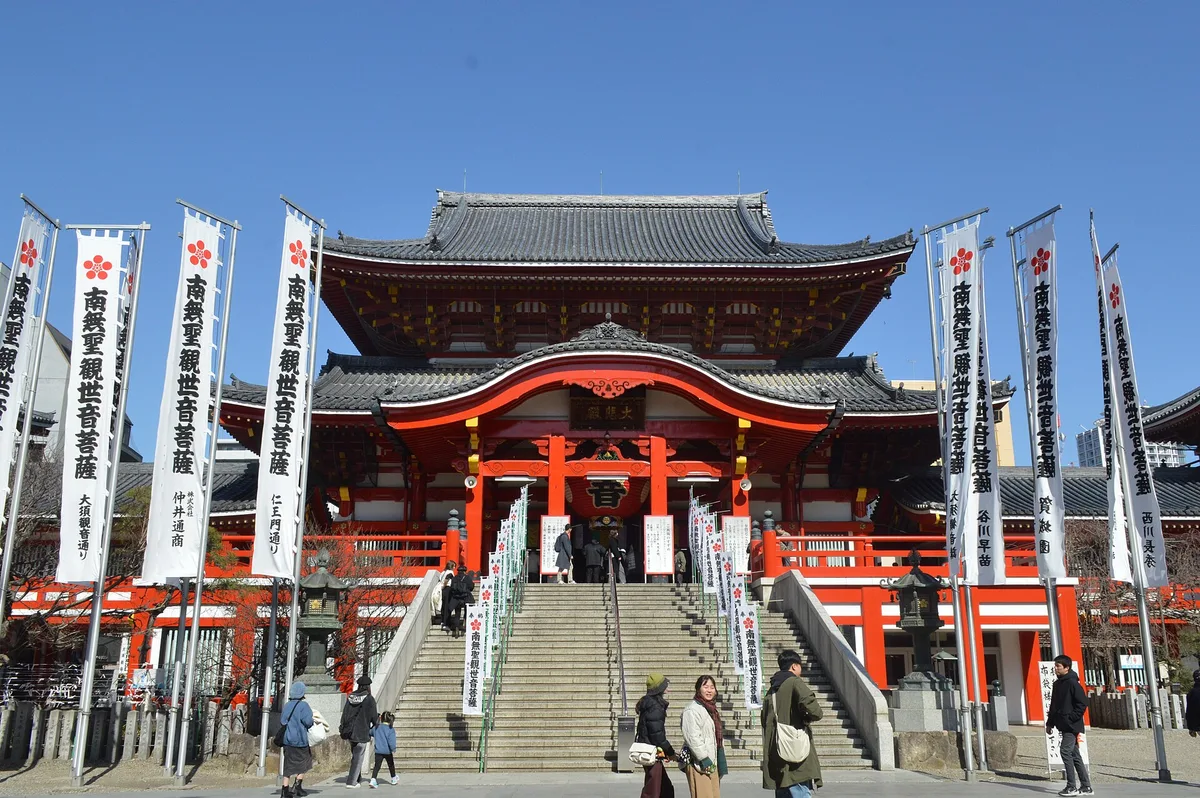
You smell the incense before you see the gate. Cut through the covered arcades of Osu Shopping District and the vermilion-and-white temple hall appears almost abruptly, its curved roofline rising above the electronics shops and used-kimono stores that crowd right up to its edge.
Osu Kannon has stood in some form since the 14th century, though what you see today is a postwar rebuild after fire destroyed the original structure. The current concrete hall dates to 1970, styled after the original wooden design. It’s still a working temple, not a museum piece, and that’s part of what makes it interesting.
Why go
This isn’t a quiet, secluded shrine tucked in a forest. It’s a very popular stop, and the crowds are part of the experience.
Pigeons scatter across the courtyard as visitors clap, bow, and toss coins into the offering box. Vendors sell fortune papers nearby. The temple holds a library of classical Japanese texts and historical documents, though the library itself isn’t generally open for casual browsing.
The real draw is the setting: a genuine 700-year-old religious institution embedded in the middle of one of Nagoya’s liveliest shopping streets.
Getting there
Osu Kannon has its own subway station on the Tsurumai Line, exit 2, which puts you at the temple gate within a couple of minutes.
If you’re coming from Nagoya Station, take the Higashiyama Line to Fushimi and transfer to the Tsurumai Line. The whole trip runs about 15 minutes. Ōsu Kannon is also a short walk from Kamimaezu Station on the Meijo and Tsurumai lines, another workable option depending on where you’re staying.

What to see and do
The main hall is the obvious anchor, and it’s worth pausing at the incense burner out front, locals waft the smoke over themselves for good health before heading in.
Beyond the hall itself:
- A five-story pagoda-style structure and smaller shrines dot the grounds
- A flea market/antique market sets up on the 18th and 28th of each month
- The surrounding Osu Shopping District has over 1,200 shops across covered arcades
- Nearby Bansho-ji temple and the Osu Kannon manga/anime shops make good add-ons
Give the temple itself 20 to 30 minutes. Give the surrounding arcades an hour or two more. This is really a half-day pocket of Nagoya once you factor in food stalls and shopping.
When to go
The temple is open every day from 6am to 7pm, so there’s flexibility. Early morning, right after opening, is when you’ll find the courtyard closest to empty, commuters and monks going about their routine, not yet the daytime crush of shoppers and tour groups.
By late morning through afternoon, especially on weekends, the courtyard fills with a steady stream of visitors and the arcades around it get genuinely busy. If you want photos of the hall without a crowd in frame, aim for before 9am.
How to visit like a local
Since this is one of Nagoya’s most-visited religious sites, don’t expect a hidden, quiet corner. The smarter move is timing your visit around the crowds rather than avoiding them entirely.
- Go before 9am on a weekday for the emptiest courtyard
- Bowing once before entering the hall and once before leaving is standard etiquette
- Coins for the offering box are the norm, small change is fine, no need to break a large bill
- Skip the shoe-removal confusion: the main worship area is walk-up, no need to remove shoes at the courtyard level
- Combine your visit with the 18th or 28th flea market day if your dates line up. That’s when the grounds feel most alive with local shoppers rather than tourists
- The most common mistake is treating it as a five-minute photo stop and missing the arcades. The shopping streets around the temple are as much the destination as the building itself
Bring small bills or coins, wear shoes you don’t mind standing in for a while on stone paving, and build in time to get lost in the side streets afterward.
Frequently asked questions
Is Osu Kannon free to visit?
Yes, entering the temple grounds and main hall is free. There's no admission fee, though donations at the offering box are customary.
How do I get to Osu Kannon by subway?
Take the Tsurumai Line to Osu Kannon Station, Exit 2 — it puts you right at the temple gate. From Nagoya Station, transfer at Fushimi from the Higashiyama Line, about 15 minutes total.
What are the opening hours?
Osu Kannon is open daily from 6:00 AM to 7:00 PM, with no variation across the week.
When is the best time to visit to avoid crowds?
Go right after opening, before 9am, especially on a weekday. Late morning through afternoon, particularly weekends, brings the heaviest foot traffic from the surrounding shopping district.
What else is nearby worth combining with the temple?
The Osu Shopping District's covered arcades surround the temple with over 1,200 shops, plus a flea/antique market on the 18th and 28th of each month.
Plan your trip to Nagoya
Japan eSIM & staying connected →
Some links above are affiliate links — if you book through them, Wander Atlas earns a small commission at no extra cost to you. It's how we keep every guide free.