Tokugawaen Garden sits in Higashi Ward, a short walk from Nagoya’s busier tourist circuits, and it still surprises people with how complete a world it creates in a relatively compact space. You enter through a gate that gives no real hint of what’s coming, and within a few steps the traffic noise falls away behind clipped hedges and pine.
The garden was built on land once belonging to the Owari Tokugawa family, the powerful branch of the Tokugawa clan that ruled this region for centuries. What you’re walking through today is a modern recreation of an Edo-period strolling garden, using the same design principles: a central pond, a winding path that reveals new views at each turn, and borrowed scenery that makes the space feel larger than its actual footprint.
The pond and its bridges
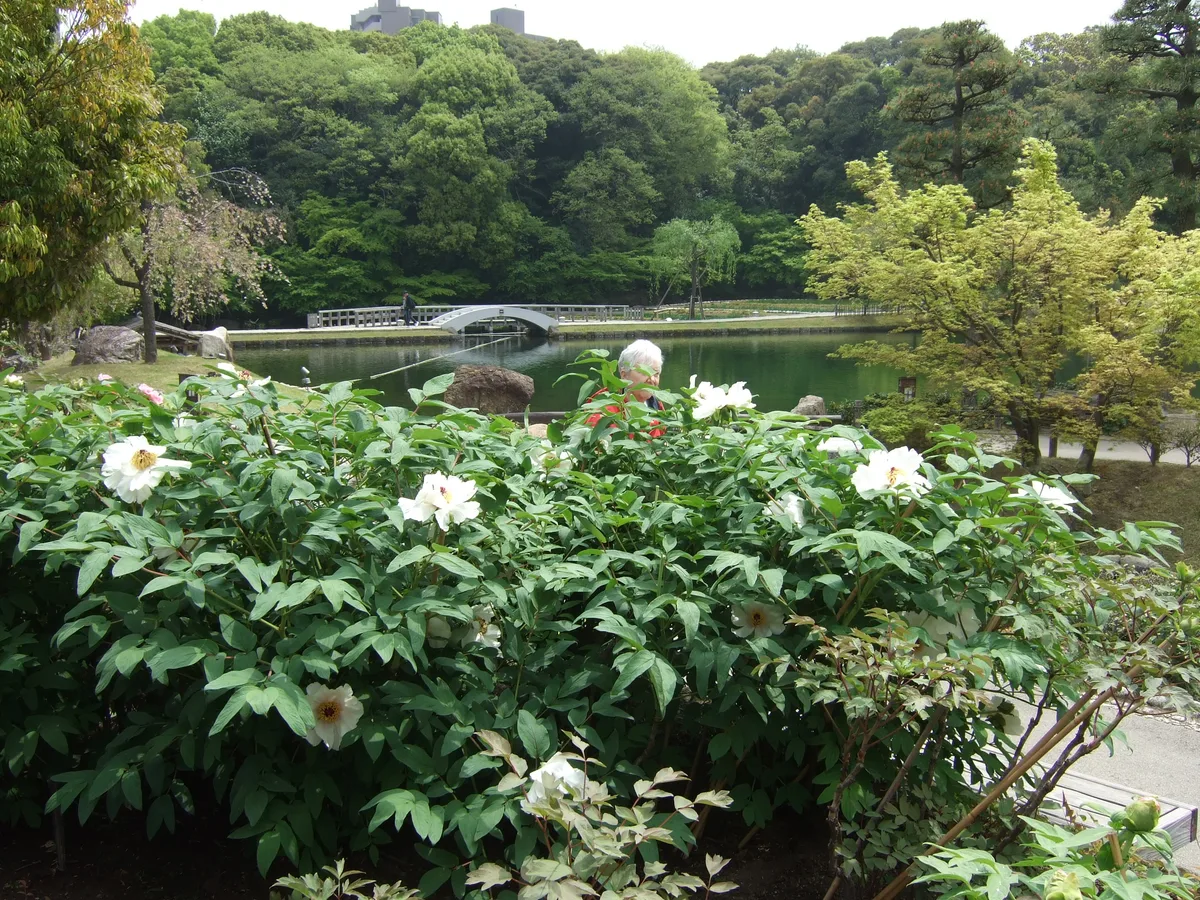
The heart of Tokugawaen is Ryusen-ko, the large pond that anchors the entire layout. Stone and wooden bridges cross it at different points, each framing a slightly different composition of water, rock and tree.
Walk the full loop rather than cutting across; the path is designed to be experienced in sequence, with the garden’s designers deliberately hiding and revealing the pond as you move. Benches and viewing points appear at the spots where the composition is best, so it’s worth pausing rather than treating the walk as a straight line to the exit.
Tea houses and the ritual of slowing down
Scattered around the grounds are several tea houses, some open for seasonal tea ceremonies or a simple bowl of matcha with a sweet. These small wooden structures are as much a part of the garden’s design as the plantings; they’re positioned to be viewed from across the pond as part of the wider composition, not just as functional stops.
If you have time, sitting at one of these tea houses is the closest thing Tokugawaen offers to a signature activity. It’s a chance to slow down mid-walk, watch the koi move under a bridge, and take in the garden from a fixed vantage point instead of constantly moving.

Seasonal timing: when the garden changes character
Tokugawaen is planted with an eye toward seasonal change, and the garden looks genuinely different depending on when you visit. Spring brings cherry blossoms along the paths; autumn turns the maples around the pond into deep reds and oranges, which is when the garden draws its heaviest local attention.
Summer is green and shaded, a decent option if you want fewer crowds and don’t mind humidity. Winter is quieter still, with a stark, pared-back look that suits the tea houses and stone lanterns particularly well.
Getting there and what to combine it with
Tokugawaen is adjacent to the Tokugawa Art Museum, which holds heirlooms of the Owari Tokugawa family including lacquerware, samurai armor and a portion of the illustrated Tale of Genji scrolls. The two sites are commonly visited together, and a combined ticket is often available at the entrance, so it’s worth checking current pricing there rather than assuming a single-site fee.
The garden is reachable by local bus or a moderate walk from nearby subway stations in Higashi Ward; because routes and stop names can shift, confirm the current best station and bus number before you go. Budget roughly an hour for the garden alone, and closer to two and a half to three hours if you’re adding the museum.
How to visit like a local
Tokugawaen is genuinely popular, not a quiet backstreet find, so the smartest move is timing rather than searching for a secret entrance.
- Arrive right at the 9:30 AM opening; the paths are far less congested before tour groups and weekend crowds build.
- Avoid Saturday and Sunday between 10am and 5pm if you can; that’s the garden’s busiest stretch.
- Remember the garden is closed on Mondays, so plan around that if your itinerary is tight.
- Pay at the entrance gate; card acceptance can be inconsistent at smaller ticket counters in Japan, so carry some cash as backup.
- Stick to the marked stone paths and keep noise down near the tea houses; these are still functioning ceremonial spaces, not just photo backdrops.
The most common visitor mistake is treating Tokugawaen as a quick ten-minute photo stop on the way to the museum. The garden rewards a slower pace, and rushing through misses most of what the designers built into the sequence of views.
Practical notes before you go
Wear shoes comfortable for gravel paths and occasional uneven stone, since the walking surface changes across bridges and near the tea houses. There’s little shade in some open stretches, so a hat is useful in summer and layers help in the cooler months when wind crosses the pond.
Photography is generally welcome throughout the grounds, though be considerate around other visitors at the narrower bridge crossings, which can bottleneck when the garden is at its busiest. Check the official opening hours before visiting, since seasonal events or maintenance can occasionally shift the schedule outside the standard Tuesday to Sunday, 9:30 AM to 5:30 PM window.
Frequently asked questions
What are Tokugawaen Garden's opening hours?
It's open Tuesday through Sunday, 9:30 AM to 5:30 PM, and closed all day Monday. Always confirm before visiting, as seasonal events can shift the schedule.
When is the best time to avoid crowds?
Try not to visit on Saturday or Sunday between 10am and 5pm, when the garden gets busiest. Arriving right at the 9:30 AM opening on a weekday gives you the calmest walk.
How long should I spend at Tokugawaen Garden?
Plan for about an hour to ninety minutes to walk the full loop around the pond. If you're pairing it with the neighbouring Tokugawa Art Museum, allow closer to two and a half to three hours total.
What's nearby worth combining with a visit?
The Tokugawa Art Museum sits right next to the garden and holds Owari Tokugawa family heirlooms, including lacquerware and samurai armor. A combined garden-and-museum ticket is often available at the entrance.
Is Tokugawaen Garden good for cherry blossoms or autumn leaves?
Yes, spring brings cherry blossoms along the paths, and autumn turns the maples around the central pond into deep reds and oranges, drawing the heaviest local interest of the year.
Plan your trip to Nagoya
Japan eSIM & staying connected →
Some links above are affiliate links — if you book through them, Wander Atlas earns a small commission at no extra cost to you. It's how we keep every guide free.