Concrete, glass and the Inland Sea
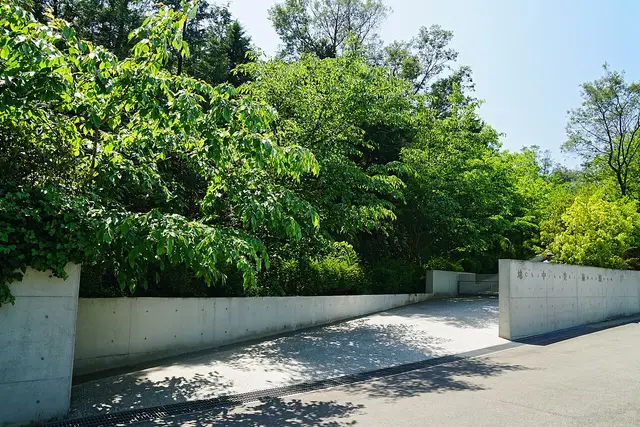
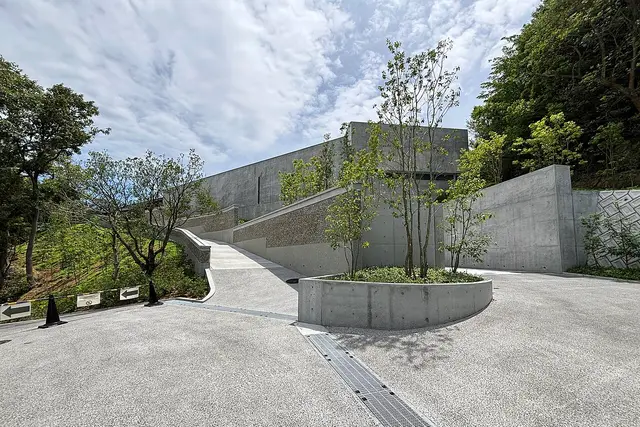
Ando built this museum into a slope above the sea. You walk in through bare concrete walls, smooth and cool, and the building opens out in steps toward the water. Glass and gaps in the walls frame the Seto Inland Sea, so the islands offshore become part of the hang.
It opened in 1992 as something unusual: a museum and a hotel in one building. Ando and the Benesse Art Site project wanted art, architecture and landscape to work together. That idea now shapes the whole south coast of Naoshima.
What’s on the walls, and beyond them
The collection is contemporary painting, sculpture, photography and installation. Several pieces were made for the exact rooms they sit in. Expect a mix of permanent site-specific work and rotating displays.
Highlights you will see named again and again:
- Bruce Nauman, 100 Live and Die: a wall of flashing neon phrases that switch on and off in sequence.
- Hiroshi Sugimoto’s seascapes: his flat, horizon-split photographs of the sea. Some hang outdoors along the coast, facing the real thing.
- Niki de Saint Phalle’s sculptures: bright figures set out near the beach below the museum.
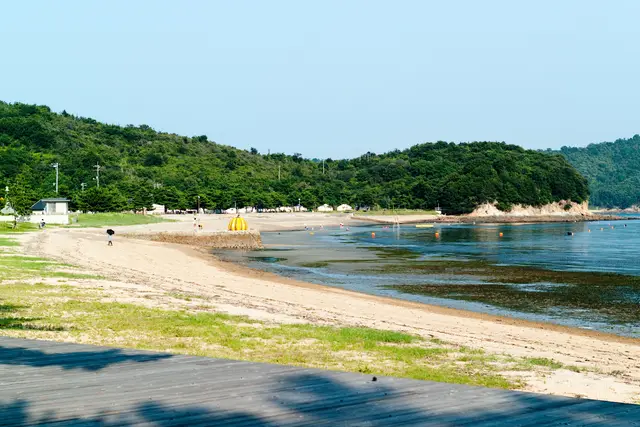
- Yayoi Kusama’s Pumpkin: the yellow, black-dotted pumpkin on an old concrete pier, a short walk downhill.
Some displays change, so check the official Benesse Art Site page for what is currently on.
The yellow pumpkin on the pier
Kusama’s Pumpkin sits at the end of a narrow pier jutting into the bay. It is the most photographed object on the island. Don’t confuse it with the red pumpkin at Miyanoura Port, a different work you pass on arrival.
The pier is open to the elements, so the view behind it changes with the tide and light. Groups tend to bunch here, and people queue loosely for a clear photo. Wait your turn at the base of the pier, then step out.
Waves can wash the pier in rough weather, and the pumpkin has been removed for repairs before. If it matters to you, check the official news page before you travel.

Late hours, quieter galleries
This museum keeps long hours. At the moment Google lists it open 8am–9pm every day of the week. That is far later than most museums in Japan, and it changes how you can plan a Naoshima day.
The usual pattern for day-trippers is to cram museums in around midday and leave on an afternoon ferry. So the hours near opening, and the evening once the day-trip crowd heads back to port, tend to feel calmer. That is reasoning from ferry logic, not a measurement. Seeing the neon and Ando’s concrete after dark is a different experience from a bright afternoon.
The museum is open every day of the year, 8am–9pm, with last entry at 8pm. The official Benesse Art Site site posts any change.
Reaching Gotanji on the south coast
The museum’s address is Gotanji (琴弾地), on Naoshima’s southern shore. Most visitors arrive by ferry at Miyanoura Port, from Uno Port in Okayama or from Takamatsu Port in Kagawa.
From Miyanoura you have three options:
- Town bus to the Tsutsuji-so stop, then the free Benesse Art Site shuttle up to the museum.
- Rental bicycle or e-bike from the shops near the port. The coast road is pleasant, but the final climb is steep, which is why e-bikes are popular.
- Walking the last stretch from Tsutsuji-so along the shoreline, past outdoor works.
Private cars have limited access to the Benesse House area, so plan on the shuttle, a bike or your feet.
Inside the galleries: how it works here
Buy your ticket at the museum entrance. Chichu Art Museum nearby uses timed online tickets, so don’t assume the same rules apply across sites. Check each one separately.
Some practical habits that make the visit smoother:
- Photography is restricted in the galleries. Look for the signs, and ask staff when unsure rather than holding your phone up.
- Keep your voice low. Many rooms are small and echo off the concrete, and other visitors stand still in front of single works.
- Big bags can be awkward in tight rooms. Leave luggage at a port locker or your accommodation before heading south.
- No tipping, as everywhere in Japan. Staff will point you on politely; a small bow and “arigatou gozaimasu” is all that is expected.
The building is also a hotel. Some spaces are for overnight guests only, so respect any “guests only” signs on stairs and terraces.
Pairing it with the rest of the south coast
Benesse House Museum anchors a cluster of art sites linked by the same shuttle. Lee Ufan Museum sits in a valley between here and Chichu Art Museum, both also by Ando. The newer Valley Gallery is close by too.
Chichu and Lee Ufan usually close on Mondays, which makes Monday a good day for Benesse House plus the outdoor works. For the other side of the island, head to the Art House Project in Honmura, or the I♥湯 bathhouse near Miyanoura before your ferry.
A realistic plan is a full day for the south coast. Two days on the island lets you see all of it without racing the last boat.
Frequently asked questions
How do I get to Benesse House Museum from the ferry?
Ferries from Uno Port (Okayama) and Takamatsu Port arrive at Miyanoura Port. Take the town bus to Tsutsuji-so and transfer to the free Benesse Art Site shuttle, or rent a bicycle or e-bike near the port. The last stretch is uphill.
What are the opening hours?
Google currently lists it open 8am–9pm every day of this week. The museum is open every day of the year, 8am–9pm with last entry at 8pm; the official Benesse Art Site website posts any change.
How long should I spend there?
Allow one to two hours inside, plus extra time to walk down to Yayoi Kusama's yellow Pumpkin and the outdoor sculptures along the shore.
Do I need to book tickets in advance?
Tickets are sold at the entrance. Chichu Art Museum nearby uses timed online tickets, so check each site's rules separately on the official website.
Can I visit on a Monday?
Yes, it is listed as open on Mondays this week. Chichu Art Museum and Lee Ufan Museum usually close on Mondays, so Monday suits a visit centred on Benesse House and the outdoor works.
Plan your trip to Naoshima
Japan eSIM & staying connected →
Some links above are affiliate links — if you book through them, Wander Atlas earns a small commission at no extra cost to you. It's how we keep every guide free.