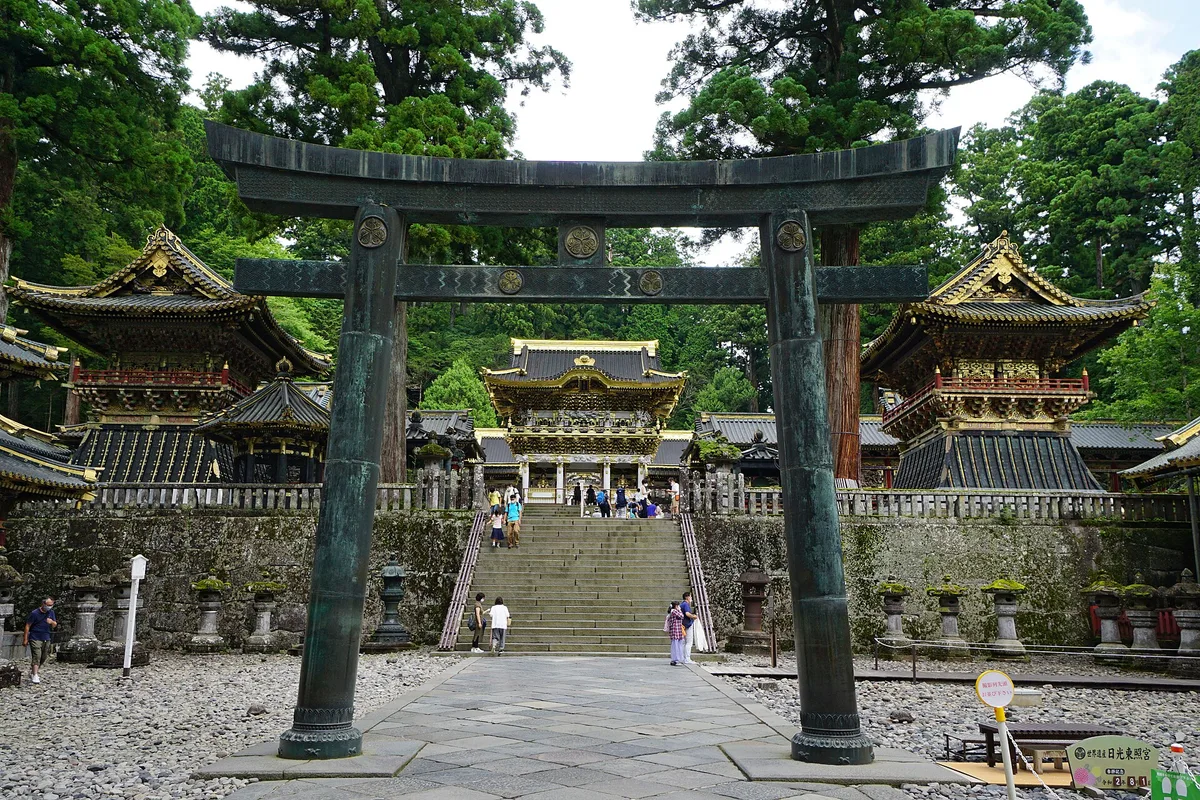
Why Tōshōgū stops you in your tracks
Nothing prepares you for the color. After the cedar-lined approach through Nikko’s forest, you round a corner and the Yomeimon Gate hits you: gold leaf, crimson lacquer, hundreds of carved dragons, lions, and mythical beasts crammed into every surface.
This is the mausoleum of Tokugawa Ieyasu, the shogun who unified Japan and founded the dynasty that ruled for over 250 years. His heirs didn’t do subtle. Every panel here was built to declare permanent, unshakeable power.
Getting there
Nikko sits about two hours north of Tokyo by train, easiest via the Tobu Nikko Line from Asakusa Station. From Tobu Nikko or JR Nikko Station, it’s a 25-30 minute uphill walk or a short bus ride toward the Shrines and Temples area.
The shrine address is 2301 Sannai. Look for signs pointing toward the World Heritage Site zone, shared with Rinno-ji Temple and Futarasan Shrine. Buses marked “Sekaiisan-meguri” loop between the stations and the shrine cluster.
What to see once inside
Budget close to two hours if you want to see it properly rather than rush through.
- Yomeimon Gate, nicknamed the “Gate of the Setting Sun” because visitors once lingered until dusk admiring it
- Sanjinko storehouses, carved with imaginative elephants by an artist who’d never seen a real one
- The Sleeping Cat (Nemuri-neko), a tiny, famous carving above a passage leading to Ieyasu’s actual tomb
- Three Wise Monkeys, “see no evil, hear no evil, speak no evil,” carved on the sacred stable
- Honji-do Hall, stand beneath the ceiling’s “crying dragon” painting and hear a monk demonstrate its odd echo
Climb the stone steps beyond the Sleeping Cat if you want to reach Ieyasu’s quiet, tree-shaded tomb itself. Most tour groups skip this part, so it thins out fast.

When to go
The shrine runs 9am to 4pm every day of the week, with no weekly closure. Crowd data shows weekdays stay manageable across the entire 9am–4pm window, making any weekday hour a reasonably safe bet.
Weekends are a different story. Between 10am and 3pm on Saturdays and Sundays, tour buses arrive in waves and the approach to Yomeimon Gate can bottleneck. If a weekend is your only option, arrive right at 9am opening, before the buses catch up.
Autumn (early-to-mid November) brings crowds for the maple foliage in the surrounding hills, while spring and early summer are quieter and just as photogenic against the cedars.
How to visit like a local
This is one of Japan’s most-visited shrine complexes, not a hidden find, so plan around the crowds rather than expecting solitude. Arrive at opening on a weekday if your schedule allows it; that’s the calm window the crowd data confirms.
Buy your entry ticket at the booth near the Omotemon Gate rather than online. There’s rarely a long line for tickets themselves, even when the paths beyond get crowded. Most visitors pay cash at the counter.
Wear shoes you can slip off easily. Some interior halls, including areas near the sleeping cat passage, require removing footwear, and fumbling with laces holds up the line behind you.
Keep voices low and stick to marked paths. This is an active Shinto shrine, not a museum, and locals visiting to pray appreciate quiet.
The mistake most first-timers make: photographing every single carving and missing the bigger picture. Step back at the Yomeimon Gate and take in the whole facade before zooming in on details. Confirm current hours and any seasonal closures on the shrine’s official site before you travel, since schedules can shift around festivals.
Frequently asked questions
How do I get to Nikkō Tōshōgū from Tokyo?
Take the Tobu Nikko Line from Asakusa Station (about two hours) to Tobu Nikko Station, then walk 25-30 minutes uphill or take a local bus toward the Shrines and Temples area.
What are the opening hours?
The shrine is open daily from 9:00 AM to 4:00 PM, with no weekly closure day. Always confirm before visiting in case of seasonal changes.
When is the quietest time to visit?
Weekdays are calm throughout the full 9am-4pm window. Avoid weekends between 10am and 3pm, when tour buses arrive and paths near the main gate get congested.
How long should I spend at Tōshōgū?
Plan for 90 minutes to two hours to see the main carvings, the Sleeping Cat passage, Ieyasu's tomb, and the Honji-do Hall's crying dragon ceiling.
What else is nearby?
Tōshōgū sits within Nikko's World Heritage shrine and temple cluster, alongside Rinno-ji Temple and Futarasan Shrine, both an easy walk away.
Plan your trip to Nikko
Some links above are affiliate links — if you book through them, Wander Atlas earns a small commission at no extra cost to you. It's how we keep every guide free.