Nikko Tamozawa Imperial Villa Memorial Park: Travel Guide
✓ Facts verified via Google Places · Sep 14, 2026
At a glance
Opening hours
- Monday: 9:00 AM – 5:00 PM
- Tuesday: Closed
- Wednesday: 9:00 AM – 5:00 PM
- Thursday: 9:00 AM – 5:00 PM
- Friday: 9:00 AM – 5:00 PM
- Saturday: 9:00 AM – 5:00 PM
- Sunday: 9:00 AM – 5:00 PM
Live foot-traffic data via BestTime.app
How this guide is made
Produced with AI assistance and reviewed against live data sources. Facts such as hours, ratings, and location come from Google Places; images are licensed or public domain. Details can change — please verify before visiting. Editorial policy
Most visitors to Nikko funnel straight from the station to Tosho-gu and never notice the turnoff toward this old imperial retreat. That’s a mistake, because Tamozawa is one of the largest wooden palace buildings left in Japan, and walking through it feels nothing like queuing at a shrine.
The villa was built in 1899 by combining parts of an Edo-period Tokugawa residence with new construction, assembled as a summer retreat for the imperial family. Emperor Taisho spent time here as crown prince, and the building later served the imperial household until the 1940s. It survived largely intact and was restored and reopened to the public in the early 2000s, which is why the tatami rooms, sliding fusuma doors, and carved transoms still look sharp rather than roped-off and faded.
Walking through the villa itself
You enter through a low wooden genkan and are handed slippers, standard practice for any traditional Japanese building where the floors are the point.
The layout unfolds as a sequence of over 100 connected rooms, some dressed in Kyoto-style painted screens, others plainer service quarters used by household staff. Look for the different ceiling heights and joinery styles between wings; they mark where the older Edo-era structure was grafted onto the newer imperial additions.
A few rooms display black-and-white photographs of the family in residence, useful context since there’s minimal English signage elsewhere in the building.

The garden and grounds
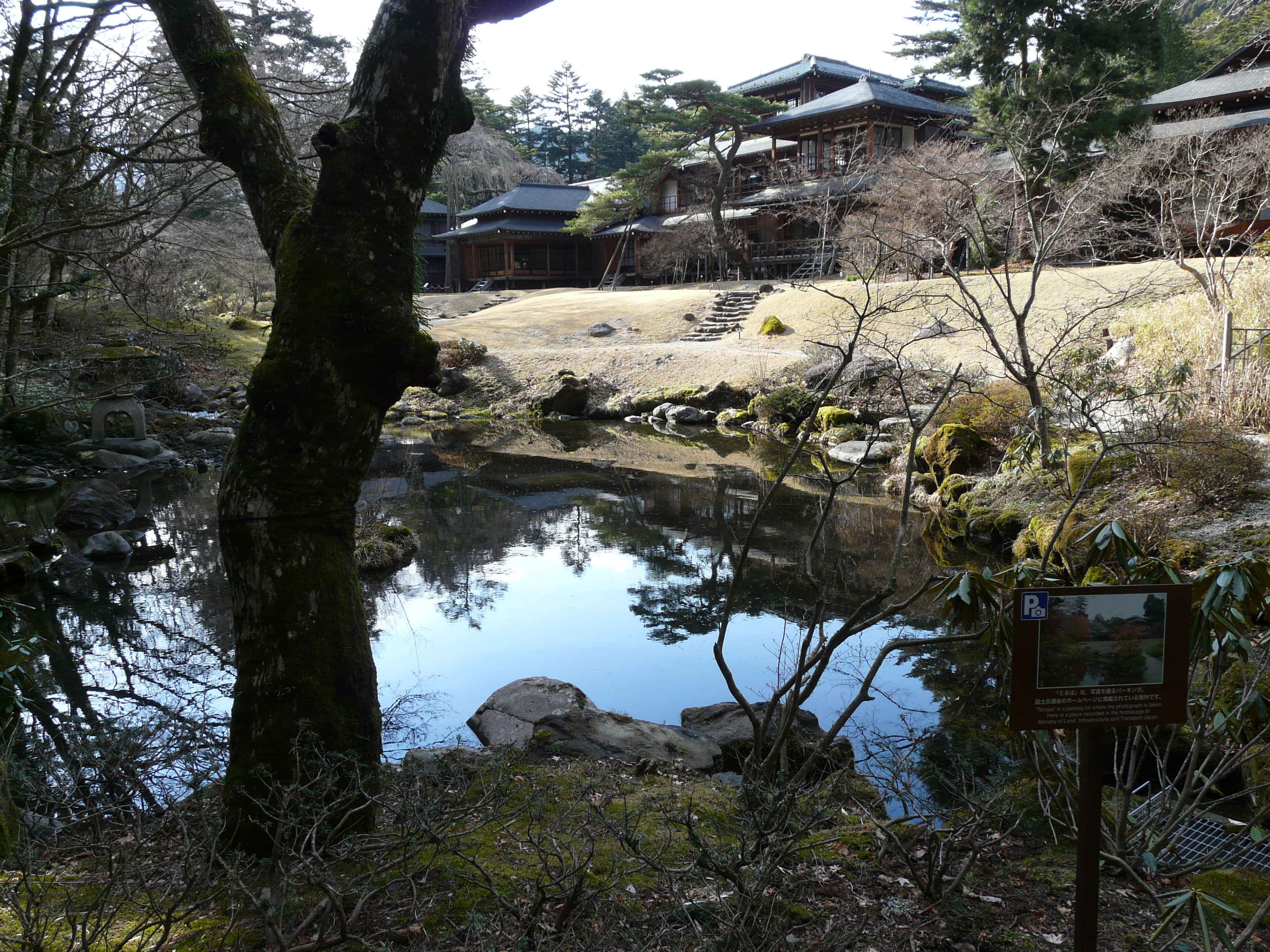
Outside, the strolling garden wraps around a carp pond and borrows the wooded hillside behind it as backdrop, a classic technique in Japanese landscape design called shakkei.
Paths are gravel and mostly flat, shaded by maples that make this a genuinely good stop in autumn when the leaves color a few weeks after Tokyo’s. In spring the same trees leaf out fresh green, and the pond reflects both seasons well if you’re carrying a camera.
Benches are scattered along the water’s edge; it’s one of the few spots in central Nikko where you can sit without a vending machine or tour bus in the frame.
Planning around the opening hours
The park is closed on Tuesdays, so don’t build a Tuesday itinerary around it. Every other day it runs 9am to 5pm.
- Open: Wednesday–Monday, 9am–5pm
- Closed: Tuesdays
- Typical visit length: 60–90 minutes for the villa and garden combined
Last entry is usually earlier than closing time since staff need to walk the last visitors out, so don’t arrive at 4:45pm expecting a full look.
Avoiding the weekend crush
This is a well-known stop on the Nikko circuit, not a secret, and weekend crowds reflect that. The heaviest traffic runs from 10am to 4pm on Saturdays and Sundays, when tour groups from Tosho-gu spill over after finishing the shrine complex.
If you can, visit on a weekday, or arrive right when the doors open at 9am before the shrine crowds arrive. The corridors are narrow in places, and a full villa means shuffling in a slipper-clad line rather than reading the room at your own pace.
Getting there and what to bring
The park sits at 8-27 Honcho, an easy walk from Tosho-gu and Shinkyo Bridge, roughly 15-20 minutes on foot from Nikko or Tobu-Nikko stations along the same route most people take to the shrines.
Wear socks without holes, since shoes come off at the entrance and you’ll be padding through dozens of rooms in them. Bring small change for the entry fee; exact current pricing isn’t posted everywhere, so check the official signage or Nikko tourism site before you go. A folding umbrella or light jacket is worth carrying in the garden regardless of season, since the wooded hillside behind the pond keeps the air a few degrees cooler than the open street outside.
Frequently asked questions
How do I get to Tamozawa Imperial Villa from Nikko Station?
It's about a 15-20 minute walk from both Nikko and Tobu-Nikko stations, following the same road that leads up to Shinkyo Bridge and Tosho-gu, then continuing slightly further along Honcho.
What day is it closed?
Tuesdays. Every other day it's open 9am to 5pm, so plan around that if Tuesday is your only free day in Nikko.
How long should I spend there?
Most people spend 60-90 minutes covering both the 106-room villa interior and a loop through the strolling garden.
When is the best time to avoid crowds?
Weekday mornings are quietest. Weekends get busiest between 10am and 4pm, largely tour groups arriving after visiting Tosho-gu, so an early weekday visit is your best bet.
Is it worth visiting alongside Tosho-gu?
Yes, they're close enough to combine in one outing. Tamozawa offers a very different pace, a quiet wooden palace and garden rather than the ornate, crowded shrine complex.
Plan your trip to Nikko
Some links above are affiliate links — if you book through them, Wander Atlas earns a small commission at no extra cost to you. It's how we keep every guide free.