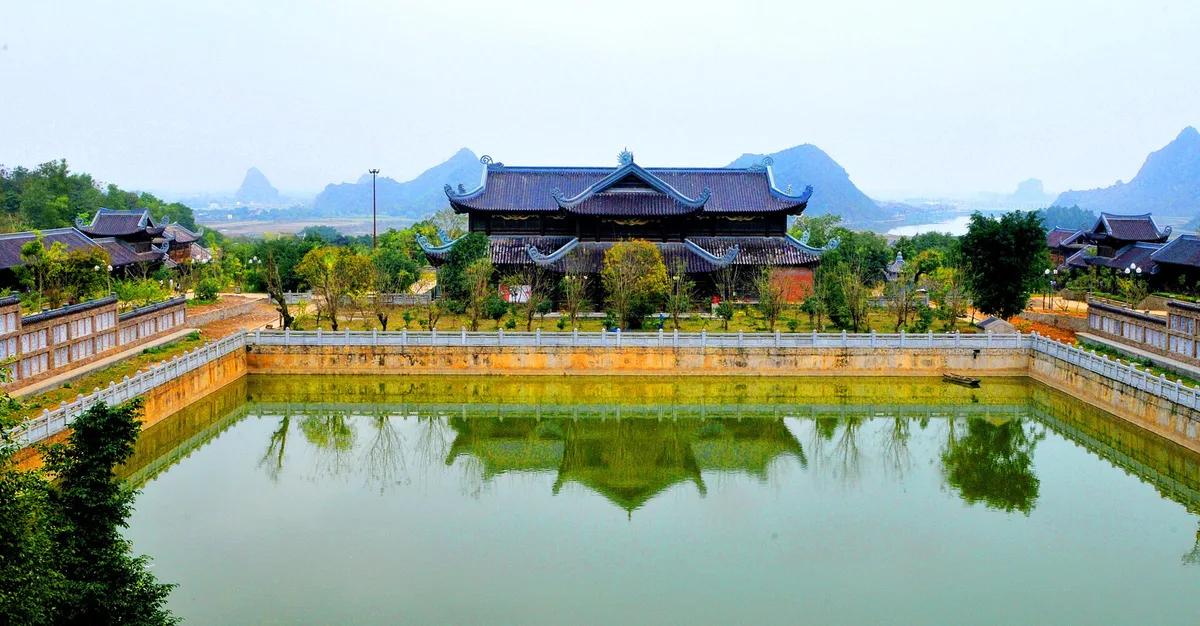
Why go
Bai Dinh isn’t a quiet countryside temple. It’s a mountain-sized monument to scale. Spread across a limestone hillside in Hoa Lu, it holds a string of Southeast Asia superlatives: the tallest bronze Buddha cast in Vietnam, the largest bell, the longest corridor of arhat statues.
You feel the size before you feel anything spiritual. The main courtyard alone could swallow a football pitch, flanked by columned walkways that seem to recede forever.
That scale is the whole point. This isn’t the intimate, incense-fogged pagoda of old Hanoi. It’s a modern pilgrimage complex, built from 2003 onward beside a much older original temple, and it wants you to feel small.
Getting there
Bai Dinh sits about 15km northwest of Ninh Binh city, roughly a 25-minute drive or taxi ride from the train station or Tam Coc.
Most visitors combine it with Trang An or Hoa Lu Ancient Capital in the same day trip, since they’re only 10-15 minutes apart by car.
If you’re not driving yourself, a rented motorbike or a booked day tour from Ninh Binh or Ninh Binh’s Tam Coc guesthouses is the easiest route. There’s no train or public bus that gets you close.

What to see
From the car park, it’s a long walk uphill to the main halls. Most people take the electric buggy that shuttles visitors up for a small fee.
Inside, don’t rush past the details for the big statues alone:
- Tam The Hall – three towering bronze Buddhas representing past, present and future
- The 500 Arhats corridor – a covered walkway lined with life-size stone statues, each with a distinct face and posture
- The bronze bell tower – housing one of Southeast Asia’s largest bells, its low tone audible across the complex
- Quan Am Hall – dedicated to the Bodhisattva of Mercy, quieter and more intimate than the main halls
Budget at least two hours if you want to see the complex properly; three if you’re climbing to the hilltop stupa for the panoramic view over the karst valley.
When to go
Bai Dinh is open every day from 7am to 5:30pm, and the hour you pick matters more here than almost anywhere else in Ninh Binh.
Tour buses tend to arrive mid-morning and again after lunch, filling the courtyards and the buggy queue. Arriving right at 7am, or after 3pm, gives you the halls with noticeably more breathing room.
Lunar New Year through the third lunar month (roughly February–April) is festival season, when Bai Dinh becomes one of the busiest pilgrimage sites in northern Vietnam. Beautiful for atmosphere, brutal for crowds. Go outside those months if you want space to actually look at the statues.
How to visit like a local
Bai Dinh draws worshippers as much as tourists, so a little temple etiquette goes a long way.
- Dress modestly, shoulders and knees covered, nothing sheer
- Speak quietly inside the halls; this is an active place of worship, not just a photo backdrop
- Walk clockwise around statues and stupas, as Buddhist pilgrims do
- Bring small cash (Vietnamese dong) for the buggy fare and any offerings, cards aren’t practical here
- Wear shoes you can slip off easily, since some hall entrances require it
The mistake most first-time visitors make is underestimating the walking. Between the car park, the buggy drop-off and the climb to the upper pagoda, you’ll cover several kilometres on uneven stone steps. Wear real shoes, not sandals.
Because this is a genuinely huge, very popular site rather than a hidden find, the crowd-avoidance strategy matters more than any secret entrance or back route. Early morning is your best card, and pairing the visit with Trang An in the same day (Bai Dinh first, boat trip after) lets you beat both the temple buses and the afternoon river queues.
Frequently asked questions
How much time should I budget for Bai Dinh Pagoda?
Plan on at least 2 hours for the main halls and corridor, closer to 3 if you also climb to the hilltop stupa for the valley view.
What's the quietest time to visit?
Right at opening (7am) or after 3pm, before the tour buses that dominate mid-morning and early afternoon.
How do I get from Ninh Binh city to Bai Dinh?
It's about a 25-minute drive or taxi ride (roughly 15km); most travelers combine it with a trip to Trang An or Hoa Lu, both 10-15 minutes away.
Is there an entrance fee?
Entry to the pagoda grounds is generally free, but there's usually a small fee for the electric buggy that shuttles you up the hill — confirm current pricing on arrival.
Should I avoid festival season?
If you want a peaceful visit, yes — the period from Lunar New Year through the third lunar month (roughly February–April) brings heavy pilgrim crowds.
Plan your trip to Ninh Binh
Some links above are affiliate links — if you book through them, Wander Atlas earns a small commission at no extra cost to you. It's how we keep every guide free.
Related guides
 attraction
 Hoa Lu Ancient Capital: Ninh Binh Travel Guide (4.3★)
 attraction
 Tam Coc - Bich Dong: Ninh Binh Travel Guide (4.5★)
 attraction
 Thong Nhat Park: Hanoi Travel Guide (4.3★)
 attraction