Green stone at the end of Alcalá
Walk north up Macedonio Alcalá and the street does the guiding. The pedestrian andador runs uphill from the Zócalo past galleries, cafés and colonial façades. Then it opens onto a wide stone plaza with Santo Domingo at the far end.
The church is built from Oaxaca’s pale green cantera, the volcanic stone that gives the old city its colour. Its twin bell towers are squat and thick-walled. Dominican friars built for an earthquake zone, and it shows.
The plaza in front is planted with agaves and edged by low walls. People sit there at all hours, and after dark the façade is floodlit. It is worth coming back for a second look once the sun has gone down.
Under the gold ceiling
Step through the doors and the plain stone gives way completely. Nearly every surface of the nave is covered in gilded stucco: saints, angels, vines and medallions climbing the vaults. The editorial shorthand calls it opulent. That undersells it.
Stop just inside the entrance and look straight up at the underside of the choir loft. The carved, painted tree there is the genealogy of Santo Domingo de Guzmán, founder of the Dominican order. His relatives sprout from its branches as half-length figures, crowned and robed.
To one side, the Capilla del Rosario holds its own gilded altarpiece around a figure of the Virgin of the Rosary. It is smaller, quieter and often used for private prayer. Much of the gold you see was restored in the twentieth century, after the complex spent years as army barracks in the 1800s.
The monastery turned museum
The convent beside the church now houses the Museo de las Culturas de Oaxaca. Its galleries ring a two-storey cloister, with thick arches framing a courtyard below. The building is half the reason to go in.
The star exhibit is the treasure of Tomb 7 from Monte Albán. It is a Mixtec burial hoard of worked gold, jade, rock crystal and carved bone found in 1932. Further rooms move through the Zapotec and Mixtec world, the conquest and the colonial era.
- Allow: two hours at a steady pace, longer if you read the labels.
- Don’t miss: the upper-floor windows overlooking the garden behind the complex.
- Labels: mostly in Spanish, so a translation app helps.

The garden behind the walls
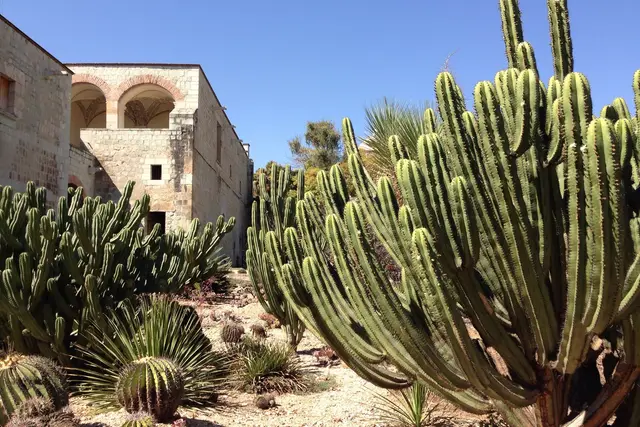
From the museum windows you will see rows of cacti, agaves and trees. That is the Jardín Etnobotánico de Oaxaca, laid out on the old monastery grounds. It shows plants native to the state and how people have used them.
You cannot wander in on your own. Entry is by guided tour only, with set times and some tours in English. Check the current schedule at the garden gate on Calle Reforma, ideally a day ahead, because tours fill up.
Inside a working church
Santo Domingo is a busy parish, not just a monument. Masses, weddings and baptisms run through the week, and visitors are expected to work around them.
- During Mass: stay at the back or come back later. Walking the aisles with a camera mid-service is the one thing that gets people quietly told off.
- Dress: shoulders and knees covered is respectful. Hats come off inside.
- Photos: fine in the church without flash when no service is on. The museum sets its own rules, posted at the ticket desk.
- Weekends: expect weddings. Couples often leave behind a calenda, a street procession with a brass band and giant papier-mâché puppets. Step aside and enjoy it.
Admission to the museum is paid, with the current rate posted at the entrance. The church itself is a place of worship. A coin in the donation box for upkeep is customary but never demanded.
Fitting it into a day in Centro
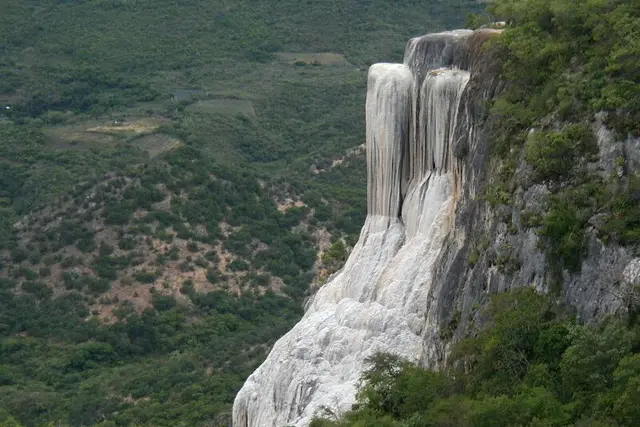
This is one of Oaxaca’s most visited sights, so plan around the crowd. Weekday mornings usually beat the day-trip groups, which tend to arrive later after visits to Monte Albán or Hierve el Agua. Opening times shift with services, so confirm them before you set out.
Everything nearby is walkable:
- Zócalo and the Cathedral: straight down Alcalá, about 10 minutes.
- Museo Textil de Oaxaca: a few blocks southwest, good for an hour.
- Museo Rufino Tamayo: pre-Hispanic art on Avenida Morelos.
- Mercado 20 de Noviembre: south of the Zócalo, for a meal after the museum.
A good rhythm is church first, museum second, then a tour of the garden if you have booked one. After that, drift back down Alcalá for lunch.
Frequently asked questions
How do I get to Templo de Santo Domingo de Guzmán?
Walk north from the Zócalo up the pedestrian Andador Macedonio Alcalá. The church sits at the top of the street in Oaxaca's Centro, about 10 minutes on foot.
How long should I spend there?
Allow 30 to 45 minutes for the church itself. Add about two hours for the Museo de las Culturas de Oaxaca in the former monastery, plus extra time if you join a guided tour of the ethnobotanical garden.
Can I visit the ethnobotanical garden on my own?
No. The Jardín Etnobotánico is open by guided tour only, and some tours run in English. Check the schedule at the gate on Calle Reforma, ideally a day in advance.
What is the best time to visit?
Weekday mornings tend to beat the tour groups. Hours shift around Masses and events, so confirm before you go. Come back after dark too, when the green stone façade is lit up.
What should I wear and can I take photos?
Cover your shoulders and knees, and take your hat off inside. Photos without flash are fine in the church when no service is on. The museum's photo rules are posted at its entrance.
Plan your trip to Oaxaca
Mexico eSIM & staying connected →
Some links above are affiliate links — if you book through them, Wander Atlas earns a small commission at no extra cost to you. It's how we keep every guide free.