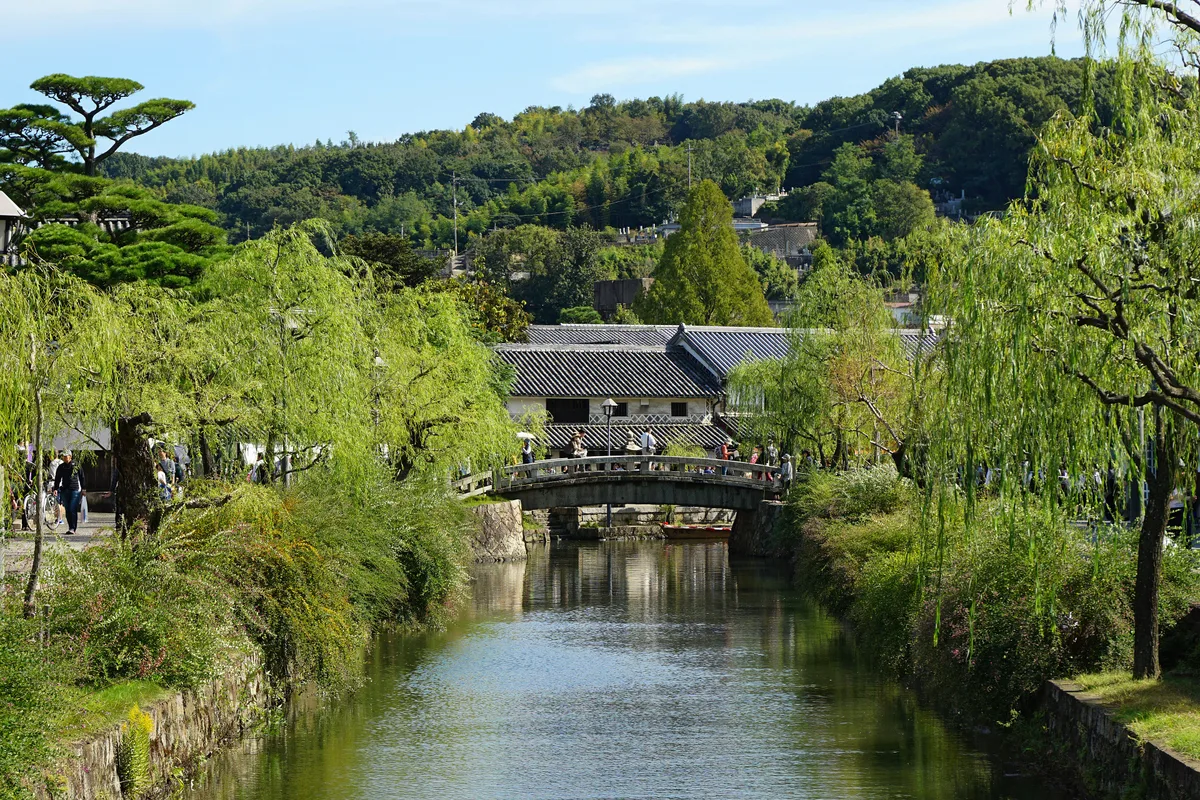
Willows, stone and black-and-white walls
A narrow canal runs between stone banks lined with weeping willows. Behind them stand rows of storehouses with white plaster walls set over a grid of black tiles. This is the Kurashiki River, and the few blocks around it make up the Bikan Historical Quarter. In the Edo period this was a shogunate-controlled town where rice and goods were collected and shipped out by water.
Today the storehouses hold shops, cafés and galleries, and stone bridges arch over the water. It’s one of the most-reviewed sights in Okayama Prefecture, so don’t expect to have it to yourself. What you can do is pick your hours well.
From Okayama Station to the canal
Getting here is easy. From JR Okayama Station, the JR San’yō Line reaches Kurashiki Station in about 15–17 minutes. If you’re coming by shinkansen, change at Okayama.
- Leave Kurashiki Station by the south exit.
- Walk straight down Kurashiki Chūō-dōri for 10–15 minutes.
- Turn left where the willows begin.
- Coin lockers at the station mean you don’t have to drag luggage over the bridges.
Give yourself at least half a day. If you add the Ōhara Museum and an evening walk, a full day or an overnight stay makes sense.
Reading the walls: namako-kabe and the kura
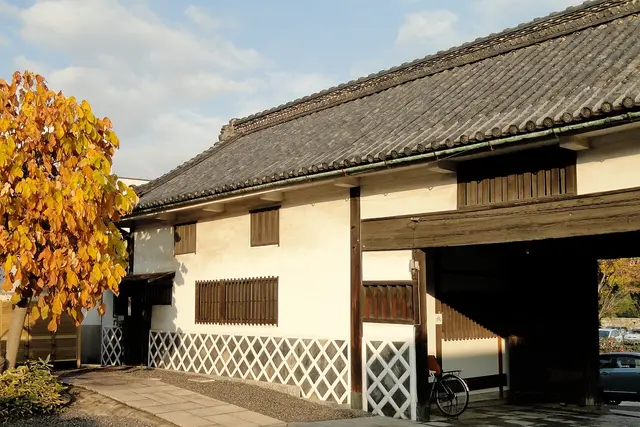
The walls are the signature here. The black-and-white grid is called namako-kabe: square tiles fixed with raised seams of white plaster. The design protected the kura (storehouses) from fire and damp. Look up as you walk and you’ll also see heavy tiled roofs and small barred windows.
Wander the lanes back from the canal, like Honmachi and Higashimachi. The same style continues there in wooden townhouses with latticed fronts, and these lanes usually have fewer people than the water’s edge.
Kurashiki-kan, the white wooden Western-style former town hall by the canal, houses the tourist information centre. Pick up a map there before you head off.

Ōhara, Ivy Square and the hill above
Three stops anchor the quarter.
- Ōhara Museum of Art: opened in 1930 as Japan’s first museum of Western art. Its collection includes El Greco’s Annunciation and works by Monet. The Greek-temple façade stands right on the canal.
- Ivy Square: the former Kurashiki Spinning Company mill. The red-brick buildings are thickly covered in ivy, and the inner courtyard is a quiet place to pause.
- Achi Shrine: at the top of the steps on Tsurugatayama hill. It looks down over the tiled roofs of the old town.
Smaller museums are also close by, including the Kurashiki Museum of Folkcraft and the Japan Rural Toy Museum. Museum hours change through the year and some close on set weekdays, so check each official site before planning around them.
Indigo, denim and what to eat
Indigo is everywhere. The Okayama coast, especially nearby Kojima, is known across Japan for denim. In the quarter you’ll find jeans, bags and small indigo-dyed goods sold in old storehouses.
Food leans on the prefecture’s farms. Look for:
- White peaches and Muscat grapes in season, often in parfaits and sweets
- Mamakari, a small local fish served as sushi
- Kibi dango, the Momotarō-legend sweet sold all over Okayama
Shops and cafés keep their own hours, which are much shorter than the 24-hour streets. Many close by early evening.
Beating the weekend crush on the Kurashiki River
Timing matters most on weekends, and the foot-traffic data is clear. Weekends are busiest from 10am to 7pm. That’s when tour groups arrive and people bunch up on the bridges for photos.
The quietest window measured is 7am–11pm on both weekdays and weekends. Within it, the stretches before 10am and after 7pm are the calmest. Stay overnight and you can walk the canal at 7am while the shutters are still down.
A few habits help:
- Boats: the flat-bottomed Kurashiki River boats are steered by a boatman with a pole. Tickets are sold at the counter near Kurashiki-kan, and departures fill up on busy days. Buy yours first, then explore.
- Eating: snacking while you walk is frowned on here. Finish your peach soft-serve beside the stall where you bought it.
- Paying: cards and IC transit cards work in many places. Small craft stalls may still prefer cash.
- Neighbours: people live in some of these townhouses. Keep your voice down early and late, and don’t step into doorways for photos.
- Rickshaws: give way to them on the narrow canal paths.
When the lamps come on
The quarter is open 24 hours a day. Once the day-trippers catch their trains home, it becomes a different place. After dark, lamps light the canal and the willows, and the white walls show up against the dark water.
Most shops will be shut by then, so treat the evening as a walk rather than a shopping trip. Start at Kurashiki-kan, cross the stone bridges and loop back via Ivy Square. It’s the best reason to book a room nearby rather than visiting from Okayama for the day.
Frequently asked questions
How do I get to Kurashiki Bikan Historical Quarter from Okayama?
Take the JR San'yō Line from Okayama Station to Kurashiki Station, which takes about 15–17 minutes. Then leave by the south exit and walk 10–15 minutes down Kurashiki Chūō-dōri to the canal.
When is the quietest time to visit?
Measured foot traffic marks 7am–11pm as the quietest window on both weekdays and weekends. Weekends are busiest from 10am to 7pm, so on Saturdays and Sundays aim for before 10am or after 7pm.
How long should I spend there?
Half a day covers the canal, the side lanes and one museum. With the Ōhara Museum of Art, Ivy Square, Achi Shrine and an evening walk, plan a full day or stay overnight.
Is the quarter open at night?
Yes, the streets are open 24 hours, and the canal is lamp-lit after dark. Shops, cafés and museums keep much shorter hours, so check each one before you go.
What else is nearby?
The Ōhara Museum of Art, Ivy Square (the former spinning mill), Achi Shrine on Tsurugatayama hill, the Kurashiki Museum of Folkcraft and the Japan Rural Toy Museum are all within walking distance.
Plan your trip to Okayama
Japan eSIM & staying connected →
Some links above are affiliate links — if you book through them, Wander Atlas earns a small commission at no extra cost to you. It's how we keep every guide free.