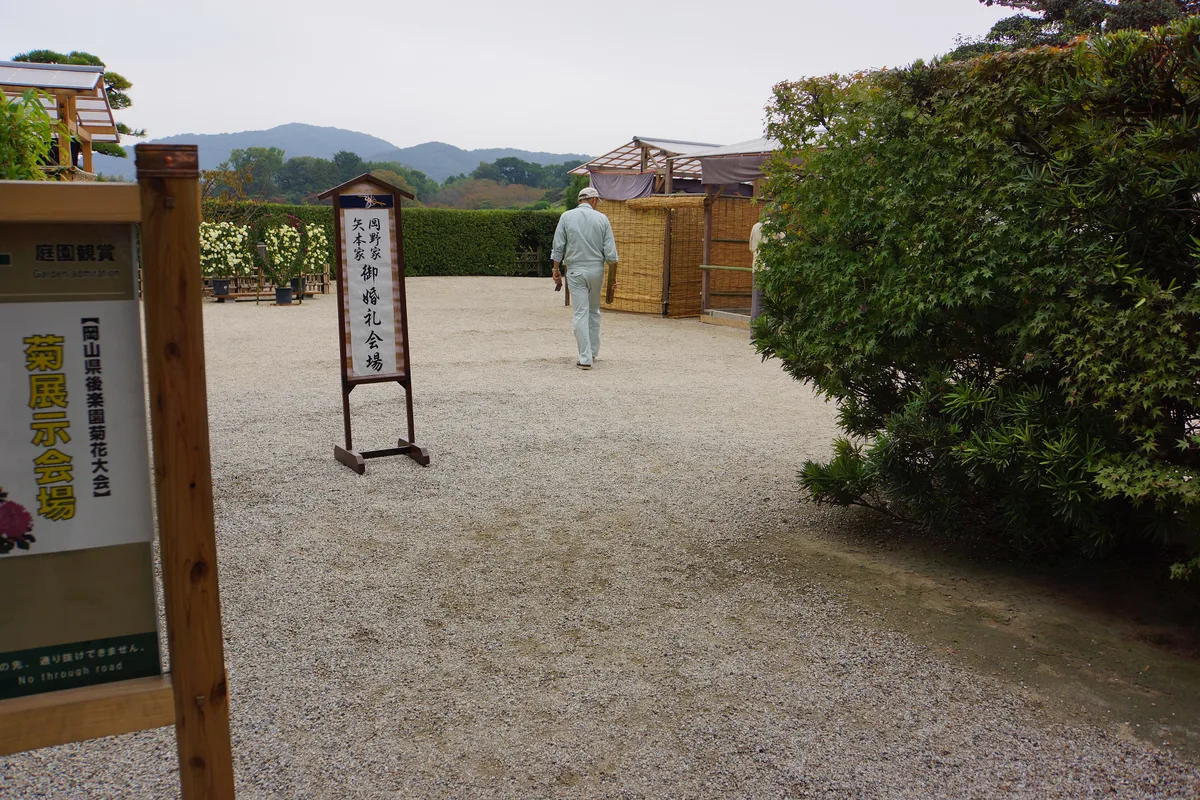
A lord’s garden on a river island
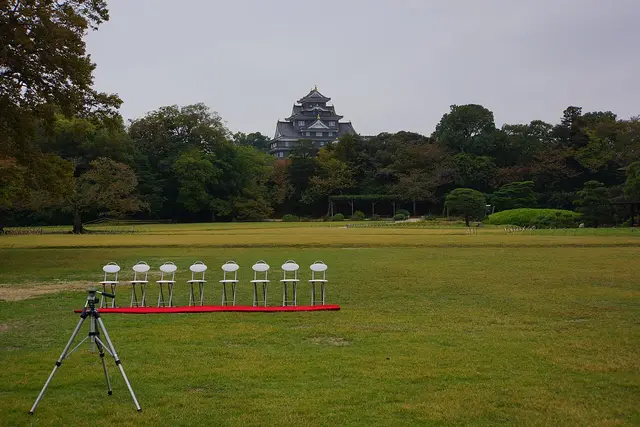
Okayama Korakuen sits on a sandbank in the Asahi River. On the far bank, the black walls of Okayama Castle rise over the treetops. The garden was built so that its lord could look at that castle from his own pond.
Ikeda Tsunamasa, the daimyo of Okayama, began the garden in 1687, and it was finished around 1700. It is a kaiyū-shiki garden, which means it is designed to be walked in a loop. Each bend of the path shows you a new view of water, hill or distant roof.
It was badly damaged by floods in 1934 and by wartime bombing in 1945. It was then restored using Edo-period paintings and records. Today it is counted with Kenroku-en in Kanazawa and Kairaku-en in Mito as one of the Three Great Gardens of Japan.
Reading the layout
The garden is more open than most visitors expect. Wide, close-cut lawns cover much of the ground, which is unusual for a Japanese garden. They let your eye run all the way to the castle and to the hills beyond the walls.
Landmarks to steer by:
- Sawa-no-ike, the large central pond, with small islands and stone lanterns along its edges
- Yuishinzan, a man-made hill with a path that spirals to the top; climb it first to see the whole layout
- Enyō-tei, the lord’s residence, where the classic pond view was framed
- Ryūten, a small open rest house with a stream running through its floor between flat stones
- Tea fields and rice paddies, which are still planted, a reminder that this was a working estate
- The plum and cherry groves and the Chishio-no-mori maple grove, each at its best in a different season
The cranes of Korakuen
The cranes are the garden’s real signature. Red-crowned cranes (tanchō) are kept in an enclosure inside the grounds. You will see white bodies, black neck feathers and the red patch on the crown, and these birds are a symbol of long life in Japan.
The flock has a long link to the garden. On New Year’s Day the cranes are traditionally let out to walk the lawns, and on some other dates too, which draws crowds who come to watch. If you are visiting at New Year, check the garden’s official site for this year’s schedule. On any other day, you can usually see them in their enclosure.

Timing your loop
Weekdays are the easy option. Foot traffic stays at its lowest all day, from 8am to 5pm. A Tuesday afternoon is as calm as a Tuesday morning.
Weekends work differently. The quiet window is short, just 8am–9am. Try not to arrive between 10am and 4pm on a Saturday or Sunday, because the pond paths and the top of Yuishinzan get crowded. At the moment the garden opens 8am to 5pm, but hours change with the season. The garden also holds evening illuminations in some months, so check the official site for this month’s times.
Each season brings something different:
- Late winter: plum blossom
- Spring: cherry trees by the river
- Summer: green lawns and lotus on the ponds
- Autumn: maples turning in Chishio-no-mori
Getting there from Okayama Station
The easiest route uses the Okayama Electric Tramway (Okaden). From the stop in front of JR Okayama Station, ride the Higashiyama line to Shiroshita. From there it is about a 10-minute walk east, past the castle, to the river.
Okaden buses to the Korakuen-mae stop leave you closer to the main gate. Walking the whole way from the station takes about 25 minutes along wide, flat streets. JR Okayama Station is a Shinkansen stop on the Sanyō line, so a half-day visit fits between trains.
Walking the garden properly
A few habits make the visit easier, both for you and for the gardeners.
- Buy your ticket at the gate. Ask about the combined ticket with Okayama Castle if you plan to see both. Prices are posted at the ticket window.
- Keep off the lawns. They are roped or signed, and the grass is kept in condition for the views, not for picnics.
- Walk the loop in one direction. Paths are narrow in places, so keeping to one direction means you are not always stepping aside for oncoming groups.
- Sit down at Ryūten. People stop here to listen to the stream. Talking quietly in the rest houses is expected.
- Bring the castle into your plan. Leave by the south gate and cross the Tsukimi bridge to reach Okayama Castle in a few minutes.
- Look for the tea house. Matcha with a seasonal sweet is a common way to break up the walk.
Beyond the garden walls
Korakuen is one stop on a compact cultural cluster, and you can walk to the others.
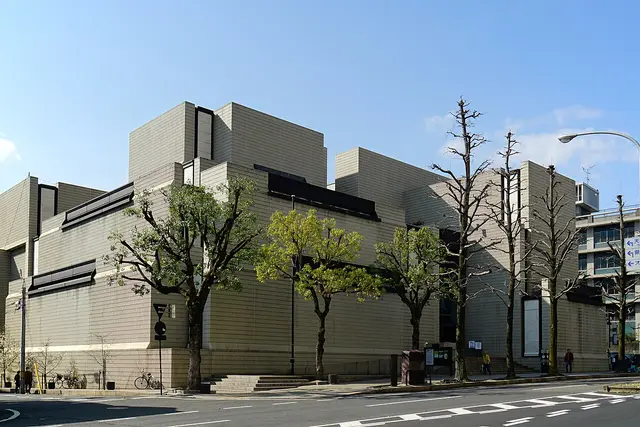
Okayama Castle, known as U-jō or “Crow Castle” for its black cladding, is just across the river. Near the garden’s main gate is the Okayama Prefectural Museum, which covers local history. A little to the north is the Yumeji Art Museum, devoted to the painter Takehisa Yumeji.
On the way back to the station, look for kibi dango. These soft millet dumplings are Okayama’s classic souvenir, and they are linked to the Momotarō folk tale that the city has adopted as its own.
Frequently asked questions
When is the quietest time to visit Okayama Korakuen?
On weekdays it is quiet all day, from 8am to 5pm. On weekends, arrive between 8am and 9am, and avoid 10am–4pm, which is the busiest stretch.
How do I get to Korakuen from JR Okayama Station?
Take the Okaden tram (Higashiyama line) to Shiroshita, then walk about 10 minutes. You can also take an Okaden bus to Korakuen-mae, or walk about 25 minutes from the station.
How long should I spend at Korakuen?
Plan on 1.5–2 hours for the loop, the climb up Yuishinzan and a tea stop. Add an hour or more if you cross the bridge to Okayama Castle.
Can I see the cranes?
Red-crowned cranes live in an enclosure inside the garden, so you can usually see them. They are traditionally let out onto the lawns on New Year's Day; check the official site for this year's dates.
What are the opening hours?
Currently 8am–5pm, but the hours change with the season and there are evening illuminations in some months. Check the official Korakuen site for this month's times.
Plan your trip to Okayama
Japan eSIM & staying connected →
Some links above are affiliate links — if you book through them, Wander Atlas earns a small commission at no extra cost to you. It's how we keep every guide free.