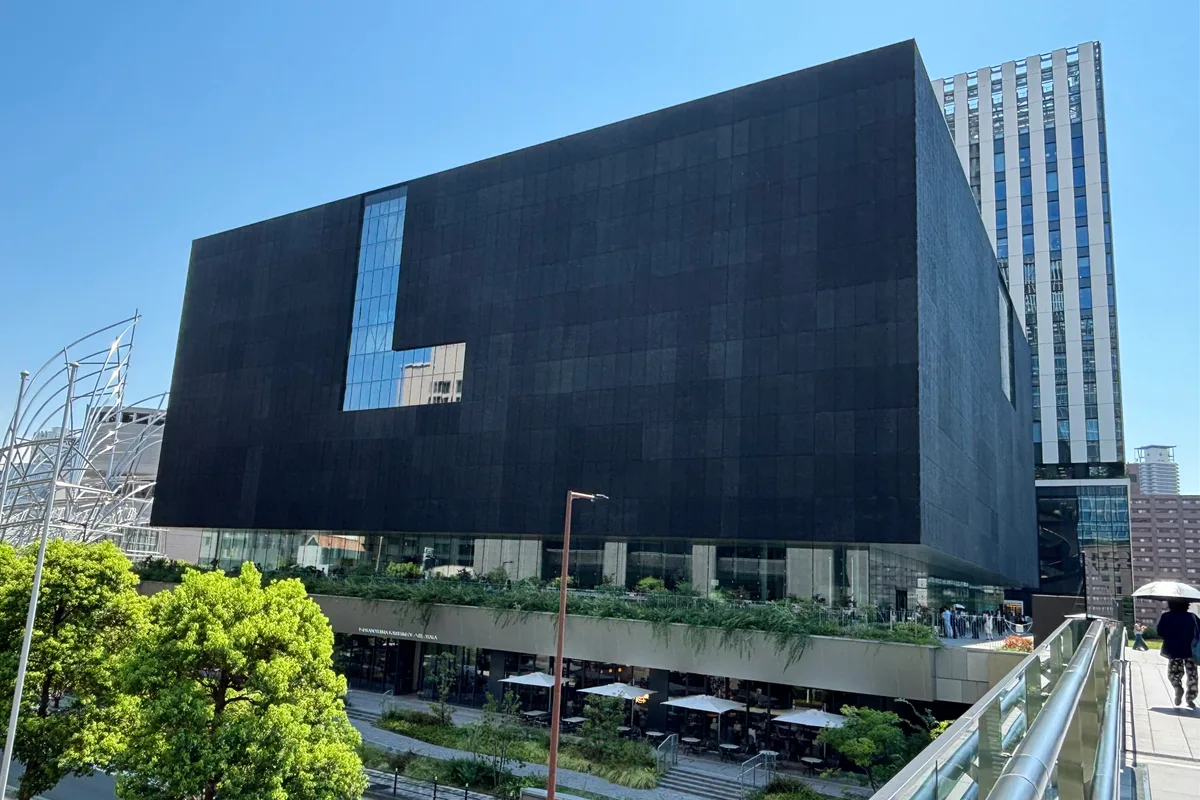
The building itself is the first exhibit: a matte black cube, five storeys tall, raised on stilts above a plaza of grey pavers. Architect Endo Yoshiaki designed it as a floating box, and from the riverside promenade along the Dojima River it reads less like a museum entrance and more like a piece of sculpture that happens to have doors.
Those doors open into a soaring atrium that runs almost the full height of the building, lit from above and lined with black steel stairs that zigzag between floors. There’s no ground-floor lobby in the traditional sense; you ride an escalator up through this dark shaft before the galleries themselves reveal anything, which is a deliberate bit of theater and one of the reasons the place gets photographed as much as its art.
What’s actually in the collection
NAKKA opened in 2022 after decades of the city’s art holdings sitting in storage, and the permanent collection reflects that backlog: over 6,000 works spanning modern and contemporary Japanese and international art.
Expect strong representation of Japanese modernism (Sakata Kazuo, Yoshihara Jiro and other Gutai-adjacent figures), plus Western modern art including a well-known Modigliani portrait the museum highlights in its own marketing. The permanent collection rotates in themed hangs rather than staying static, so what’s on view changes even between visits a year apart.
Special exhibitions occupy separate floors and usually charge a separate admission from the collection displays. These have ranged from single-artist retrospectives to design and photography shows, and they’re the main reason ticket lines form on weekends.
Finding it on Nakanoshima
The museum sits at the western end of Nakanoshima, the narrow island that splits the Dojima and Tosabori rivers through central Osaka.
- Nearest station: Watanabebashi Station (Keihan Nakanoshima Line), about a 5-minute walk
- Also walkable from Yodoyabashi and Higobashi stations (Midosuji and Yotsubashi lines), roughly 12-15 minutes
- Neighbors include other Nakanoshima cultural institutions and the National Museum of Art, Osaka, just across the plaza, so pairing the two in one afternoon is easy and common
Because the National Museum of Art is essentially next door and partly underground, many visitors do both museums back to back rather than choosing one.

Timing your visit around the crowds
The museum is genuinely popular rather than a quiet local spot, and weekends show it: expect steady crowds from 11am to 5pm on Saturdays and Sundays, especially when a headline special exhibition is running.
Arriving right at the 10am opening on a weekday is the simplest way to get the atrium and early galleries to yourself before tour groups and school trips filter in through the late morning. If a weekend is your only option, getting there at opening still beats waiting until after lunch, when the ticket counter and escalators both back up.
Remember the museum is closed all day Monday, which catches out travelers used to Tuesday-closure schedules common at other Japanese museums.
Tickets and moving through the building
Permanent collection and special exhibition tickets are usually sold separately, and a combined ticket is often available at a modest discount if you plan to see both.
Buy tickets at the machines or counter just past the ground-floor entrance; advance online tickets exist for popular special exhibitions and are worth booking ahead if a blockbuster show is on. Cash and IC cards (Suica, ICOCA and similar) are both accepted at the ticket counters and in the gift shop.
- Coin lockers are on the lower floors for bags and coats
- The escalator sequence up through the atrium is one-directional during busy periods, so backtracking floors isn’t always simple
- The top-floor café and shop are worth the extra escalator ride even if you skip the current special exhibition, for river views back toward central Osaka
Making an afternoon of Nakanoshima
Once you’re done inside, the island itself rewards a slow walk. Nakanoshima Park runs along the water just east of the museum, with a rose garden that’s at its best in spring and autumn.
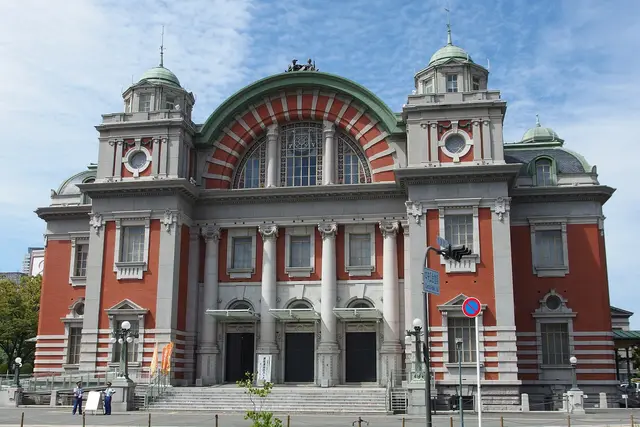
The Osaka Central Public Hall, a domed Renaissance-style building from 1918, sits a short walk further along and makes a striking contrast to NAKKA’s black steel exterior. Riverside cafés along the Dojima side give you a place to sit with those two very different buildings in view at once.
Frequently asked questions
How do I get to the Nakanoshima Museum of Art, Osaka?
Walk about 5 minutes from Watanabebashi Station on the Keihan Nakanoshima Line, or roughly 12-15 minutes from Yodoyabashi or Higobashi stations on the Midosuji or Yotsubashi lines.
What days is NAKKA closed?
It's closed every Monday. Tuesday through Sunday it runs 10:00 AM to 5:00 PM.
When is the museum least crowded?
Weekends see steady crowds from 11am to 5pm, so arriving right at the 10am opening on a weekday is the best way to avoid lines, especially during a popular special exhibition.
How long should I plan to spend there?
Budget 90 minutes for the permanent collection alone, or up to two to three hours if you're also seeing a special exhibition.
Is it worth combining with other sights nearby?
Yes. The National Museum of Art, Osaka is right across the plaza, and Nakanoshima Park and the Osaka Central Public Hall are a short walk further along the island.
Plan your trip to Osaka
Japan eSIM & staying connected →
Some links above are affiliate links — if you book through them, Wander Atlas earns a small commission at no extra cost to you. It's how we keep every guide free.