A city race in late November
Osaka closes its own roads for this one. The Osaka Marathon is the city’s big annual road race, and the 2026 edition takes place in late November. Runners come from across Japan and from abroad.
The race first ran in 2011. Since then it has grown into one of the country’s best-known city marathons. Much of its appeal comes from the course, which runs through neighbourhoods most visitors only see from a train window.
The organisers publish the exact date, the course map and the entry links on the race’s official site. That site is the single reference point for anything that changes from one year to the next.
Under the castle walls
Recent editions have used Osaka Castle Park as the race’s hub. The park is big and open, with the stone ramparts and moats of Osaka Castle at its centre. Wide avenues run along its western side by the Osaka Prefectural Government offices.
Earlier editions, from 2011 to 2019, finished out at INTEX Osaka in the bayside Suminoe area. If you find older race reports describing a waterfront finish, that is the reason. The course map on the official site shows the current layout.
Around the start, runners spread across the park’s lawns and paths in the cold early light. Some warm up along the moat, and long lines form at the temporary toilets. Spectators usually split away from the runners here and head to points along the route.
Getting a bib: how entry works
There are no tickets for spectators. Watching from the roadside is open to anyone. Runners, on the other hand, need a place in the field, and in past editions most general places have gone through a lottery.
The main entry routes in past years have been:
- General lottery entry, the route most domestic and overseas runners use
- Charity entry, where runners commit to fundraising in exchange for a place
- Specialist and elite categories, which come with qualifying requirements
Entry fees, deadlines and the rules for overseas applicants sit on the official site’s entry pages. This guide doesn’t quote any of them, because they change from edition to edition.
Race-morning trains to the park
On race day the trains to Osaka Castle Park are packed with runners in tracksuits and throwaway layers. The park has several stations around its edges:
- Morinomiya Station: JR Osaka Loop Line, plus Osaka Metro Chuo and Nagahori Tsurumi-ryokuchi lines, on the park’s southeast corner
- Osakajokoen Station: JR Osaka Loop Line, on the east side
- Tanimachi 4-chome Station: Osaka Metro Tanimachi and Chuo lines, by the government offices to the southwest
- Temmabashi Station: Osaka Metro Tanimachi Line and Keihan Line, to the northwest
Runners staying in Umeda or Namba usually ride the Loop Line or the Tanimachi Line. Both take only minutes to reach the park. An ICOCA card, or any national IC card such as Suica, saves queueing at ticket machines on the busiest morning of the race weekend.
Midosuji in ginkgo season
Late November is when Osaka turns yellow. Midosuji, the broad boulevard linking Umeda in the north with Namba in the south, is lined with ginkgo trees, and their leaves usually reach full colour in late November and early December.
The city’s marathon courses have used Midosuji in past editions. If the current map does too, runners on that stretch pass between rows of gold trees with fallen leaves in the gutters. The cool air is also part of why autumn suits distance running here.
Spectators who want a classic photograph usually look for a straight stretch of the avenue under the trees. Stations along Midosuji include Yodoyabashi, Hommachi and Shinsaibashi on the Midosuji Line.
Cheering from the kerb, Osaka style
Osaka people are loud on race day, and visitors are welcome to join in. The usual shout is “ganbatte!” (keep going), often with a runner’s name if it is printed on their bib. Handmade signs and clapping sticks are common along the busier stretches.
A few habits keep the day running smoothly:
- Cross only where marshals direct you. The course is closed, and volunteers manage set crossing points.
- Carry your rubbish. Public bins are scarce in Japanese cities, and spectators usually take bottles and wrappers home.
- Keep off the racing line. Don’t step onto the road to pass a runner water or snacks. The official aid stations handle that.
- Expect the trains to be busy. Lines near the course stay crowded through the morning, so supporters following one runner usually plan two or three viewing points along a single line.
Cash still works almost everywhere, though cards and IC cards are now widely accepted at convenience stores and station kiosks. Tipping isn’t part of the culture here, at cafés or anywhere else.
Recovery: where runners eat and stay
After the finish, most runners want food. Osaka’s reputation for kuidaore, eating until you drop, suits the occasion. Post-race crowds often end up in these areas:
- Kyobashi, a short ride from the castle, known for standing bars and inexpensive izakaya
- Shinsekai, beneath Tsutenkaku tower, where kushikatsu (battered, deep-fried skewers) is the local dish
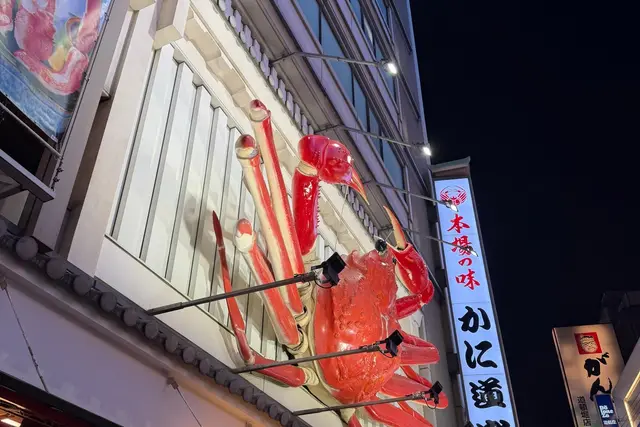
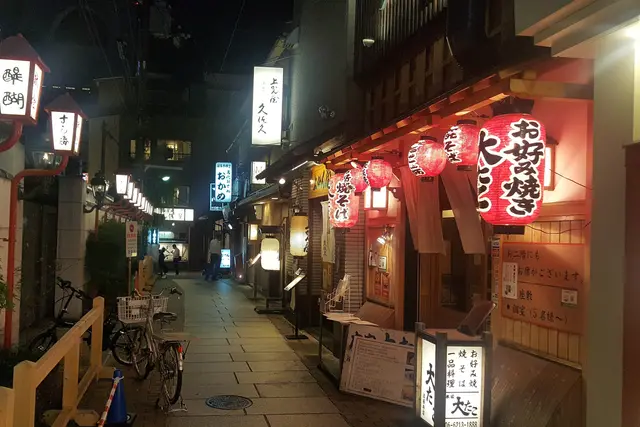
- Dotonbori and Namba, for okonomiyaki and takoyaki along the canal
Shinsekai’s kushikatsu counters keep a shared pot of dipping sauce, and dipping twice is not allowed. If you want more sauce, scoop it on with a piece of the cabbage served on the side.
For accommodation, runners usually stay near the Loop Line or the Tanimachi Line so race morning means one short ride. Kyobashi, Temmabashi and Tanimachi are the closest districts to the park, while Umeda and Namba have the widest choice of hotels.
Many visitors add a day for the city itself. The Osaka Castle main tower stands right beside the race hub. Its opening hours shift through the year, and the official site lists the current times.
Frequently asked questions
When is the Osaka Marathon in 2026?
The 2026 edition takes place in late November. The exact date, course map and entry details are on the race's official site.
Where does the Osaka Marathon start and finish?
Recent editions have used Osaka Castle Park as the race hub. Editions from 2011 to 2019 finished at INTEX Osaka by the bay, so older race reports describe a different layout.
Do spectators need tickets?
No. Watching from the roadside is free and open to anyone. Only runners need a place, and in past editions most general places have been allocated through a lottery, with charity and specialist entry routes as well.
Which station is closest to the start area?
Morinomiya (JR Osaka Loop Line, Osaka Metro Chuo and Nagahori Tsurumi-ryokuchi lines) and Osakajokoen (JR Loop Line) are on the park's east side. Tanimachi 4-chome and Temmabashi serve the western side.
What is there to do near the course after the race?
Osaka Castle is right beside the hub. Kyobashi has izakaya a short ride away, Shinsekai is known for kushikatsu under Tsutenkaku, and Dotonbori in Namba is the place for okonomiyaki and takoyaki.
Plan your trip to Osaka
Japan eSIM & staying connected →
Some links above are affiliate links — if you book through them, Wander Atlas earns a small commission at no extra cost to you. It's how we keep every guide free.