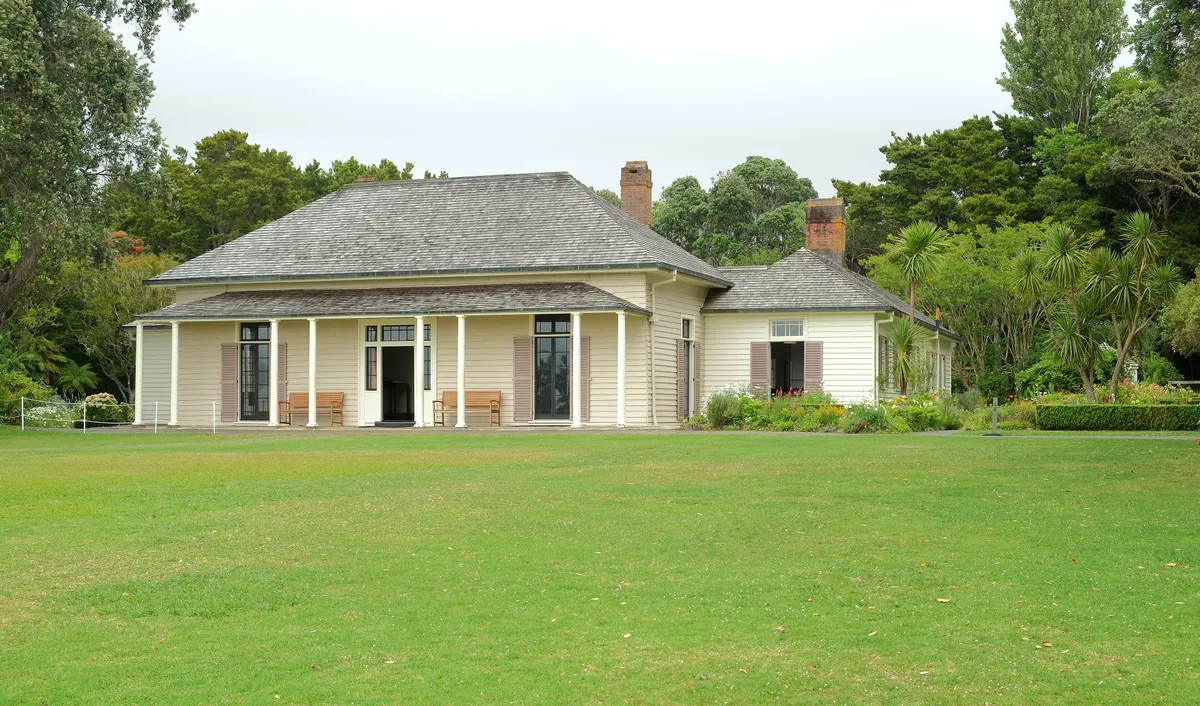
A lawn that slopes down to the bay
A tall white flagstaff stands on a wide sweep of mown grass above the water. It marks roughly where, on 6 February 1840, Māori rangatira and representatives of the British Crown met to sign the Treaty of Waitangi. New Zealanders still argue over what that document promised, and you’ll understand the argument much better after an afternoon here.
The grounds sit on a headland where the Waitangi River meets the Bay of Islands. Pōhutukawa trees line the shore. Paihia’s motels and ferry wharf are a short walk south. This is the most visited historic site in Northland, so expect company.
What you’ll actually walk through
The site is spread out, and the buildings each tell a different part of the story:
- Te Kōngahu Museum of Waitangi: the main exhibition, built around facsimiles of the treaty in te reo Māori and English. It sets out how the two texts differ.
- The Treaty House: James Busby’s small colonial home, framed from timber pre-cut in Sydney in the 1830s. It’s one of the oldest surviving houses in the country.
- Te Whare Rūnanga: a carved meeting house opened for the 1940 centenary. Its carvings come from iwi across the country.
- Ngātokimatawhaorua: a ceremonial war canoe roughly 35 metres long, carved from kauri for the same centenary. It sits in an open-sided shed near the beach.
- Te Rau Aroha: a museum about Māori service in the armed forces, including the 28th (Māori) Battalion.
Admission usually includes a guided walk and a cultural performance. Ask at the visitor centre desk for the day’s start times and plan the rest of your visit around them.
Getting there from Paihia
Walking is the easy option. Head north along Marsden Road, which follows the waterfront from the Paihia wharf. Cross the Waitangi River bridge and turn up Tau Henare Drive. It’s about 2km and mostly flat, with the bay on your right the whole way.
If you’re driving, there’s parking at the visitor centre. From Kerikeri it’s roughly a 25-minute drive. Coming from Auckland on State Highway 1, budget around three and a half hours.
Shoes off at Te Whare Rūnanga
The meeting house is part of a marae, and the usual marae protocol applies. Take your shoes off before you step inside. Leave food and drink outside. Don’t sit on the tables or step over people sitting on the floor.
The cultural performance sometimes opens with a formal challenge and welcome. When the hosts lead, follow them. Stay quiet during speeches and waiata, and only take photos once your guide says it’s fine. In the carving, the guides will point out which ancestor each figure stands for. Those are named people to their descendants, so leave the touching to the guides.
Use the Māori names; staff do. Say Waitangi as “why-tung-ee”, not “wait-angie”. A simple kia ora at the desk goes down well. At the waka shed, look but don’t climb in. Ngātokimatawhaorua is a working canoe, still paddled every Waitangi Day.
Picking your day and your hours
Waitangi Day, 6 February, is a national holiday. On that day the grounds become the centre of national commemorations, with speeches from politicians, a dawn service and the waka launched onto the bay. It’s crowded and often politically charged, and it’s worth seeing. Just don’t come expecting a quiet look at the museum.
For an ordinary visit, start in the morning. Do Te Kōngahu first, while you’re fresh, because the context there makes everything outside easier to read. Then join the guided walk and the performance, and finish at the Treaty House and flagstaff in the afternoon.
Summer, from December to February, brings cruise ships and school holidays to the Bay of Islands, so the busiest times of year come in those months. The guided walk is mostly outdoors on grass and gravel. Bring a hat in summer and a rain layer in winter.
Haruru Falls, Russell and the rest of the bay
A walking track leads from near the grounds through mangrove wetland to Haruru Falls. It uses boardwalks in places, and the falls are a wide horseshoe on the Waitangi River. Plan on a couple of hours one way at an easy pace.
Back in Paihia, passenger ferries cross the bay to Russell, once called Kororāreka. It was a whaling port with a rough reputation before the treaty. Christ Church, the oldest surviving church in New Zealand, still has musket-ball holes in its weatherboards. Seeing Russell and Waitangi on the same trip gives you both sides of the 1830s and 1840s.
Frequently asked questions
How do I get to Waitangi Treaty Grounds from Paihia?
Walk north along the Marsden Road waterfront from the Paihia wharf, cross the Waitangi River bridge and turn up Tau Henare Drive. It's about 2km and takes roughly 30 minutes. If you drive, there's parking at the visitor centre.
How long should I spend there?
Allow three to four hours. That covers Te Kōngahu Museum, the guided walk, the cultural performance, the Treaty House and the waka. Add Te Rau Aroha and you could easily fill most of a day.
What are the opening hours?
At the moment it opens 9am–5pm. Hours change through the year and on some special days, so check the official Waitangi Treaty Grounds website before you go.
Is it worth visiting on Waitangi Day?
Yes, if you want to see the national commemorations and the waka Ngātokimatawhaorua out on the water on 6 February. Expect big crowds and speeches. For a calm look at the museums, choose another day.
What else is nearby?
From near the grounds, a mangrove walking track runs to Haruru Falls. You can also take a ferry from Paihia across the bay to Russell, where Christ Church is the oldest surviving church in New Zealand.
Plan your trip to Paihia
New Zealand eSIM & staying connected →
Some links above are affiliate links — if you book through them, Wander Atlas earns a small commission at no extra cost to you. It's how we keep every guide free.