Bogwangsa: Paju Travel Guide (4.5★)
When to visit South Korea: month-by-month weather, crowds and holidays →
✓ Facts verified via Google Places · Sep 20, 2026
At a glance
How this guide is made
Produced with AI assistance and reviewed against live data sources. Facts such as hours, ratings, and location come from Google Places; images are licensed or public domain. Details can change — please verify before visiting. Editorial policy
The road into Bogwangsa narrows to a single lane through pine forest, and you park before you see any part of the temple itself. That’s deliberate: the walk in, past a stream and a stone bridge, is part of how the place is meant to be approached, not an inconvenience to rush through.
What’s actually there
Bogwangsa is a functioning temple, not a museum, so you’ll find monks going about their routines alongside visitors.
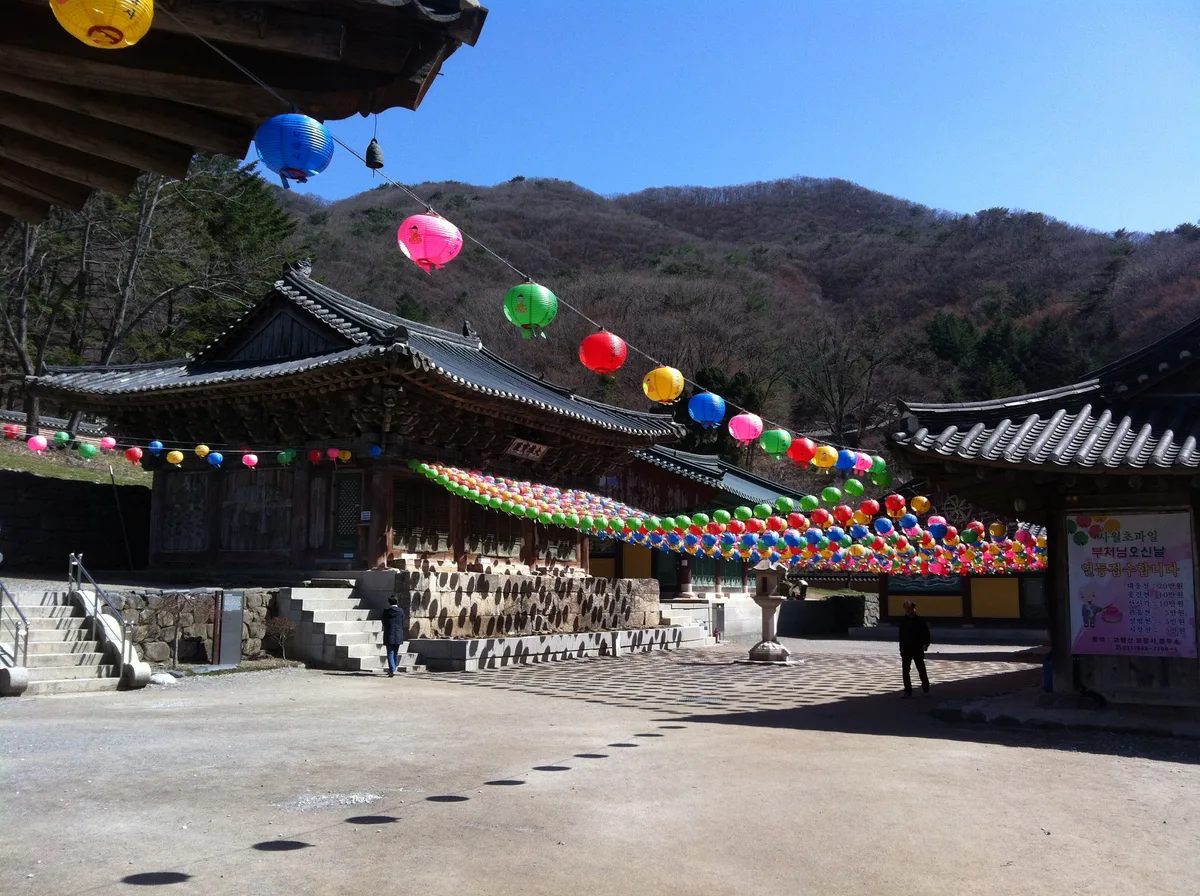
The main hall, Daeungjeon, holds the central Buddha triad and is where most people stop first. Behind and around it sit smaller shrine halls, a bell pavilion, and a scatter of stone pagodas that have accumulated over the temple’s long history on this site.
Look for the painted eaves under the main hall’s roofline: the dancheong colorwork here is some of the more vivid you’ll see at a temple this size, greens and reds that haven’t been dulled by heavy tourist traffic.
The setting on Mount Bobawsan
The temple sits on the lower slopes of Bobawsan, and that hillside setting does most of the work. Forest presses in close on three sides, so even the temple courtyard feels enclosed rather than open to a parking lot or road.
A short trail continues up from the temple grounds into the hillside pines. You don’t need hiking gear for it, just decent shoes, and it’s a good add-on if you’ve already seen the halls and want another twenty minutes outdoors.
When to go
Bogwangsa is open 24 hours, every day of the week, which is typical for an active temple where dawn and evening chanting happen year-round. That means there’s no opening time to plan around.
The busiest window is weekends between 9am and 6pm, when day-trippers from Seoul and Paju combine with regular worshippers. If you want the courtyard closer to empty, aim for a weekday, or get there before mid-morning on a weekend before the bulk of visitors arrive.
Spring and autumn are the most comfortable seasons here: the surrounding hillside turns either flowering or russet, and the temperature makes the walk in from the parking area pleasant rather than a slog.
Temple etiquette that actually matters here
Bogwangsa is a working religious site, so basic courtesy goes further than at a purely historical monument.
- Keep voices low inside and near the halls; services and private prayer happen throughout the day.
- Remove shoes before stepping onto the raised wooden floors of any hall you enter.
- Photography of the exterior and courtyard is fine; check for posted signs before photographing inside halls, since some restrict flash or photos of the altar.
- Dress modestly: shoulders and knees covered is the safe default.
- If you see monks in the middle of a ceremony, it’s fine to observe quietly from the courtyard rather than stepping inside.
There’s no admission booth and no ticket to buy, so there’s nothing transactional to navigate; the main thing to get right is behaving like a guest in someone’s place of worship rather than a sightseer at a monument.
Getting there from Seoul or central Paju
Bogwangsa sits well outside Paju’s more visited clusters like Heyri Art Village or Paju Book City, so it isn’t a casual add-on to those trips without a car.
Driving is the most practical option: it’s roughly 40 to 50 minutes from central Seoul depending on traffic, with parking available near the temple entrance. Public transit involves a bus connection from Paju’s town center and a walk in from the nearest stop, so budget extra time if you’re relying on it.
Because it draws a steady but not overwhelming crowd, this is a reasonable stop to pair with a slower, half-day itinerary in northern Paju rather than a packed sightseeing loop. Give yourself 45 minutes to an hour for the halls and courtyard, longer if you take the trail up the hillside.
Frequently asked questions
Is there an entrance fee for Bogwangsa?
No, there's no admission charge to enter the temple grounds; donations are welcome but not required.
What are Bogwangsa's opening hours?
The temple grounds are open 24 hours every day, though most halls have their own quieter rhythms tied to morning and evening chanting.
When is Bogwangsa least crowded?
Weekends from 9am to 6pm are the busiest window. Weekday mornings or early evenings give you a much quieter courtyard.
How do I get to Bogwangsa from Seoul?
Driving takes roughly 40 to 50 minutes depending on traffic, with parking near the temple entrance. Public transit requires a bus from central Paju plus a walk, so allow extra time.
How long should I plan for a visit?
Most visitors spend 45 minutes to an hour seeing the main halls and courtyard; add 20 to 30 minutes if you walk the trail up the adjacent hillside.
Plan your trip to Paju
Some links above are affiliate links — if you book through them, Wander Atlas earns a small commission at no extra cost to you. It's how we keep every guide free.