Why go
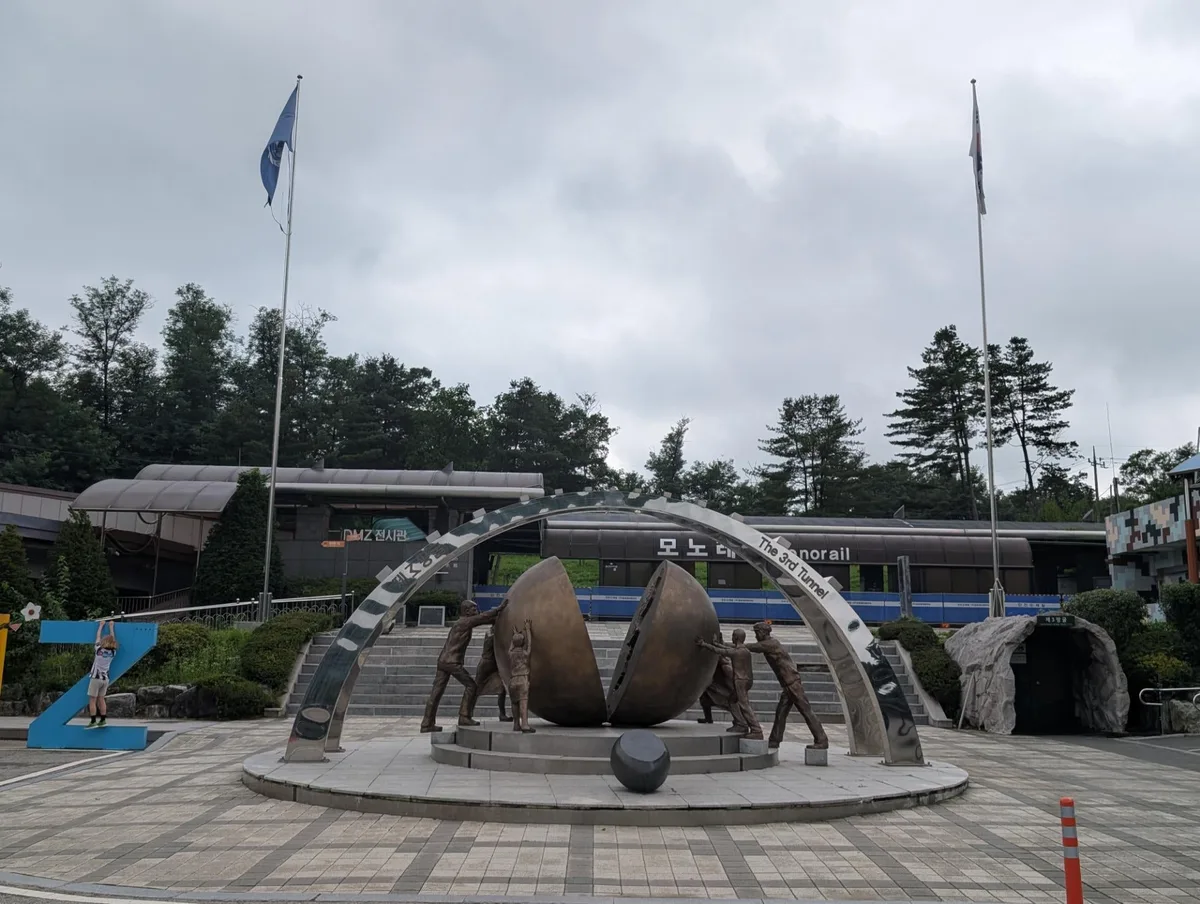
The Third Tunnel of Aggression is one of four known tunnels North Korea dug under the Demilitarized Zone, discovered in 1978 after a tip from a North Korean defector. Built through solid granite roughly 73 meters below ground, it was engineered to move an estimated 30,000 soldiers per hour toward Seoul, only about 44 km away. Unlike the more remote First and Second Tunnels, the Third is the most accessible to international visitors and the most frequently included on organized DMZ itineraries, which explains its strong reputation among travelers (a 4.6 rating across roughly 3,250 reviews).
It pairs history with a rare physical experience: walking into an actual invasion tunnel, hard hat on, well below the surface.
Getting there
The Third Tunnel sits inside the Civilian Control Zone in Gunnae-myeon, Paju-si, Gyeonggi-do, and cannot be visited independently, access requires a registered tour operator or the DMZ Train/shuttle system coordinated with the Ministry of National Defense. Most visitors join a half-day or full-day tour departing from central Seoul (Hongik University, Itaewon, or Myeongdong pick-up points are common), which bundles the tunnel with Dora Observatory and Dorasan Station.
There is no direct subway line to the tunnel itself, so trying to arrive by public transport alone is not realistic, build the day around a booked tour rather than DIY transit. Bring your passport; security checkpoints along the way will ask for ID, and entry is denied without one.
What to see and do
Tours typically begin at the Third Tunnel Visitor Center, where a short film outlines the tunnel’s 1978 discovery and the broader history of DMZ infiltration attempts. From there, visitors descend via a steep monorail (included for most ticket packages) or a long sloped walkway down to the tunnel entrance. The walkway is a workout on the way back up, so pace yourself.
Inside, the tunnel is narrow and low-ceilinged in sections; hard hats are mandatory and genuinely useful, as taller visitors will hit their heads on the rock ceiling more than once. The walkable section extends to the third of three concrete blockades installed to prevent further southward movement, where a small viewing window lets you look toward the next barrier line.
Photography is prohibited underground, so this is a place to experience rather than document. Above ground, the adjacent DMZ Theater and Exhibition Hall display maps, relief models of all four discovered tunnels, and artifacts related to the armistice.
When to go and how long to spend
Plan for 1.5 to 2 hours at the tunnel itself, including the film, the descent, the walk, and the return climb, though full-day DMZ tours combining multiple sites often run 6–8 hours total. Spring (April–May) and autumn (September–October) offer the most comfortable walking conditions both underground and at the outdoor overlooks nearby. Weekday visits tend to be quieter than weekends, though tour bus volume is fairly steady year-round given the tunnel’s fixed role in almost every DMZ itinerary.
Note that the site occasionally closes for South Korea–North Korea diplomatic events or military exercises, so operators may substitute another stop, always confirm your tour is running as scheduled a day or two before departure.
Nearby and practical tips
Because access rules and hours here are tied to military administration rather than a typical museum schedule, treat published opening times as approximate and reconfirm with your tour operator rather than assuming a fixed daily schedule. Wear closed-toe, sturdy shoes; the tunnel floor is uneven rock and can be damp. Claustrophobic visitors should know the passage narrows to about 1.5 meters wide and 1.7 meters high in places.
Most itineraries pair the Third Tunnel with Dora Observatory, where telescopes look across the border into North Korea’s Kaesong area, and Dorasan Station, the symbolic last stop on the South Korean rail line before the border, both a short drive away and worth the extra hour if your tour includes them.
Frequently asked questions
Can I visit the Third Tunnel on my own without a tour?
No. It sits inside the Civilian Control Zone near the DMZ, so access is restricted to registered tour operators or official shuttle/train programs — independent entry isn't permitted.
Do I need my passport?
Yes, a passport (not just a copy) is required at security checkpoints; entry is refused without it.
How long should I budget for the visit?
About 1.5–2 hours for the tunnel itself, but most people join a half- or full-day DMZ tour (6–8 hours) that also covers Dora Observatory and Dorasan Station.
Is the tunnel walk physically demanding?
It involves a steep monorail or a long sloped walkway down and back up, plus a low-ceilinged underground walk — hard hats are mandatory and helpful, as head bumps are common.
Can I take photos inside the tunnel?
No, photography underground is prohibited; cameras and phones can generally be used at the visitor center and outdoor viewpoints instead.
Plan your trip to Paju
South Korea eSIM & staying connected →
Some links above are affiliate links — if you book through them, Wander Atlas earns a small commission at no extra cost to you. It's how we keep every guide free.