The Third Thursday Rule
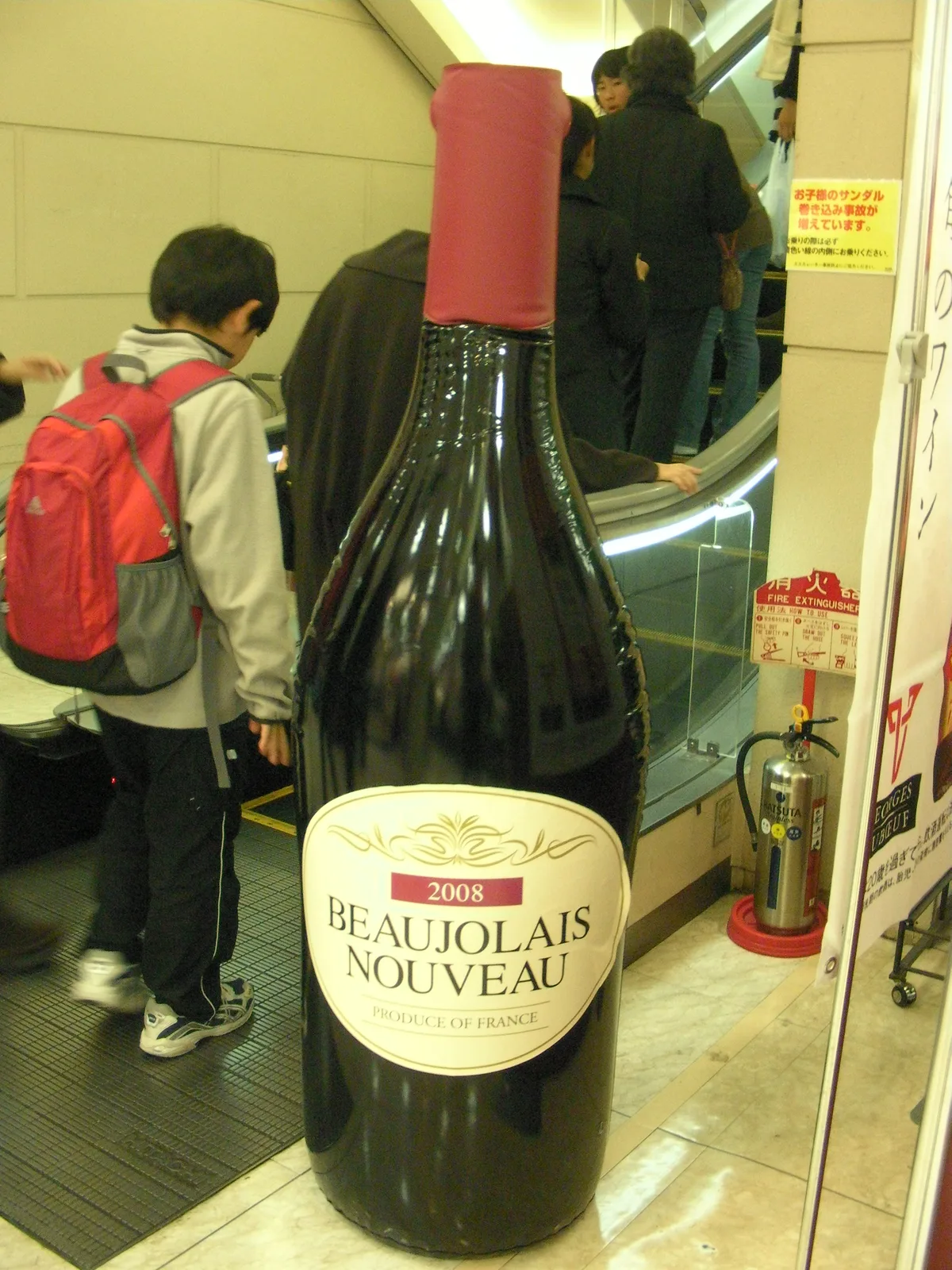
The date is fixed by a rule, not a promoter. Since 1985, Beaujolais Nouveau has been released on the third Thursday of November. In 2026 that is November 19.
The wine itself is barely two months old. It comes from Gamay grapes picked in the Beaujolais region north of Lyon, fermented fast and bottled within weeks. Release traditionally begins just after midnight, which is why some Paris bars stay open late on the Wednesday night to pour the first glasses.
The slogan you see chalked on bistro boards is the same one used for decades: “Le Beaujolais Nouveau est arrivé!” It means the new Beaujolais has arrived. That sign is the closest thing the day has to an opening ceremony.
A Festival Without a Venue
There is no gate, no main stage and no wristband. The festivities are spread across Paris and happen wherever wine is poured. That means neighbourhood bistros, natural-wine bars, brasseries and the small wine shops Parisians call cavistes.
Some areas pack a lot of wine bars into a short walk, so revellers often drift between them:
- The 11th arrondissement, around rue Oberkampf and rue de Charonne, where wine bars sit door to door
- Canal Saint-Martin in the 10th, with bars along the quais and side streets
- Le Marais in the 3rd and 4th, dense with bistros and cavistes
- Montmartre in the 18th, home to the city’s own small vineyard on rue des Saules
None of these is an official hub. They are simply streets where you can find many open counters within a few minutes of each other.
Tickets, and Why You Mostly Don’t Need One
For most people, the festival costs only what’s in the glass. You walk into a bar, order the new vintage and stand at the counter. No ticket is involved.
Ticketed events do exist, but each is run by an individual venue. A bistro might host a set dinner paired with several Nouveau producers, or a caviste might hold a tasting. Each business sets and posts its own terms on its own website, social pages or chalkboard. There is no citywide pass.
Prices follow the venue rather than the festival. A glass at a neighbourhood zinc counter is usually budget-friendly, while a hotel bar or a ticketed dinner sits on the pricier side. Menus and boards show the current figures.
What Arrives in the Glass
Expect something light, bright and young. Beaujolais Nouveau is made mostly by carbonic maceration: whole bunches ferment inside a sealed tank. The result is low in tannin, purple-tinged and fruity, with aromas often compared to banana, cherry and candied red fruit.
It is meant to be drunk now, not cellared. Bars commonly serve it slightly cool rather than at room temperature, which suits its lightness.
Don’t confuse it with the region’s serious wines. The ten Beaujolais crus, such as Morgon, Fleurie and Moulin-à-Vent, are made from the same grape but aged and structured. Many Paris wine bars pour Nouveau from natural-wine producers alongside the big commercial labels. That spread is a large part of the fun of comparing glasses.
Ordering at the Zinc
Paris has its own rhythm for this. The phrases are short, and bar staff on a busy night appreciate speed.
- “Un verre de Beaujolais nouveau, s’il vous plaît”: a glass of the new Beaujolais
- “Un pichet”: a small carafe, good for two or three people sharing
- “Une bouteille”: a bottle, often the sensible choice for a group
- “Une planche”: a board of charcuterie or cheese, the classic partner
Standing at the counter is usually cheaper than taking a table, and it is where the conversation happens. If you sit, wait to be served rather than ordering at the bar. Card payment is widely accepted, including contactless. Service is included in French bills by law, so tipping is optional. Rounding up or leaving small change is common when service was good.
Greeting staff with “Bonsoir” on the way in matters more than it might seem. Skipping it reads as rude in Paris. Saying it costs nothing.
Shaping Your Evening
The night drives this festival. It falls on a weekday, so after-work crowds fill bars from early evening. Sunset in Paris in late November comes around 5pm, and terraces under heaters stay busy well after dark.
Many visitors treat it as a slow crawl. They take a glass in one bar, a planche in a second, then end at a bistro for dinner. Pairing works best with simple food: saucisson, rillettes, jambon persillé, lentil salads, roast chicken and soft cheeses. Those are the dishes of Lyon and Burgundy, the Nouveau’s home turf.
Cavistes add a quieter option. Many open bottles for tasting at the counter on release day, and you can carry one home rather than squeeze into a packed bar. The Nouveau is meant to be finished within months, so a bottle bought in November is for this winter, not next.
Getting Around on the Night
The Métro runs late, but not all night on weekdays. Revellers crossing the city usually plan around the last trains or use Vélib’ bikes and taxis. For the 11th arrondissement, Oberkampf (Lines 5 and 9) and Charonne (Line 9) put you among the wine bars. Canal Saint-Martin is a short walk from République, where Lines 3, 5, 8, 9 and 11 meet.
For Montmartre, Abbesses (Line 12) drops you onto the hill, a climb away from the Clos Montmartre vineyard. The vineyard holds its own harvest festival in October, so it makes a fitting pilgrimage spot for wine lovers at either event.
Frequently asked questions
When is the Beaujolais Nouveau Festival in Paris in 2026?
It takes place on Thursday, November 19, 2026. Beaujolais Nouveau is always released on the third Thursday of November, and some bars start pouring just after midnight on the Wednesday night.
Where is the venue for Beaujolais Nouveau in Paris?
There is no single venue. The celebration happens across Paris in bistros, wine bars, brasseries and wine shops. The 11th arrondissement around rue Oberkampf, Canal Saint-Martin and Le Marais have many wine bars close together.
Do I need tickets for Beaujolais Nouveau in Paris?
Usually not. Most people walk into a bar and order at the counter. Some venues host their own ticketed dinners or tastings, and each venue posts its own details on its website, social pages or chalkboard.
What does Beaujolais Nouveau taste like?
It is a very young, light red made from Gamay grapes. It is low in tannin and fruity, with notes often described as cherry, banana and candied red fruit. It is usually served slightly cool and is meant to be drunk within months.
What food goes with Beaujolais Nouveau?
Simple Lyonnais-style bistro food works best: saucisson, rillettes, jambon persillé, charcuterie and cheese boards, lentil salads and roast chicken.
Plan your trip to Paris
France eSIM & staying connected →
Some links above are affiliate links — if you book through them, Wander Atlas earns a small commission at no extra cost to you. It's how we keep every guide free.