Seven days of the sport’s top tier
This is para table tennis at world-title level. The 2026 championships run from November 13 to 19 in Pattaya. Players arrive from across the world, and over those seven days the singles, doubles and team events produce the sport’s world champions.
You’re watching table tennis at its most compressed. The ball travels a 2.74-metre table in a fraction of a second, and points rarely last more than a few shots. Matches are played to 11 points a game and usually decided over five games. A session can swing on a couple of serves.
How the classes work on court
The class numbers on the draw sheets tell you what you’re about to see. Para table tennis groups players by how their impairment affects play:
- Classes 1–5: wheelchair players, with Class 1 for the most severe impairments
- Classes 6–10: standing players, with Class 10 for the mildest
- Class 11: players with an intellectual impairment
Wheelchair matches have their own serving rule. In singles, the serve has to leave the table over the receiver’s end line rather than the sideline. Spectators often find this one of the most tactical parts of the sport: chairs reposition between shots and players lean hard over the table edge to reach short balls. Standing classes play much closer to the able-bodied game, with fast footwork and heavy topspin.
Reaching Pattaya from Bangkok
Pattaya is in Chonburi province, about 150 km southeast of Bangkok. Most international visitors fly into Suvarnabhumi Airport. From there, direct buses and private transfers take roughly two hours down Motorway 7, depending on traffic.
From central Bangkok, buses to Pattaya leave from Ekkamai (Eastern) Bus Terminal, beside Ekkamai BTS station on the Sukhumvit Line. A smaller number of flights land at U-Tapao International Airport, south of the city. That cuts out the Bangkok traffic altogether.
Inside Pattaya, the blue and white songthaews (pickup “baht buses”) loop Beach Road and Second Road. Grab and Bolt work across the city and are what most visitors use to reach the competition venue.
Sitting in the stands: arena etiquette
Table tennis crowds follow a rhythm. Applause, cheers and flags come between points. During a rally the hall goes quiet, because the players are reading spin off the sound of the bat as much as off the ball. Spectators usually hold their phones still and turn the flash off.
Some customs specific to Thailand:
- When a national anthem plays at a medal ceremony, the whole hall stands. If the Thai royal anthem is played, Thai spectators stand still for it, and visitors do the same.
- A wai (palms together, slight bow) is the polite answer to one. A smile and a nod also works.
- Card and Thai QR payments (PromptPay) are common in Pattaya. Small food vendors and songthaew drivers mostly take cash in baht.
- Tipping is appreciated but not expected. Many people just leave the small change at cafés.
Some sessions draw large travelling groups, waving national flags and singing between games. The atmosphere is warm and partisan, but players from every country get applause.
Where visitors base themselves
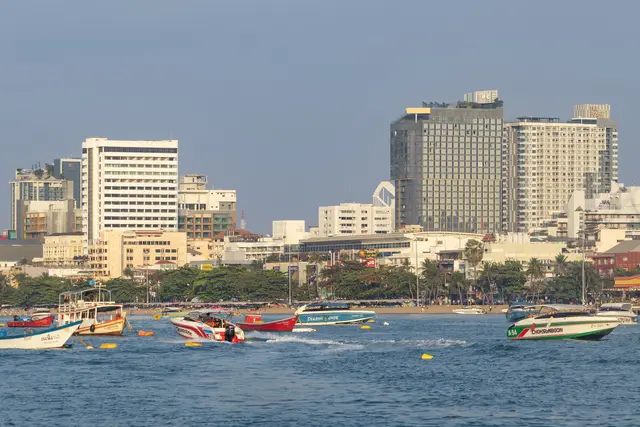
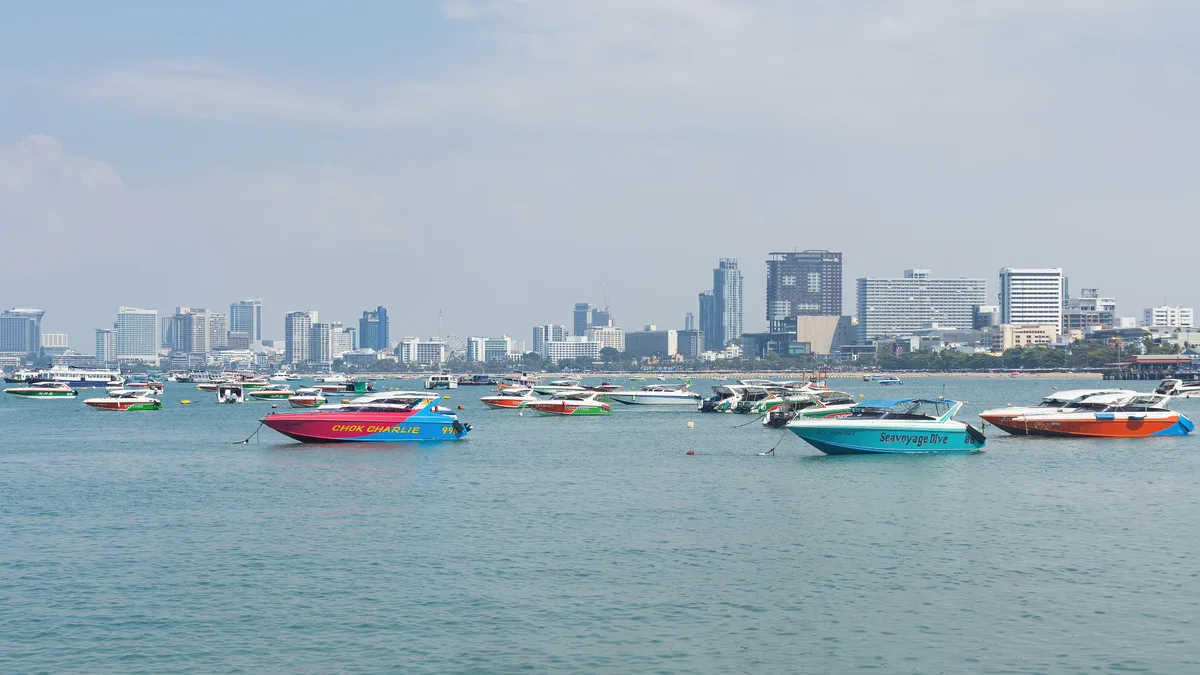
Pattaya divides into a few distinct strips. Central Pattaya, along Beach Road and around Walking Street, is the loudest and has the most hotels. Jomtien, to the south, has a long, flatter beach road and a quieter evening crowd. Naklua and Wongamat, to the north, are more residential, with condo towers and calmer sand.
Visitors coming for the championships often stay in Jomtien or Central Pattaya. These areas have the most transport options and the most step-free hotel rooms. Pavements in the city can be uneven, with high kerbs. Wheelchair users usually rely on ride-hailing cars instead of songthaews, which you climb into from the back.
November on the Gulf coast
The timing works well for a beach city. November is when Thailand’s monsoon gives way to the cool, dry season. The humidity falls, and the evenings along Beach Road are pleasant to walk.
Between sessions, many spectators head to some of these:
- Sanctuary of Truth in Naklua, the enormous carved-teak temple-palace on the seafront
- Koh Larn, about 30–45 minutes by ferry from Bali Hai Pier
- Jomtien Beach at sunset, with seafood stalls along the road
- Pattaya Viewpoint on Pratumnak Hill, between Pattaya Bay and Jomtien
The ITTF publishes the competition schedule, venue details and ticket information on its official site. That’s where the session times for each class and medal day are listed.
Frequently asked questions
When are the ITTF World Para Table Tennis Championships in Pattaya?
The championships run from November 13 to 19, 2026, in Pattaya, Thailand.
Where do I find the venue and ticket information?
The ITTF, the sport's world governing body, publishes the venue, session schedule and ticket details on its official site.
How do I get to Pattaya from Bangkok?
Pattaya is about 150 km southeast of Bangkok. Direct buses and private transfers from Suvarnabhumi Airport take roughly two hours. From the city, buses leave Ekkamai (Eastern) Bus Terminal, next to Ekkamai BTS station. U-Tapao International Airport, south of Pattaya, is a closer option for some flights.
What do the class numbers mean?
Classes 1–5 are for wheelchair players, classes 6–10 for standing players, and class 11 for players with an intellectual impairment. Lower numbers within each group mean a greater impact on play.
What else is there to do nearby between sessions?
Spectators often visit the Sanctuary of Truth in Naklua, take the ferry from Bali Hai Pier to Koh Larn, or watch the sunset from Pattaya Viewpoint on Pratumnak Hill or along Jomtien Beach.
Plan your trip to Pattaya
Thailand eSIM & staying connected →
Some links above are affiliate links — if you book through them, Wander Atlas earns a small commission at no extra cost to you. It's how we keep every guide free.