Golden Gate Park: San Francisco Travel Guide (4.8★)
✓ Facts verified via Google Places · Sep 17, 2026
At a glance
How this guide is made
Produced with AI assistance and reviewed against live data sources. Facts such as hours, ratings, and location come from Google Places; images are licensed or public domain. Details can change — please verify before visiting. Editorial policy
Most people picture Golden Gate Park as one thing, maybe the bison paddock or the Japanese Tea Garden, and then get there and realize it’s three miles long. It runs from the edge of the Haight almost to the Pacific Ocean, a rectangle of reclaimed sand dunes that San Francisco spent the 1870s onward turning into meadows, lakes, and windbreaks of eucalyptus and Monterey pine. At 1,017 acres it’s bigger than Central Park, and it doesn’t reveal itself from any single entrance.
That scale is the first thing to plan around. Walking end to end takes a couple of hours with no stops; most visitors pick a section (the museum cluster near the middle, the tea garden and Stow Lake area, or the wilder western half toward the beach) rather than attempting all of it in one visit.
Getting oriented without wasting a day
The park is open 24 hours every day, but that doesn’t mean every part of it feels safe or interesting after dark; plan your visit for daylight hours regardless.
JFK Drive is the park’s spine, running east-west, and on Sundays a long stretch of it closes to cars entirely, filling with cyclists, skaters, and strollers. That’s the single best window for experiencing the park at street level rather than driving through it.
- Eastern end (near Haight-Ashbury): Conservatory of Flowers, Hippie Hill, Kezar Stadium
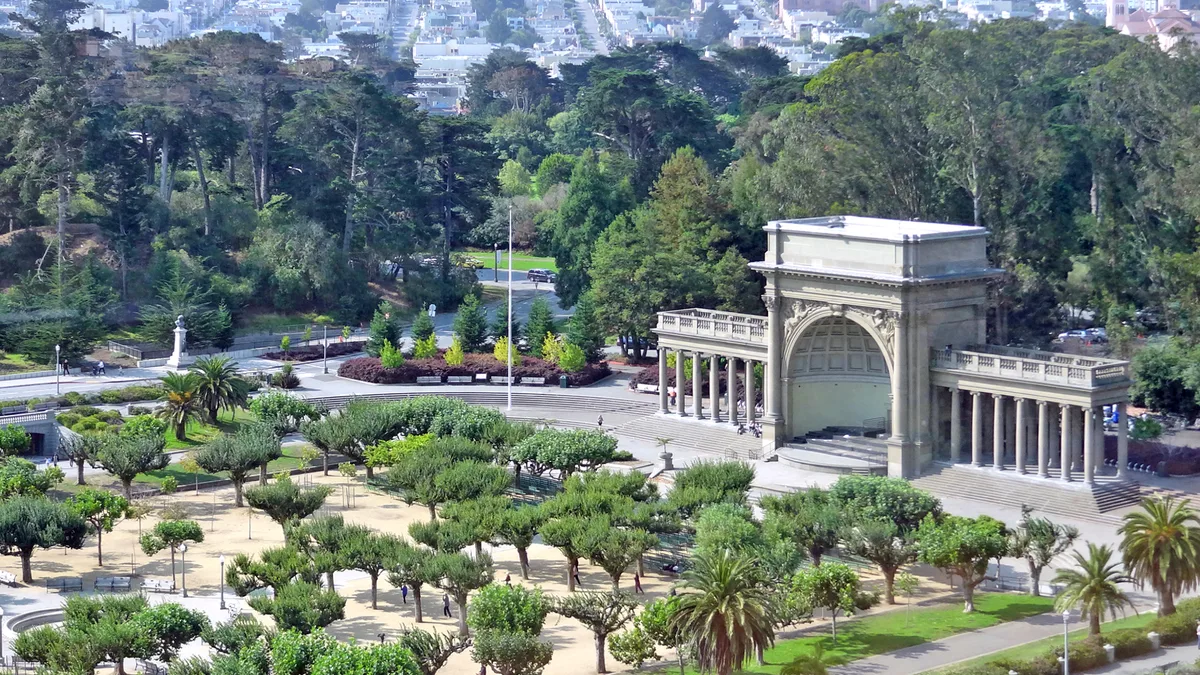
- Middle section: de Young Museum, California Academy of Sciences, Japanese Tea Garden, Music Concourse
- Western section: Stow Lake, Dutch Windmill, Queen Wilhelmina’s Tulip Garden, Ocean Beach nearby
If museums are the goal, start there and radiate outward. If it’s just green space and quiet, skip the concourse entirely and head toward Stow Lake or the AIDS Memorial Grove.
The Music Concourse, park’s busy middle
This sunken plaza between the de Young and the Academy of Sciences is where most first-time visitors end up, and it shows. Weekends bring a crush of tour groups, school trips, and families timing their visit around museum hours.
Because the park is rated among the most visited attractions in the city, arriving right when the museums open on a weekday is the simplest way to beat the crowd rather than fighting it midday. The concourse itself is free to walk through even if you skip both museums; there are usually informal musicians or a farmers’ market stall depending on the day.
The de Young’s tower has a free observation floor with views back across the park to the ocean, worth the elevator ride even without a museum ticket.
Japanese Tea Garden’s morning ritual
The Tea Garden predates the rest of the park’s plantings in some sections, laid out originally for the 1894 California Midwinter Exposition and maintained since as a formal Japanese-style garden of koi ponds, a pagoda, and a steeply arched drum bridge that photographs better than it walks.
It’s one of the few paid attractions inside the park, and it opens before most of the surrounding museums. Getting there at opening avoids both the tour buses and the narrow-path bottlenecks that build up by midday.
- Order or don’t: there’s a small tea house inside serving tea and cookies, cash and card both usually accepted
- The drum bridge is steep and slick when wet; there’s a flatter path around it if you’re not there for the photo
- Paths are narrow and one-directional in places, so early or late in the day gives you room to actually look at the plantings rather than shuffle past them
Stow Lake and the quieter west
Once you cross Crossover Drive, the crowds thin fast. Stow Lake circles a small forested island (Strawberry Hill) with a waterfall, and you can rent pedal boats from the boathouse to get out onto the water rather than just around it.
This half of the park keeps more of the original dune-and-windbreak character, with denser eucalyptus groves and fewer paved paths. The Dutch Windmill and the adjacent tulip garden near the park’s northwest corner bloom heavily in spring and are far less photographed than the Tea Garden’s bridge, despite being just as photogenic.
Keep walking west and the park simply ends at the Great Highway, with Ocean Beach on the other side; it’s a good way to close out a long visit with actual ocean air after hours of trees.
Bison paddock, the park’s odd landmark
Golden Gate Park has kept a small herd of American bison since 1891, in a paddock along JFK Drive toward the western end. It’s an unexpected sight this deep into a city park, and there’s a viewing area right along the fence line where you can usually see them grazing regardless of season.
It’s a five-minute stop, not a destination in itself, but it’s an easy add if you’re already walking or biking the western half toward the windmill.
Getting around like it’s Sunday
Renting a bike near the eastern entrance and riding the length of JFK Drive is the most efficient way to see multiple sections without backtracking on foot. Rental shops cluster near the Haight-Ashbury entrance and along Stanyan Street.
- Sundays: JFK Drive is car-free for a long central stretch, making it the easiest day to bike or skate through without dodging traffic
- Weekdays: quieter overall, better for museum visits without ticket lines, though vehicle traffic returns to the roads
- Parking: limited and often full near the Music Concourse on weekends; consider Muni or a rideshare drop-off instead of driving in
Because the park sits at “very popular” status among San Francisco attractions, don’t expect solitude in the museum core at any hour on a nice weekend. The tradeoff is that the western third of the park rarely gets crowded even when the concourse is packed, so a short bike ride buys real quiet.
Frequently asked questions
How much time should I budget for Golden Gate Park?
A focused half-day covers one section well, like the museum cluster or the Tea Garden and Stow Lake. Seeing the full three-mile length, including the bison paddock and windmill, takes most of a day.
Is Golden Gate Park open at night?
The park has no gates and is technically open 24 hours, but most visitors stick to daylight hours; museums, the Tea Garden, and boat rentals all keep their own separate daytime schedules.
What's the best day to visit for biking?
Sunday, when a long stretch of JFK Drive closes to cars and fills with cyclists and skaters instead.
Where do I park near the museums?
There's a garage beneath the Music Concourse near the de Young and California Academy of Sciences, but it fills up on weekends; arriving at opening or using public transit is more reliable.
Is the Japanese Tea Garden worth the entrance fee?
Most visitors think so; it's compact but historically distinct from the rest of the park, dating to 1894, and going right at opening avoids the worst of the crowds and tour groups.
Plan your trip to San Francisco
Some links above are affiliate links — if you book through them, Wander Atlas earns a small commission at no extra cost to you. It's how we keep every guide free.
Related guides
 attraction
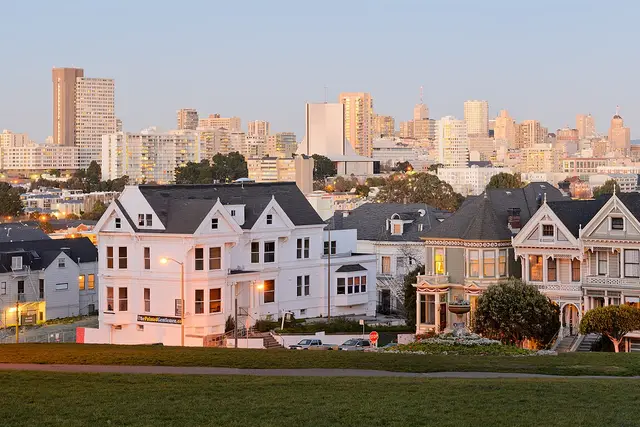
 The Painted Ladies: San Francisco Travel Guide (4.4★)
 attraction
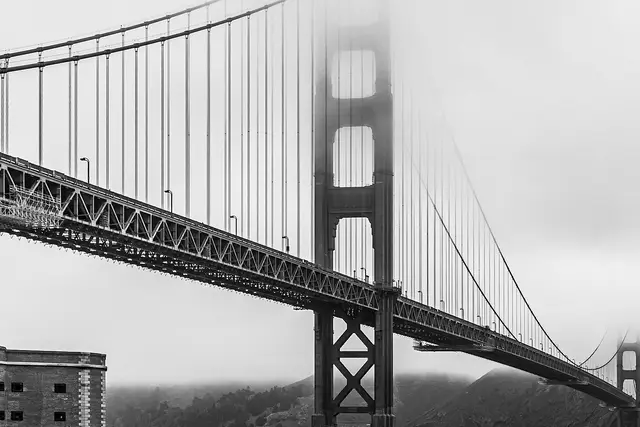
 Golden Gate Bridge: San Francisco Travel Guide
 attraction
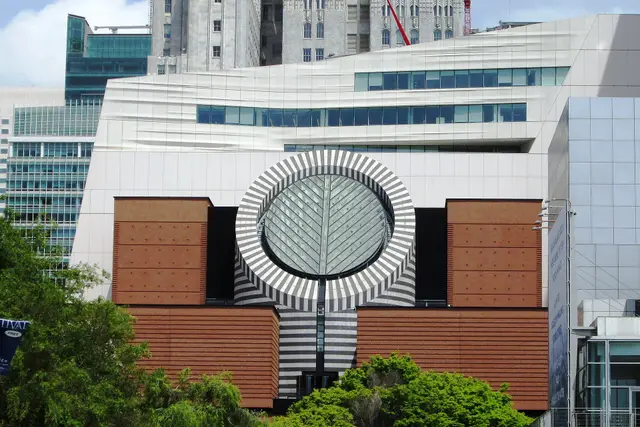
 San Francisco Museum of Modern Art: Travel Guide (4.6★)
 attraction
 Alcatraz Island: San Francisco Travel Guide
More San Francisco guides: Fort Point National Historic Site 4.7 kmTartine Bakery 5.2 kmRich Table 5.3 kmThe Buena Vista 6.9 kmThe Happy Crane