Why go
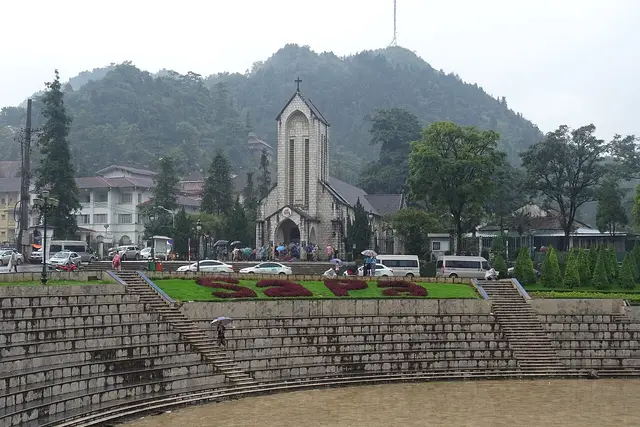
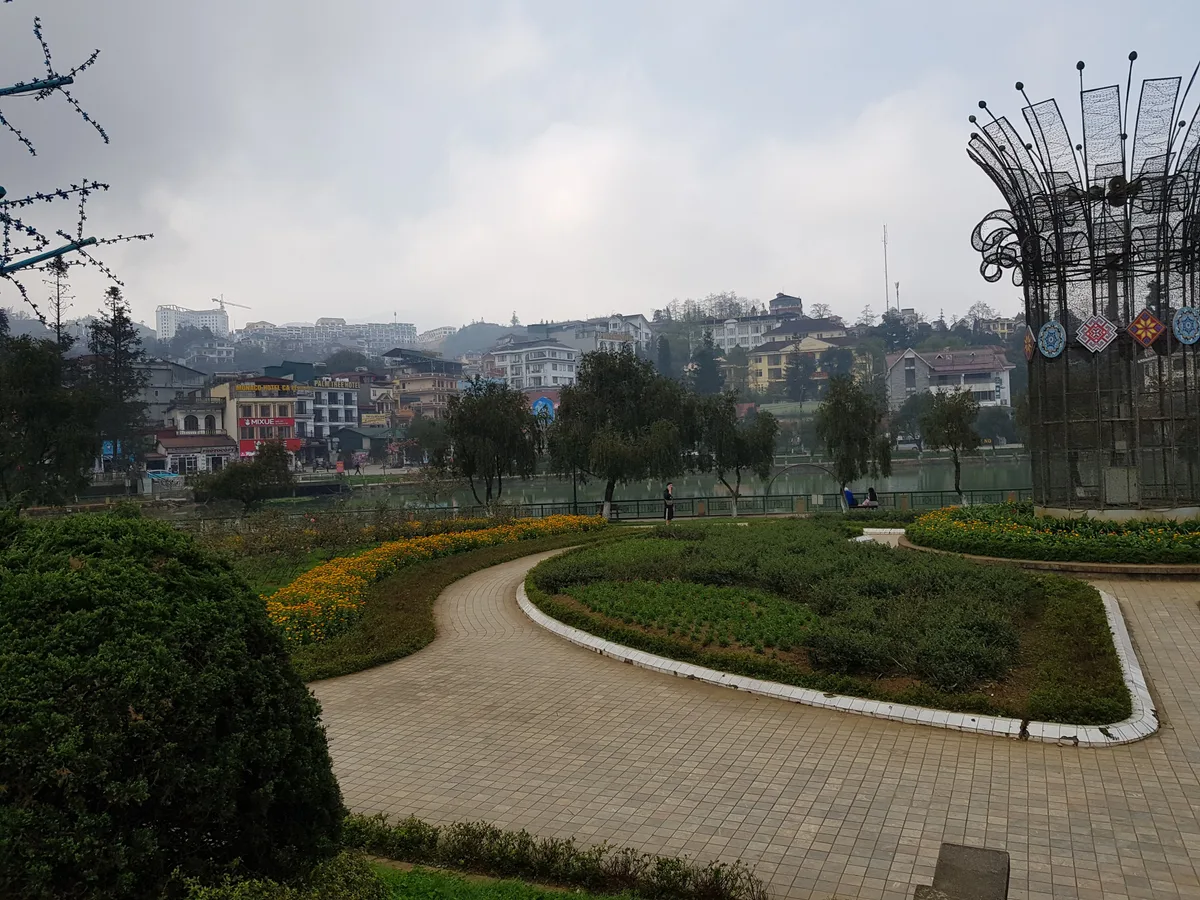
Sapa Park won’t be the reason you book a trip to Lào Cai. It’s a modest patch of paved paths, trees and benches on Đ. Thạch Sơn, right in the heart of Sapa town, steps from the stone church.
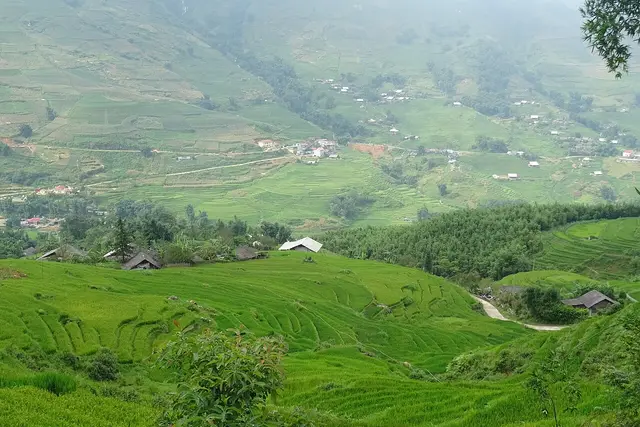
What it offers is a breather. After the switchback drive up from the valley or a morning trek through terraced rice fields, this is where you sit down, watch the mist move across the surrounding peaks, and let your legs recover.
What you’ll actually find
Paved walkways run between trees and a scattering of benches. The green strip runs northeast between Xuân Viên and Thạch Sơn streets to the southern tip of Sa Pa Lake, so the lakeside lawns are a continuation of the same walk. The low cloud that rolls through Sapa on most afternoons often drifts right over it.
Locals and visitors mix here for low-key reasons:
- Morning tai chi or stretching before the town wakes up
- Couples and families taking photos between the church and the park
- Vendors selling grilled corn, sweet potatoes, and drinks near the edges
- A resting point before or after the walk up to the church or market
There’s no admission gate and no set visiting hours. It’s open 24 hours, every day. That makes it flexible: a sunrise stop, a midday shade break, or a lantern-lit evening stroll all work.
Getting there
Sapa town is compact, and Sapa Park sits close to its center, an easy walk from most hotels around the main square and Sapa Lake area. If you’re staying near the church, it is a minute or two away; from the central market, allow about ten minutes.
There’s no metro or bus line to worry about, Sapa is a hill town, and everything of interest clusters within walking distance. A taxi or Grab ride from the edge of town, if you’re staying further out, should take only a few minutes.

When to go
Because it’s rated under-the-radar rather than a major draw, you won’t fight crowds here the way you might at Sapa’s viewpoints or the cable car station. Still, timing shapes the experience.
Weekday mornings tend to be the quietest, worth choosing if you want the benches to yourself. Weekend evenings tend to draw the biggest crowds, as locals and tourists gather after dinner.
Sapa’s weather is the bigger variable. Mist and drizzle are common year-round, and the park and the hills behind town look moodier, sometimes better, under low cloud than under a flat blue sky.
How to visit like a local
Treat Sapa Park as a pause, not a destination, and time it accordingly.
- Arrive 7am-8am on a weekday for near-empty paths and calm water
- Avoid weekend evenings after 5pm if you want space to yourself, since that tends to be when it’s busiest
- Bring small cash (Vietnamese đồng) for snack vendors, cards aren’t the norm at outdoor stalls
- Skip elaborate photo setups during peak evening hours; locals use benches for actual rest, not just backdrops
- Combine it with a short walk to Sapa Lake or the stone church rather than making it a standalone trip
The most common visitor mistake is showing up expecting a landscaped, ticketed attraction on the scale of Sapa’s mountain viewpoints. It’s a town square with green space, its value is convenience and calm, not spectacle.
Nearby to pair it with
Sapa Park works best stitched into a walking loop rather than visited alone. The central market, Sapa Stone Church, and the lakeside promenade are all within easy reach on foot.
If you’re staying multiple days, save the park for a low-energy morning or evening between bigger outings, a trek to Cat Cat Village, a cable car ride toward Fansipan, or a market wander. It’s the kind of place that rewards a slow ten minutes rather than a rushed visit, and with no closing time, you can fit it in whenever your schedule has a gap.
Frequently asked questions
How much does it cost to visit Sapa Park?
There's no admission fee — it's a public park open to walk through freely, 24 hours a day.
When is the quietest time to visit?
Weekdays between 7am and 8am see the fewest visitors. Weekend evenings from 5pm to 11pm are the busiest, so avoid that window if you want a calm visit.
How long should I spend at Sapa Park?
Most visitors spend 20-30 minutes — enough to walk the paths, sit on a bench, and grab a snack from a nearby vendor.
How do I get to Sapa Park?
It's centrally located on Đ. Thạch Sơn in Sapa town, a minute or two from the stone church and the town square, and a short walk from Sa Pa Lake and the central market. No metro or bus needed.
What else is nearby?
Sapa Lake, Sapa Stone Church, and the central market are all within walking distance, making it easy to combine into one town loop.
Plan your trip to Sapa
Vietnam eSIM & staying connected →
Some links above are affiliate links — if you book through them, Wander Atlas earns a small commission at no extra cost to you. It's how we keep every guide free.