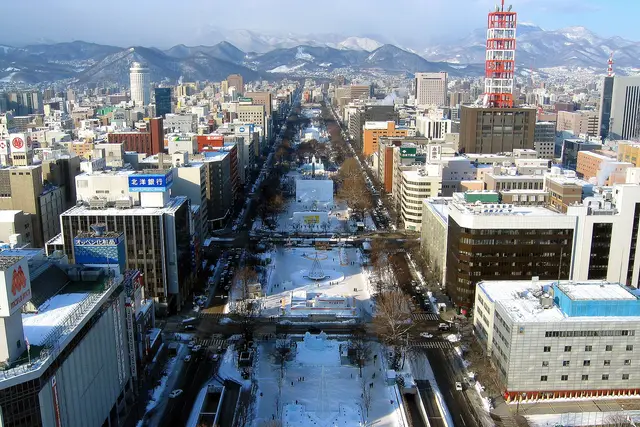
Most of the year, Odori Park is a long strip of lawn, flowerbeds and fountains running between two lanes of traffic. It stretches roughly 1.5 kilometres west from the Sapporo TV Tower. From February 4 to 11, 2027, its blocks fill with snow buildings several storeys high, carved scenes and smaller works by amateur teams. The 77th Sapporo Snow Festival spreads across three venues in central Sapporo: Odori Park, Susukino and Tsudome.
Dates, venues and what a ticket covers
The 77th edition runs from Thursday, February 4 to Thursday, February 11, 2027. Its three sites each have a different job:
- Odori Park: the main stage, with the large snow sculptures laid out block by block.
- Susukino: ice sculptures along the streets of Sapporo’s nightlife district.
- Tsudome: an indoor and outdoor site in Higashi-ku built around snow play.
Odori and Susukino are a public park and public streets, so no ticket is needed to wander them. The festival’s official site carries the dates, venue maps and any paid extras for the current edition.
From six statues in 1950
The festival began in 1950, when local high school students built six snow statues in Odori Park. Japan’s Self-Defense Forces began contributing large sculptures in the 1950s. Their work grew into the building-sized pieces that now anchor the park’s main blocks.
The scale has changed but the setting hasn’t. The sculptures still stand on the same downtown park, a few minutes’ walk from offices and department stores. That’s why you can see the whole thing on foot and still go back to your hotel to warm up.
Walking Odori Park block by block
Odori is divided into numbered blocks, written chōme, which run from the TV Tower westward. Blocks are separated by cross streets, so the festival comes in chapters. You see a giant sculpture, cross at the lights, and the next one is in front of you.
The big snow pieces are set up as stages, with viewing areas in front. After dark, the larger ones often host projection mapping, with light and animation played across the snow. Towards the west end, the International Snow Sculpture Contest has traditionally lined up works by teams from around the world. Their pieces are smaller than the monuments but often finer in detail.
Food stalls line parts of the park, selling Hokkaido staples:
- miso and butter-corn ramen
- grilled scallops and crab
- jingisukan (grilled mutton)
- steamed potatoes with butter
- hot drinks to hold as much as to drink
A full walk from the TV Tower to the far end and back, with stops, usually takes two to three hours.

Susukino after dark
Susukino is a district of neon, karaoke bars and ramen counters south of Odori. During the festival, its main streets hold clear ice sculptures, some with fish or seafood frozen inside. Ice reads best with light behind it, so most visitors make Susukino their last stop of the evening.
It sits right beside Susukino Station on the Namboku Line, and Hōsui-Susukino on the Tōhō Line is close by. This means you can go from the sculptures to dinner without another trip outside. Ramen Yokocho, the narrow alley of tiny ramen shops, is a short walk away. Queues there are common during festival week.
Tsudome: the venue built for sliding
Tsudome, the Sapporo Community Dome, is the one venue that isn’t downtown. It sits in Higashi-ku, roughly a 15-minute walk from Sakaemachi Station, the northern end of the Tōhō Line. Families make up most of the crowd. The outdoor area is given over to snow slides and play, while the dome provides indoor space, food and somewhere to thaw.
Treat it as a daytime half-day, separate from your Odori evening. Children who would get bored of looking at sculptures usually stay happy here for hours.
Moving through the cold like Sapporo does
The city has worked out how to handle winter, and the festival runs on the same habits. Average February temperatures sit below freezing, and the pavements between venues are often packed ice. These habits help:
- Go underground. The Chi-Ka-Ho walkway runs from Sapporo Station to Odori. Below Odori, the Aurora Town and Pole Town arcades continue towards Susukino. Locals use them to cover most of the distance in the warm.
- Walk the local way. Take short, flat-footed steps with your weight over your front foot. Convenience stores and shoe shops around the city sell strap-on shoe grips, and many visitors buy a pair on day one.
- Layer for indoors too. Subways, shops and restaurants are heated well, so a coat you can open matters as much as one that’s thick.
- Pay ready. IC transit cards such as Kitaca and Suica work on the subway and in many shops. Small stalls are often simplest with cash. Tipping isn’t part of Japanese custom, at stalls or anywhere else.
- Leave the sculptures alone. Climbing on or touching the works is off limits. Public bins are scarce in Japan, so festival-goers use the sorting stations near the food areas or carry rubbish back with them.
Photographers who want the big sculptures without a crowd in front usually come in daylight. In the evening, people stand several deep for the projections.
Getting to Sapporo and between the venues
Most international visitors fly into New Chitose Airport. JR’s Rapid Airport train reaches Sapporo Station in about 40 minutes. From the station, Odori is a short walk south, either above ground or through Chi-Ka-Ho.
Odori Station is the hub, served by the Namboku, Tōzai and Tōhō lines. Each venue is a stop or two away:
- Odori Park: Odori Station; the TV Tower end is also near Bus Center-mae on the Tōzai Line.
- Susukino: Susukino Station (Namboku Line), one stop south of Odori, or a 10-minute walk.
- Tsudome: Sakaemachi Station (Tōhō Line), then the walk to the dome.
Hotel rooms near Odori, Susukino and Sapporo Station are in heavy demand during festival week. Visitors usually reserve them months in advance. Some stay further out along a subway line and travel in.
How long to give it
One full day covers the essentials. Spend the afternoon at Odori, then come back after dark for the lights and finish at Susukino. Two days lets you add Tsudome and see Odori in daylight as well as at night. That leaves time for the city’s winter food: soup curry, Sapporo miso ramen and a beer at the old Sapporo Beer Museum in its red-brick building.
Frequently asked questions
When is the 2027 Sapporo Snow Festival?
The 77th Sapporo Snow Festival runs from February 4 to February 11, 2027, across Odori Park, Susukino and Tsudome in central Sapporo.
Do I need a ticket to see the sculptures?
No ticket is needed to walk among the sculptures at Odori Park and Susukino, because they are in a public park and on public streets. The festival's official site lists venue maps and any paid extras.
How do I get from Sapporo Station to the festival?
Walk south to Odori Park in about 10 minutes, above ground or through the heated Chi-Ka-Ho underground walkway. Odori Station (Namboku, Tōzai and Tōhō lines) is the subway hub. Susukino is one stop south on the Namboku Line, and Tsudome is a walk from Sakaemachi Station on the Tōhō Line.
How much time should I spend at the festival?
One full day covers Odori Park in daylight and after dark, plus the ice sculptures at Susukino. Two days lets you add a half-day at Tsudome, which is built around snow slides and suits families.
How cold is it, and what should I wear?
Average February temperatures in Sapporo are below freezing, and pavements are often icy. Visitors usually wear warm layers they can open in heated subways and shops, plus waterproof boots. Many buy strap-on shoe grips, which are sold in convenience stores around the city.
Plan your trip to Sapporo
Japan eSIM & staying connected →
Some links above are affiliate links — if you book through them, Wander Atlas earns a small commission at no extra cost to you. It's how we keep every guide free.