Why go
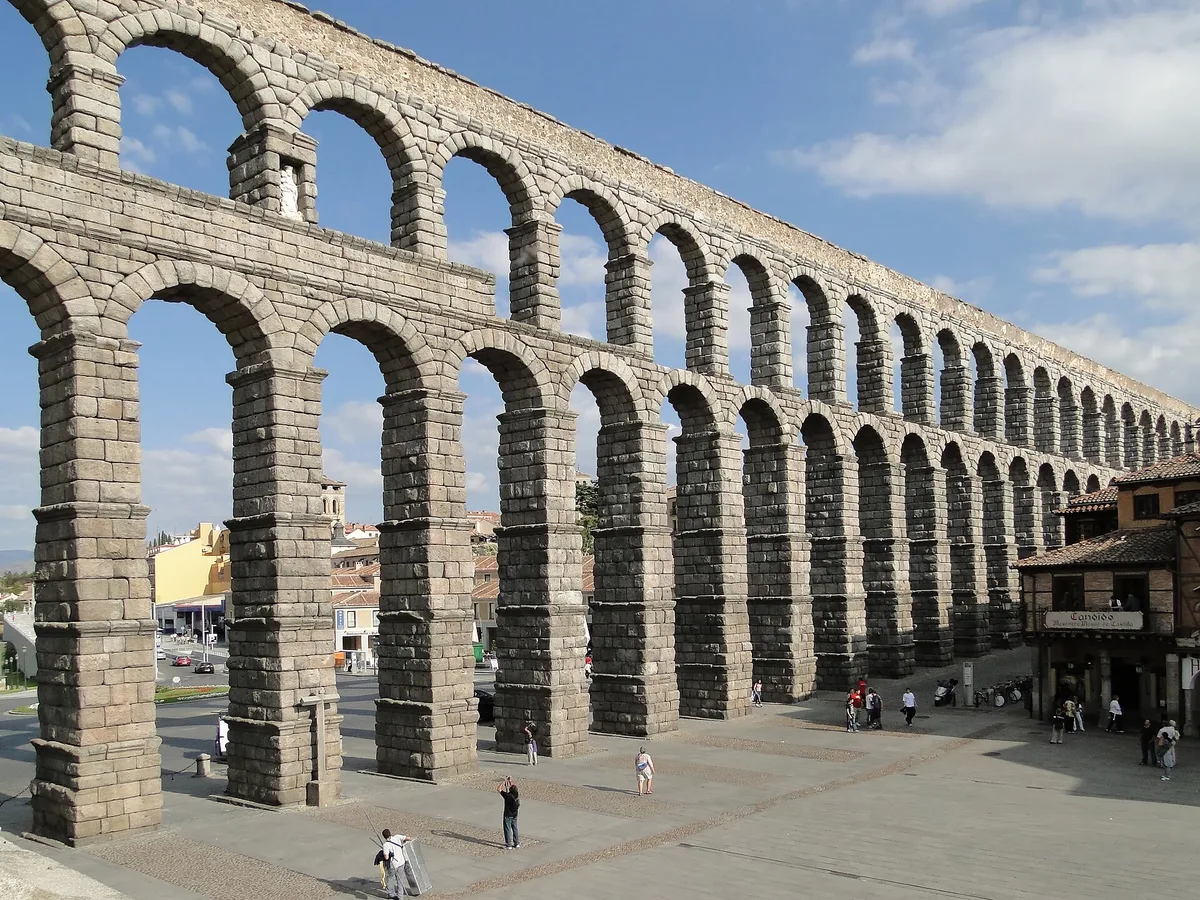
You come around a corner from the newer part of Segovia and it just appears, 167 arches, stacked two tiers high, cutting straight through the middle of the city. No mortar holds it together. Just cut granite blocks, fitted so precisely by Roman engineers roughly two thousand years ago that the thing still stands, still (until modern times) carried water.
The scale is what gets people. At its tallest, near Plaza del Azoguejo, it rises about 28 meters, nearly nine stories of stacked stone arches framing the square below.
Getting there
Segovia is an easy day trip from Madrid. High-speed AVE trains from Madrid-Chamartín reach Segovia-Guiomar station in under 30 minutes.
From there, bus or taxi into the old town takes about 15 minutes, dropping you close to Plaza del Azoguejo, where the aqueduct’s tallest arches loom over the square.
If you’re already in the historic center, just walk, everything in Segovia’s compact old town is within 15-20 minutes on foot, and the aqueduct is impossible to miss.
What to see
Start in Plaza del Azoguejo, at the foot of the tallest arches, and look straight up. The double-tier structure is clearest here, with the lower arches noticeably wider than the upper ones.
Then walk the length of it toward Calle de Cervantes, watching how the arches step down in height as the ground rises to meet the old aqueduct’s original grade.
- Climb the stone steps beside the aqueduct near Calle Teodosio el Grande for an elevated view over the arches
- Look for the small niche partway up one pier, which once held a statue and inscription
- Cross into the old town through the arches to reach the Alcázar and cathedral, both a short walk away
Because it’s open 24 hours with no barriers, you can walk right up to the base and touch the stone, something few Roman monuments this intact still allow.

When to go
Early morning is genuinely the best time here, both for light and for crowds. The stone catches a warm gold cast around sunrise, and the plaza is nearly empty.
This is a very popular landmark, and by mid-morning through early evening the square around it fills with tour groups, especially in spring and summer. If you want photos without a crowd in every frame, aim to arrive before 9am.
Evenings bring a different mood: the arches are lit up after dark, and the square takes on a slower, more local pace as day-trippers head back to Madrid.
How to visit like a local
Segovians treat the aqueduct less as a monument to photograph and more as a landmark to walk past on the way somewhere else, to the market, to work, to a bar for a midmorning coffee. Do the same: don’t linger only at the obvious photo spot in Plaza del Azoguejo.
Walk its full length instead, following Calle de Cervantes as the arches shrink toward street level. This is where you get a real sense of the engineering, away from the thickest crowds.
Since it’s a public, unticketed structure standing 24 hours, there’s no queue system, no tickets, and nothing to book. The only real etiquette is practical: don’t climb on the stonework, and be mindful in the square during peak tourist hours, when it gets genuinely packed with groups and guides.
The one mistake visitors consistently make is treating this as a five-minute photo stop before rushing to the Alcázar. Give it a proper look from both ends of the plaza, the perspective changes completely depending on where you stand.
If you want an uncrowded view, come back at dusk. The stone takes on a different color under the streetlights, and the square empties out as tour buses depart.
Frequently asked questions
Is the Segovia Aqueduct free to visit?
Yes. It's a public monument in an open plaza with no entry fee and no set hours — you can walk up to it any time, day or night.
How long should I spend at the aqueduct?
Most visitors spend 20-30 minutes at the main viewpoint in Plaza del Azoguejo. Add another 20 minutes if you walk its full length toward Calle de Cervantes or climb the nearby steps for an elevated view.
What's the best time to avoid crowds?
Early morning, ideally before 9am, is quietest. This is a very popular landmark and the plaza fills with tour groups from mid-morning through early evening.
How do I get to the aqueduct from Madrid?
Take the AVE high-speed train from Madrid-Chamartín to Segovia-Guiomar (under 30 minutes), then a short bus or taxi ride into the old town, which stops close to Plaza del Azoguejo.
What else is nearby?
Segovia's Alcázar castle and Gothic cathedral are both a short walk through the old town from the aqueduct, making it easy to combine all three in one visit.
Plan your trip to Segovia
Some links above are affiliate links — if you book through them, Wander Atlas earns a small commission at no extra cost to you. It's how we keep every guide free.