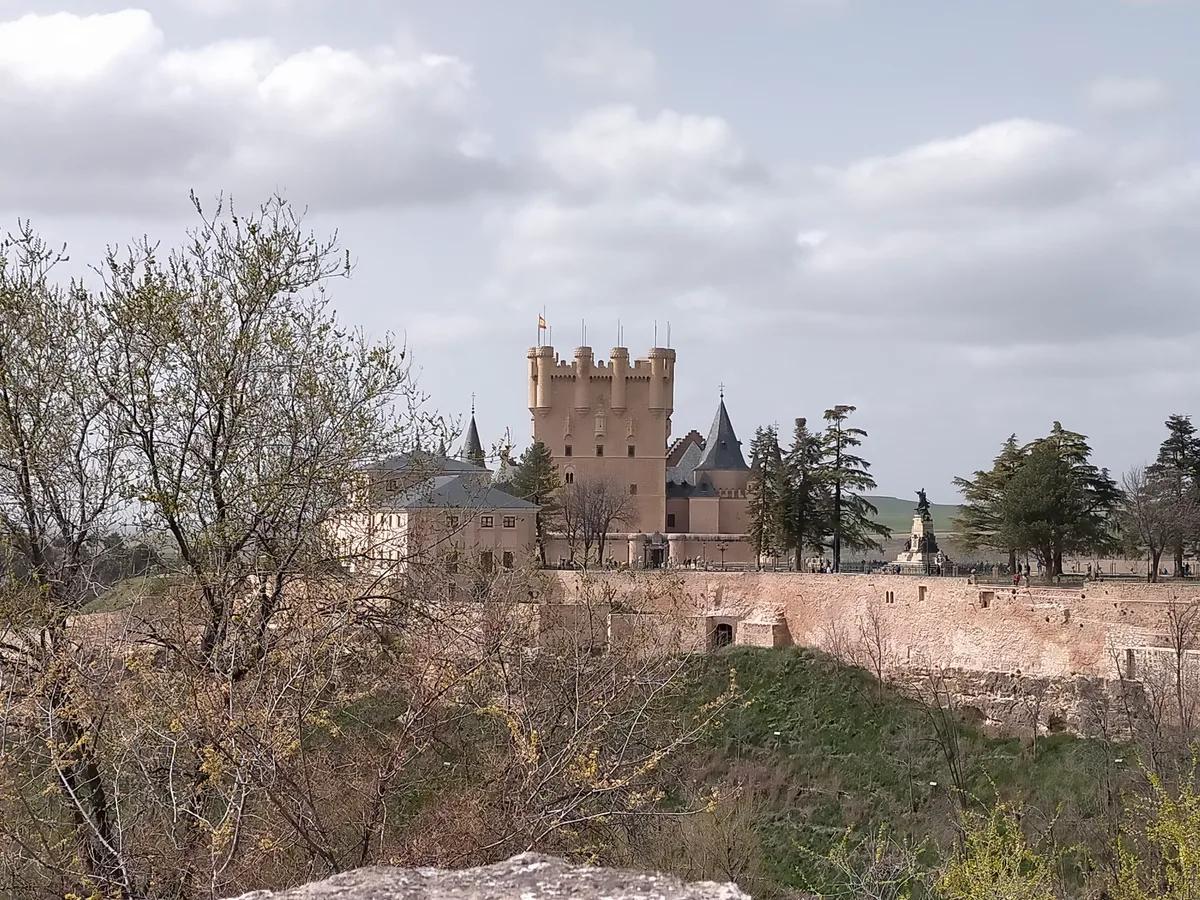
A gate at the bottom of the Judería
From Plaza del Socorro, the wall is right in front of you. The Puerta de San Andrés sits squat and square on the slope, with a stone arch you walk straight through. Uphill are the narrow streets of the old Jewish quarter. Downhill, the ground drops away towards the Clamores valley.
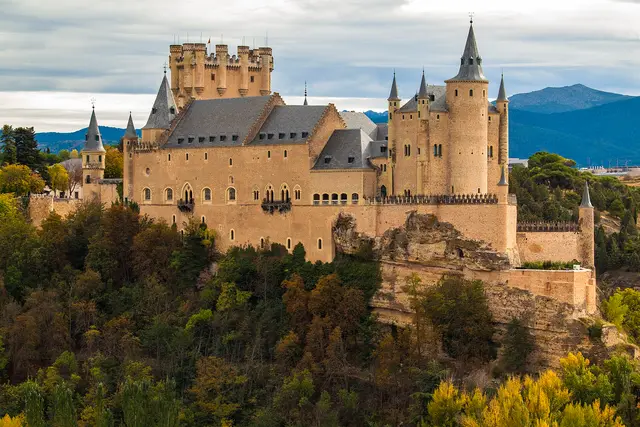
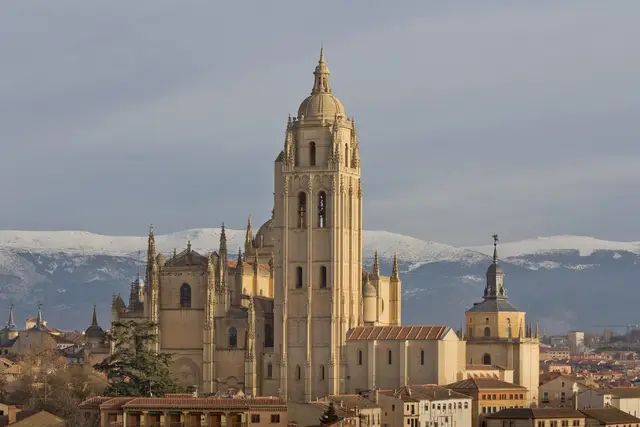
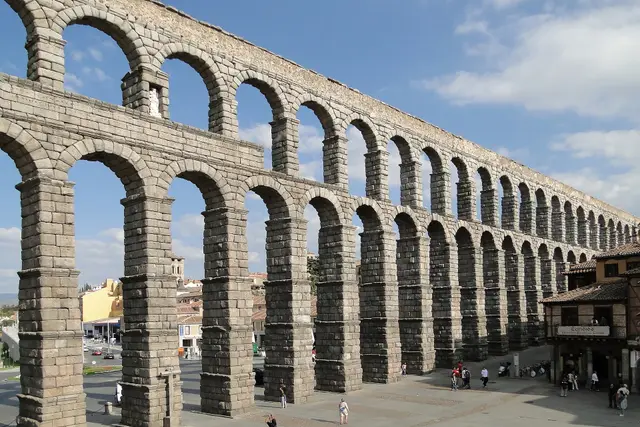
Most visitors to Segovia never come this far. They queue at the Aqueduct, climb to the Cathedral, then head for the Alcázar, and skip the granite ring that holds all three together. That is why the walls feel like a quieter find: you get one of the city’s oldest structures without the elbows.
What the walls actually are
The walls run for roughly three kilometres around the rock the old town stands on. Most of what survives went up after Alfonso VI of Castile retook and resettled the city in the late 11th century. Work carried on into the 12th, and the walls were rebuilt and patched for centuries after that.
The builders mainly used local granite, and they took whatever stone was nearby. That included pieces of Roman Segovia. Dozens of towers once punctuated the circuit. Today three main gates survive:
- Puerta de San Andrés, the southern gate on Plaza del Socorro, home to the interpretation centre
- Puerta de Santiago, on the north side, facing the Eresma valley
- Puerta de San Cebrián, a plainer gate on the northern stretch
The walls belong to Segovia’s UNESCO World Heritage listing, which covers the Old Town and the Aqueduct together.
Reading the Roman stones in the granite
This is the part to slow down for. As you walk the base of the wall, look for blocks that don’t match the rough-cut granite around them: smoother faces, carved edges, fragments of lettering. Some of them are Roman funerary stones, set into the medieval wall as plain building material.
Spotting them works best in daylight, when the sun throws shadow across the carving. Pay particular attention around the gates and the lower courses. Tell yourself before you start that you’ll find three. It changes how you look at every metre of the wall.

Walking the circuit
You don’t need a ticket for the outside of the walls. A path follows long stretches of the circuit below the old town. It drops north towards the Eresma river and the Alcázar’s rocky prow, and south past the Clamores valley.
- South side: from the Puerta de San Andrés, look across the Clamores to the slope where the Jewish cemetery of El Pinarillo lay.
- North side: the Puerta de Santiago faces the Eresma valley, with views back up to the walls on their rock.
- West end: the path curves round below the Alcázar, the best angle on how the walls and the fortress share one ridge.
A full loop on foot takes about two hours at an easy pace with stops. You can also walk one stretch and climb back into town through a gate. Expect slopes and uneven ground: Segovia sits on a ridge, and the walls follow its edge.
The weekday-morning window
The timing here is unusual. At the moment, the access at the Puerta de San Andrés opens Monday to Friday from 10am to 2pm and is closed on Saturday and Sunday. That catches out weekend day-trippers from Madrid, who arrive to a shut door.
Those hours apply this week, and heritage sites in Spain often change their schedule with the seasons and close on some public holidays. Check the official Segovia tourism site for the current month before you build a day around it. If you can only come at the weekend, the outside of the walls is still open to you.
Getting into the Puerta de San Andrés
The gate houses the walls’ interpretation centre. Inside, you learn how the circuit was built and get access to a section of the adarve, the walkway along the top. A few things help:
- Go early in the window. Arriving near 10am leaves you the whole morning, and the last hour before a 2pm close can feel rushed.
- Ask for the muralla. Staff and locals say “la muralla” (singular) for the walls. “Puerta de San Andrés” will get you directions anywhere in the old town.
- Check the price at the gate. Current ticket information is posted at the entrance and on the official tourism site. Card payment is normal in Spain, but carry a backup in case a small desk can’t take cards.
- Pair it with lunch. The 2pm close lines up with the Spanish lunch hour. Walk up through the Judería to the Plaza Mayor and you’ll be there as the restaurants fill.
Wear shoes with grip. The stone on the walkway and the gate steps is worn smooth in places.
Getting there and what’s close
From Madrid, high-speed trains run to Segovia-Guiomar station, outside the city. Local buses link the station to the Aqueduct, and regular coaches also run from Madrid to the bus station near the old town. From the Aqueduct, walk up through the old town towards the Plaza Mayor and then downhill into the Judería. Plaza del Socorro is at the bottom.
Close by, all on foot:
- The Judería, the old Jewish quarter, whose lanes lead straight down to the gate
- Plaza Mayor and the Cathedral, a short climb uphill
- The Alcázar, at the western tip of the ridge, reached by following the walls round
- The Aqueduct, at the eastern edge of the old town, where the walls once met the Roman water channel
Give the gate and interpretation centre about an hour, and add a stretch of the outer circuit if you have the morning. Of all of Segovia’s big monuments, this is the one where you’ll most likely have a stretch of medieval stone to yourself.
Frequently asked questions
When can I visit the Murallas de Segovia?
At the moment, the access at the Puerta de San Andrés on Plaza del Socorro opens Monday to Friday, 10am to 2pm, and is closed at weekends. Hours can shift by season and on holidays, so check the official Segovia tourism site before you go. The outside of the walls can be walked at any time.
Where is the entrance to the walls?
The main visitor access is the Puerta de San Andrés, Plaza del Socorro 1, at the bottom of the old Jewish quarter (Judería). It's a short downhill walk from the Plaza Mayor and the Cathedral.
How long does a visit take?
Allow about an hour for the gate, the interpretation centre and the wall walk. Walking the full outer circuit takes about two hours at an easy pace, with slopes and uneven paths.
Can I see the walls at the weekend?
The Puerta de San Andrés access is currently closed on Saturday and Sunday. You can still walk the paths along the outside of the walls, past the Puerta de Santiago and below the Alcázar.
What else is near the walls?
The Judería is right next to the gate. The Plaza Mayor and Cathedral are a short climb away, the Alcázar sits at the western end of the circuit, and the Aqueduct is at the eastern edge of the old town.
Plan your trip to Segovia
Spain eSIM & staying connected →
Some links above are affiliate links — if you book through them, Wander Atlas earns a small commission at no extra cost to you. It's how we keep every guide free.