Santa Maria della Scala: Siena Travel Guide (4.6★)
✓ Facts verified via Google Places · Sep 15, 2026
At a glance
Opening hours
- Monday: 10:00 AM – 7:00 PM
- Tuesday: 10:00 AM – 7:00 PM
- Wednesday: 10:00 AM – 7:00 PM
- Thursday: 10:00 AM – 7:00 PM
- Friday: 10:00 AM – 7:00 PM
- Saturday: 10:00 AM – 7:00 PM
- Sunday: 10:00 AM – 7:00 PM
Live foot-traffic data via BestTime.app
How this guide is made
Produced with AI assistance and reviewed against live data sources. Facts such as hours, ratings, and location come from Google Places; images are licensed or public domain. Details can change — please verify before visiting. Editorial policy
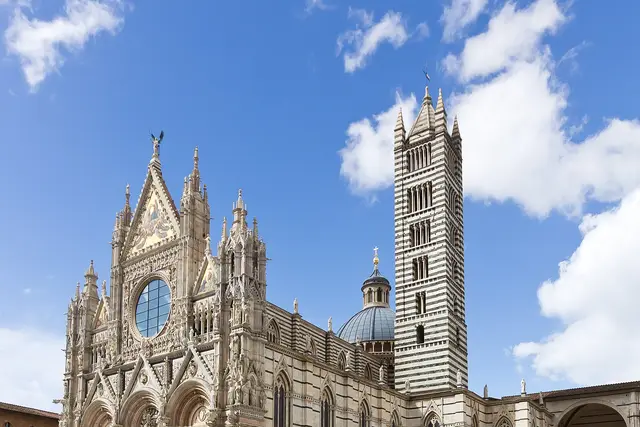
Most people crossing Piazza del Duomo walk straight past this building, eyes fixed on the Cathedral’s striped marble facade. That’s a mistake, because the plain stone front opposite hides one of the largest museum complexes in Siena, built up over nine centuries as a hospital for pilgrims, orphans and the sick.
What this place actually is
Santa Maria della Scala functioned as a working hospital from at least the 1090s until the 1990s, making it one of Europe’s oldest charitable institutions. It took in travelers arriving via the Via Francigena, the medieval pilgrim road that ran through Siena on its way to Rome.
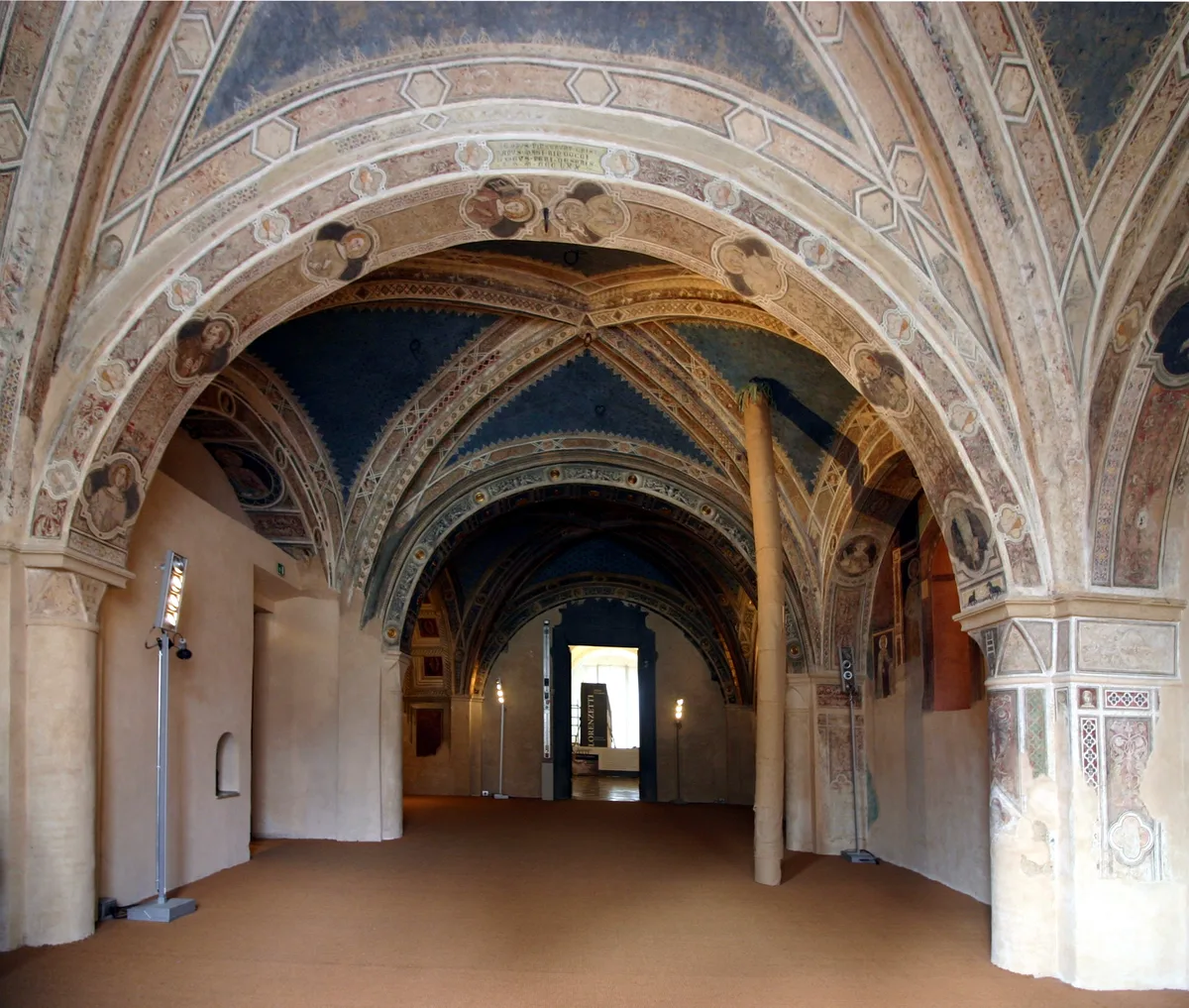
Today the complex is a stacked museum: frescoed halls above, an archaeological museum carved into the old cisterns below, and temporary exhibition spaces threaded between them. The scale only becomes clear once you’re inside and realize the building drops several floors down the hillside behind the piazza.
The Pellegrinaio, the room everyone comes for
The main draw is the Sala del Pellegrinaio, the old pilgrims’ ward, its walls covered in 1440s frescoes by Domenico di Bartolo and other Sienese painters. Unlike most Renaissance church cycles, these show secular life directly: nurses bathing infants, physicians examining patients, almsgiving in progress.
It’s rare to see hospital work depicted with this much documentary detail from the period. Give the room ten minutes at minimum just standing still, since the panels reward slow reading left to right.
Beyond it, don’t skip the Cappella del Sacro Chiodo and the eerie, low-ceilinged former church of Santissima Annunziata, still holding a wooden crucifix and choir stalls.
Down into the cisterns
The basement level houses Siena’s archaeological museum, built into rock-cut water cisterns that predate the hospital itself. Etruscan and Roman artifacts sit in dim, cave-like rooms with the temperature noticeably cooler than upstairs.
It’s a strange contrast after the bright frescoed halls above, and most visitors spend less time here simply because it’s tucked at the bottom of the building. Worth the extra stairs if you have another 30 to 40 minutes.
When to go
The complex is open every day, 10am to 7pm, with no weekly closing day listed, which makes it easier to slot in than sights that close midweek. It sits in the well-known, well-visited tier of Siena attractions, so plan around that rather than expecting an empty room.
On weekends, the quietest stretch runs from 12pm to 5pm, useful if you’re trying to dodge the morning tour groups who arrive right after the Duomo opens. Weekday mornings tend to see a similar rush from coach groups doing Duomo-then-museum in sequence.
Getting the most from a visit
A basic loop through the Pellegrinaio, chapel, and one temporary exhibition takes about 90 minutes. Add the archaeological museum in the basement and you’re closer to two and a half hours.
- Wear layers: the upper halls are warm, the cisterns below are notably cooler
- Photography is generally allowed without flash, though this can change for temporary shows, so check signage at the entrance
- Combined tickets covering the Duomo, Baptistery, Crypt and Piccolomini Library are usually sold nearby and can include Santa Maria della Scala, often working out cheaper than paying separately
- There’s a small bookshop near the exit worth a look for prints of the Pellegrinaio frescoes
Reading the building like a local
Locals and repeat visitors treat this less as a single museum and more as a building to wander, since the layout isn’t strictly linear. Signage guides you between levels, but it’s normal to double back once you realize a corridor leads somewhere unexpected.
Because it draws a steady stream of visitors year-round, arriving right when it opens at 10am or waiting until after 5pm gives you a better shot at having the Pellegrinaio to yourself for a few minutes. Staff at the ticket desk can point you toward whichever temporary exhibition is running, since these rotate and aren’t always obvious from the entrance alone.
Confirm current opening hours and ticket combinations before you go, since museum complexes in Siena periodically adjust both for seasonal exhibitions.
Frequently asked questions
Where is Santa Maria della Scala and what's the nearest landmark?
It's on Piazza del Duomo in Siena, directly facing the Cathedral's main entrance, so it's impossible to miss once you're in the square.
How much time should I budget?
Plan on 90 minutes for the main frescoed halls and chapel, closer to two and a half hours if you add the underground archaeological museum.
What are the opening hours?
It's open daily from 10am to 7pm, with no listed weekly closing day, though it's worth confirming before your visit since hours can shift for exhibitions.
When is it least crowded?
On weekends, the calmest window is between 12pm and 5pm. Arriving right at the 10am opening or after 5pm on other days also tends to be quieter.
Can I buy a combined ticket with the Duomo?
Yes, combined tickets covering the Cathedral, Baptistery, Crypt and Piccolomini Library often include Santa Maria della Scala and are usually cheaper than separate admissions.
Plan your trip to Siena
Some links above are affiliate links — if you book through them, Wander Atlas earns a small commission at no extra cost to you. It's how we keep every guide free.