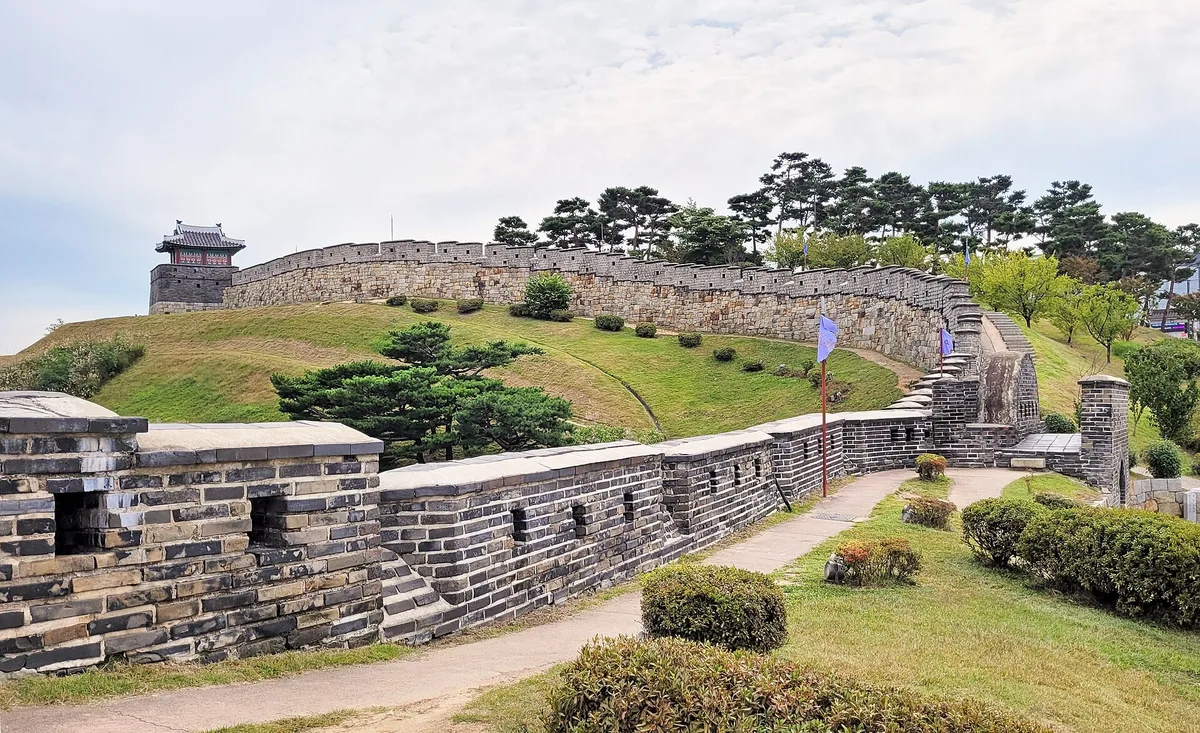
Why Hwaseong Fortress Matters
Built between 1794 and 1796 under King Jeongjo of the Joseon Dynasty, Hwaseong Fortress was designed as both a military stronghold and a tribute to the king’s father, Crown Prince Sado. Unlike Seoul’s older fortress walls, Hwaseong incorporated then-cutting-edge design informed by Confucian scholar Jeong Yak-yong, blending Korean and Chinese defensive architecture with early Western-influenced engineering. It was inscribed as a UNESCO World Heritage Site in 1997, largely because construction records (the Hwaseong Seongyeok Uigwe) survived almost completely, allowing precise post-Korean War restoration.
The result is one of the few Korean fortresses where you can walk an essentially unbroken 5.7-kilometer wall loop encircling a living, modern city center.
Getting There
From Seoul, take Line 1 (the dark blue subway line) directly to Suwon Station, roughly 60-90 minutes depending on where you board. From Suwon Station, the fortress area is a further 15-20 minute ride via local bus (many routes run from the station to Janganmun Gate or Paldalmun Gate) or about a 25-minute taxi ride. Alternatively, from Suwon Station you can transfer to a local bus heading toward Paldalmun, the fortress’s southern gate, which sits closest to the old downtown core.
If coming from Gangnam or southern Seoul, the Bundang Line connects to Suwon as well via transfer at Suseo or Wangsimni onto Line 1. Aim to arrive by mid-morning to allow time for the full wall walk before sunset, since parts of the ramparts are unlit at night.

What to See and Do
Start at Janganmun, the fortress’s massive northern gate and one of the largest gate structures in Korea, larger even than Seoul’s Namdaemun. From there, the wall walk heads east past Hwaseomun and up toward Seojangdae, the western command post, which offers panoramic views over Suwon and is where King Jeongjo reportedly oversaw military drills. Continue along the ramparts to catch the Nammun (Paldalmun) area to the south, then loop past the Banghwasuryujeong pavilion near the northeastern corner, a graceful structure overlooking a lotus pond, popular for photos especially in early morning light.
Budget 2-3 hours for the full loop if walking briskly, or half a day if you stop at the Suwon Hwaseong Museum near Janganmun, which houses construction tools, uigwe manuscripts, and models explaining how the fortress was engineered. Traditional performances, including a re-enactment of the Joseon royal guard-changing ceremony, are sometimes staged near Janganmun on weekends. Check the Suwon Cultural Foundation’s schedule before visiting.
A tourist train (the Hwaseong-eolyeocha) and hop-on trolleys also circle portions of the route for those who want a shorter version.
Where to Eat
Suwon is famous nationwide for galbi (marinated grilled short ribs), and the tradition reportedly began near Paldalmun’s old marketplace, where butchers historically sold and grilled fresh beef ribs for travelers passing through the fortress gates. The streets around Paldalmun and the adjacent Yeongdong Market area remain the best places to find long-established galbi restaurants, many specializing in “Suwon-style” rib cuts grilled tableside. For something lighter, the alleys near Motgol Market and Paldalmun also have street food stalls worth a wander after the wall walk.
When to Go and Practical Tips
Spring (April) and autumn (October-November) are the best seasons, when the ramparts are framed by cherry blossoms or foliage and temperatures suit hours of outdoor walking. Summer is walkable but shadeless in stretches, so bring sun protection. Winter is quieter and photogenic if there’s snow, though the trek along the wall gets cold and windy at the command posts. Wear real walking shoes; sections involve stone steps and slight inclines, particularly near Seojangdae.
Entry to the wall walk itself is generally free, though the Suwon Hwaseong Museum and some restored structures may charge a small admission, confirm current fees before visiting since these are periodically adjusted.
Frequently asked questions
How do I get to Hwaseong Fortress from Seoul?
Take Line 1 to Suwon Station (about 60-90 minutes from central Seoul), then a local bus or taxi (15-25 minutes) to Janganmun or Paldalmun Gate, the fortress's main entry points.
How long does it take to see the whole fortress?
The full 5.7km wall loop takes about 2-3 hours walking briskly, or a half day if you include the Suwon Hwaseong Museum and stops at command posts like Seojangdae.
Is there an entrance fee?
Walking the wall itself is generally free, but the Suwon Hwaseong Museum and some restored buildings may charge a modest admission — check current prices before your visit.
What's the best time of year to visit?
Spring (April cherry blossoms) and autumn (October-November foliage) offer the most comfortable temperatures and best scenery for the outdoor wall walk.
What should I eat nearby?
Suwon is known nationwide for galbi (grilled short ribs); the area around Paldalmun Gate and Yeongdong Market has long-established galbi restaurants tied to this local tradition.
Plan your trip to Suwon
South Korea eSIM & staying connected →
Some links above are affiliate links — if you book through them, Wander Atlas earns a small commission at no extra cost to you. It's how we keep every guide free.
Related guides
 attraction
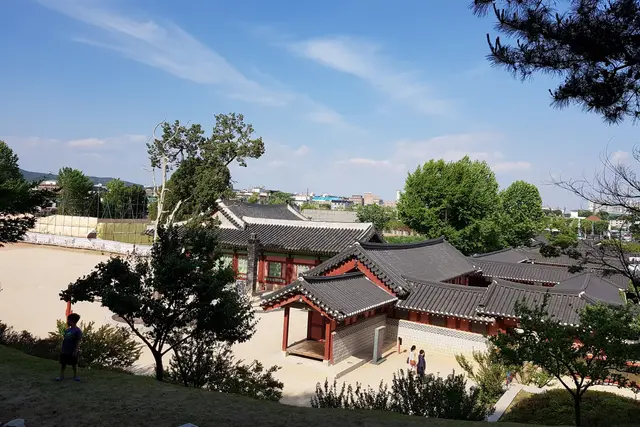
 Hwaseong Haenggung: Suwon Travel Guide (4.5★)
 attraction
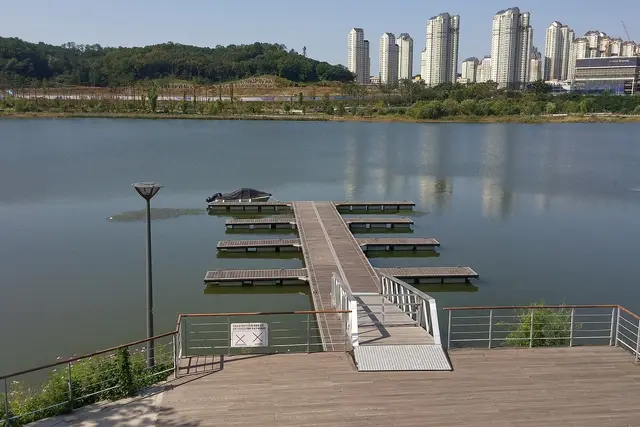
 Gwanggyo Lake Park: Suwon Travel Guide (4.6★)
 hidden gem
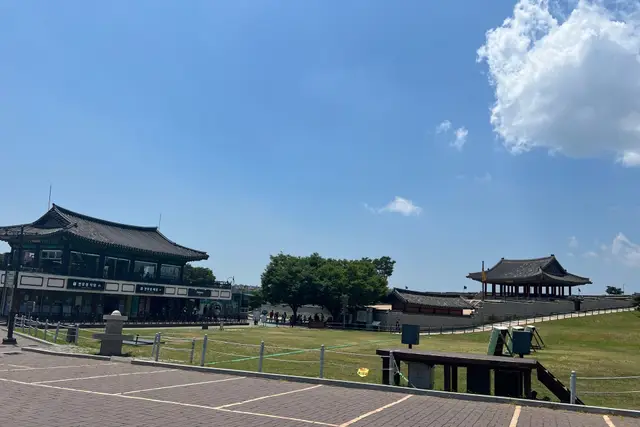
 Yeonmudae (Dongjangdae/Eastern Command Post): Suwon Travel Guide
 attraction