
Takamatsu Castle sits right on the water. The moat is filled from the Seto Inland Sea, so it rises and falls with the tide, and sea bream swim in it. The Kotoden trains rattle past one edge of the walls, and the ferry terminal for Naoshima is a short walk from the other. Few castle sites in Japan sit this close to a working city.
You won’t find a soaring keep. That was pulled down in 1884. What remains is a park of stone ramparts, restored wooden turrets and a feudal lord’s residence, laid out on a site first built in 1590. Locals call the place Tamamo Kōen.
A castle built on the sea
The sea shaped the whole design. Ikoma Chikamasa started the castle in 1590 and set it on the shoreline. Seawater fed the moats, and ships could moor almost at the gates. It’s counted among Japan’s three great water castles, alongside Imabari and Nakatsu.
From 1642 the Matsudaira clan ruled the Takamatsu domain from here. They were relatives of the Tokugawa shoguns and held the castle until the Meiji era. Much of the outer castle has since been swallowed by the modern city, including the station, the roads and the port. The inner core survives as the park.
Feeding the tai in the moat
The moat is the reason to come. Lean over the stone edge and you’ll see the tai, or sea bream, gliding through the brackish green water. Sea bream normally live in the ocean. Here they share the moat with other saltwater fish.
Fish food is sold inside the park. Scatter a handful and the water churns. It’s the most popular few minutes of most visits, and children tend to stay at the railings much longer than adults planned for.
Traditional wasen boats sometimes take visitors out on the moat. The schedule changes, so check at the entrance before you count on a ride.
What you’ll walk through
The park is compact, and a loop takes about an hour. Allow longer if you go inside the residence or sit in the gardens. The main stops:
- Tenshudai, the massive stone base where the keep once stood. It has been restored, and you can climb up for views over the moat and toward the port.
- Tsukimi Yagura, the moon-viewing turret, a multi-storey wooden tower facing the sea side of the site.
- Ushitora Yagura, the northeast turret, moved to its current spot within the grounds and set above the moat.
- Hiunkaku, a large residence built in 1917 by the Matsudaira family on the site of the old palace, with a landscaped garden beside it.
- The pine-lined paths and stone walls between them, built from heavy, irregular granite blocks.
In spring the cherry trees around the walls draw picnickers. In autumn, the gardens near Hiunkaku turn colour later than you might expect.

Getting there without a transfer
You barely need directions. Kotoden Takamatsu-Chikko Station, the terminus of the Kotohira Line, sits right against the park’s walls. JR Takamatsu Station is roughly five minutes away on foot, across the plaza toward the port.
If you arrive by ferry from Naoshima, Shodoshima or the other islands, the Sunport ferry terminal is also a short walk away. That makes the castle easy to fit in before or after a boat. The entrance and ticket window face the station side, and the current admission is posted there.
Timing the 7am opening
The early opening hour is what sets this place apart. Gates open at 7am every day of the week and close at 5pm, which is earlier than many city parks. It’s quietest between 7am and 9am on both weekdays and weekends. At that hour the paths around the Tenshudai are mostly empty, and you can walk the moat edge without weaving around groups.
Weekends are a different story. From 10am right through to the 5pm close, the park stays busy, with families at the fish-feeding spots and tour groups on the ramparts. Try not to plan a slow weekend wander for the middle of the day. If a weekend is your only option, go at opening and you’ll be done before the crowds build.
The 5pm close also catches people out. Late-afternoon light on the turrets looks tempting, but last entry comes before closing, so don’t leave it until 4:45.
Paying, feeding and moving like the regulars
Most locals treat the castle park as a place to walk through, not a place to see once and leave. A few habits help:
- Buy your ticket at the window by the entrance. It’s a small kiosk-style counter, and having cash ready keeps the line moving.
- Feed the fish only with the food sold inside. Bread and snacks foul the seawater moat, and staff do notice.
- Take your shoes off if you go inside Hiunkaku. Expect slippers or bare floors in the tatami rooms, and keep voices down in the rooms.
- Stay on the marked paths on the ramparts. The old stone edges have no railings in places.
- Keep your rubbish with you. Like most Japanese parks, there are few bins, so carry it out to the station.
Signs at the main points have English, but the turret names are often written only in Japanese. It helps to know that yagura means turret and tenshu means keep.
Pairing it with the rest of Takamatsu
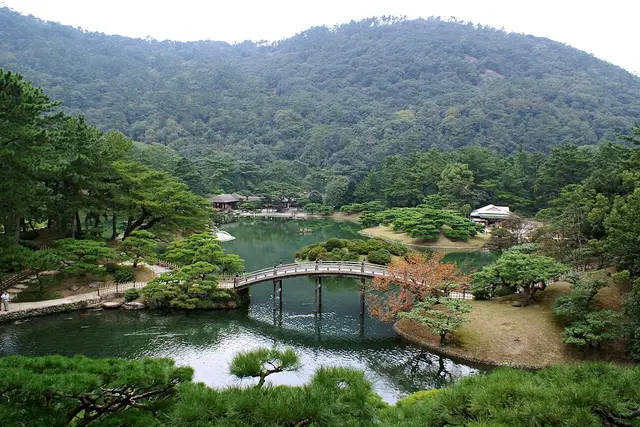
The castle fits neatly into a day in the city. Ritsurin Garden, one of Japan’s most celebrated stroll gardens, is a short Kotoden or JR ride away near Ritsurin-koen Station. It also built up under the same Matsudaira lords, which makes it a natural second stop.
The shopping arcades running south from the station area are Takamatsu’s covered high streets. They’re the easiest place to find a bowl of Sanuki udon, the thick, chewy noodle Kagawa is famous for. For the island ferries, the port is close enough that you can walk from the castle walls to your boat.
Frequently asked questions
When is the quietest time to visit Takamatsu Castle Park?
It's quietest from 7am to 9am on both weekdays and weekends. On weekends it stays busy from 10am until the 5pm close, so arrive at opening if you want the paths to yourself.
How do I get to Takamatsu Castle Park?
Kotoden Takamatsu-Chikko Station is right next to the park walls. JR Takamatsu Station and the Sunport ferry terminal are each a short walk away.
What are the opening hours?
The park is listed as open 7am–5pm every day of the week. Leave yourself time before closing, because last entry is earlier than 5pm.
How long should I spend there?
About an hour covers a loop of the moat, the Tenshudai keep base and the turrets. Allow longer if you go inside Hiunkaku or feed the sea bream.
What's nearby?
Ritsurin Garden is a short train ride away, the Sanuki udon shops in the city's covered arcades are close by, and ferries to Naoshima and Shodoshima leave from the nearby port.
Plan your trip to Takamatsu
Japan eSIM & staying connected →
Some links above are affiliate links — if you book through them, Wander Atlas earns a small commission at no extra cost to you. It's how we keep every guide free.
Related guides
 hidden gem
 Kagawa Museum: Takamatsu Travel Guide (4.1★)
 restaurant
 Honetsukidori Ikkaku: Where to Eat in Takamatsu (4.1★)
 attraction
 Ritsurin Garden: Takamatsu Travel Guide (4.5★)
 attraction