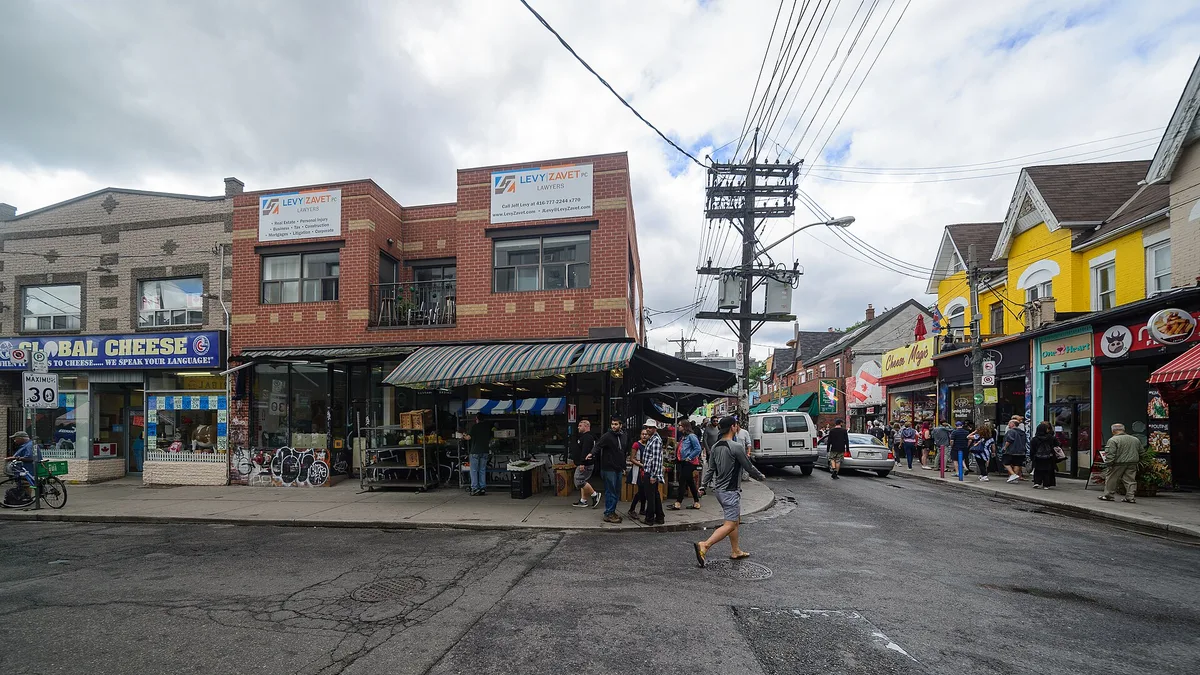
A neighbourhood of front porches turned shopfronts
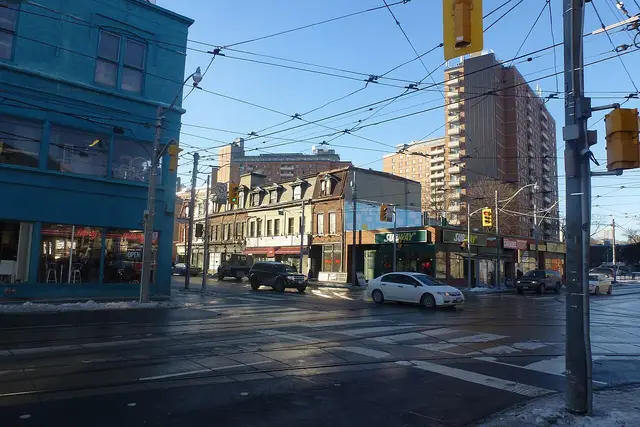
Kensington Market is not a hall with stalls. It is a few blocks of Victorian and Edwardian row houses whose ground floors became shops a century ago. Crates of produce, racks of clothing and sandwich boards sit on what used to be front yards.
The streets are narrow and the sidewalks narrower. Augusta Avenue, Kensington Avenue, Baldwin Street and Nassau Street carry most of the trade. Painted walls and murals cover the side elevations, and the whole thing fits inside a rough rectangle you can cross on foot in ten minutes. Then you spend three hours not crossing it.
The listing at 88 Nassau Street sits in the middle of that grid. It is a sensible pin to drop on your map before you go.
How the market got its many accents
The area began as a working-class district of Jewish immigrants in the early 1900s. For decades Torontonians called it the Jewish Market, and the street trade spilled out of houses and onto the curb.
Later waves layered on top. Portuguese, Caribbean, Chinese, Latin American and other communities each left shops behind, which is why a cheese counter, a spice merchant and an empanada window can share one block. Parks Canada designated Kensington Market a National Historic Site in 2006, recognising exactly this mix of immigrant commerce.
Walking the grid: where to point your feet
There is no correct route, but the streets have different personalities. A loose plan:
- Kensington Avenue: the densest run of vintage and second-hand clothing shops, racks often parked on the sidewalk.
- Augusta Avenue: food shops, cafés and bars, plus the edge of Bellevue Square Park.
- Baldwin Street: the older food trade, with fish, cheese and grocers among the storefronts.
- Nassau Street: a cross street linking the others, easy to drift along between stops.
Bellevue Square Park, at the western side of the market, is where people sit down with whatever they just bought. Look for the bronze statue of actor Al Waxman on a bench there. He grew up in the neighbourhood.

Pedestrian Sundays on the market streets
The market changes character on Pedestrian Sundays. Through the warmer months, usually on the last Sunday of each month, the core streets close to cars. Augusta and Kensington fill with buskers, sidewalk tables and people walking down the middle of the road.
It is the best day to see the place at full volume. It is also the most crowded, so if you want to browse vintage racks slowly, pick an ordinary weekday instead. Dates are announced each season, so confirm before you plan a trip around one.
In December, the neighbourhood also hosts a long-running Winter Solstice parade with lanterns. Again, check the date and route locally that year.
Getting to Kensington from downtown
No subway line stops inside the market, so streetcars do the work. Your main options:
- 510 Spadina streetcar: runs between Spadina station (Lines 1 and 2) and Union station; get off at Nassau Street or Baldwin Street and walk west.
- 505 Dundas streetcar: stops along the market’s southern edge on Dundas Street West.
- 506 Carlton streetcar: runs along College Street on the northern edge.
- On foot: St. Patrick station (Line 1) is a walk of roughly 15 minutes west along Dundas, passing the Art Gallery of Ontario.
Driving is a poor choice. The streets are tight, often one-way, and parking is scarce. Cycling works well, with bike racks and Bike Share Toronto docks around the edges.
Shopping the stoops: how the market actually works
This is a collection of independent shops, not one operation. Each business keeps its own hours, and they vary widely, so check a specific shop before you make a special trip for it. No single opening time covers the market.
A few habits make a visit smoother:
- Payment: most shops take tap cards, but a few small counters prefer cash, so carry a little.
- Tax: Ontario’s 13% HST is usually added at the till, not printed on the tag.
- Tipping: at sit-down cafés and bars, 15 to 20 percent is standard in Toronto; counter takeaway is optional.
- Bargaining: vintage and second-hand shops sometimes negotiate on bigger pieces, while food shops do not.
Bring a tote bag. Produce and grocery shops assume you will carry things home, and you will. Step aside to the curb when you stop to look, because the sidewalks are often only one person wide.
Because the market sees fewer visitors than the downtown landmarks, mid-week mornings can feel like an ordinary shopping street. That is the version where shop owners have time to talk about what they stock.
Pairing it with Chinatown and the AGO
Kensington’s eastern edge is Spadina Avenue, and Spadina is Toronto’s main Chinatown strip. Bakeries, dim sum rooms and grocery stores run north and south from Dundas, so the two areas join into one long afternoon on foot.
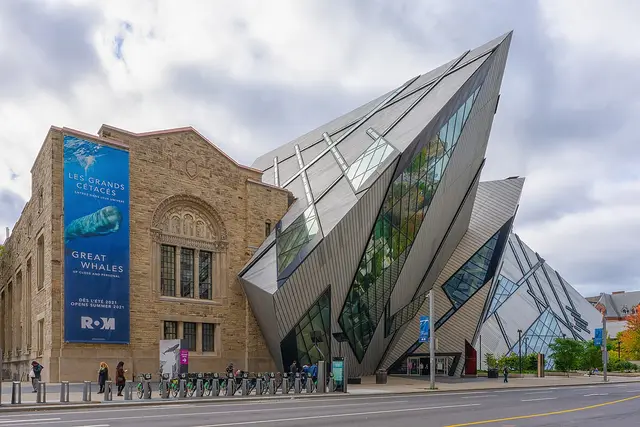
A few minutes east along Dundas, the Art Gallery of Ontario fills a block with Frank Gehry’s wood-and-glass facade. Grange Park sits behind it. North of College, the University of Toronto campus is a quieter walk back toward Queen’s Park.
Plan two to three hours for the market itself, longer if you eat your way through it or stop in the vintage shops. Add another hour or two if you link it with Chinatown and the gallery.
Frequently asked questions
How do I get to Kensington Market by transit?
Take the 510 Spadina streetcar from Spadina or Union station and get off at Nassau or Baldwin Street, or ride the 505 Dundas or 506 Carlton streetcars to the market's south and north edges. St. Patrick station on Line 1 is about a 15-minute walk east along Dundas.
How long should I spend at Kensington Market?
Two to three hours covers a relaxed walk through Augusta, Kensington, Baldwin and Nassau streets with a food stop. Allow half a day if you add Chinatown on Spadina and the Art Gallery of Ontario.
What are Pedestrian Sundays?
In the warmer months the market's core streets close to cars, usually on the last Sunday of the month, and fill with buskers and street tables. Dates are announced each season, so check before you go.
What are the market's opening hours?
There is no single schedule. Kensington Market is a neighbourhood of independent shops, each with its own hours, so check the specific business you want before you go.
What is near Kensington Market?
Chinatown runs along Spadina Avenue on the market's eastern edge. The Art Gallery of Ontario and Grange Park are a short walk east on Dundas Street West, and the University of Toronto is just north of College Street.
Plan your trip to Toronto
Canada eSIM & staying connected →
Some links above are affiliate links — if you book through them, Wander Atlas earns a small commission at no extra cost to you. It's how we keep every guide free.