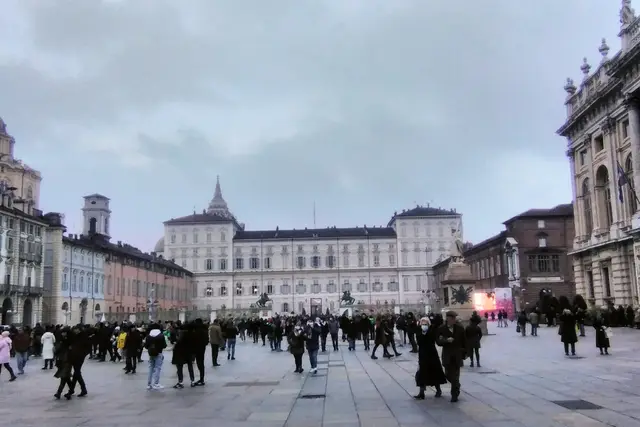
Piazza Castello at the start line
Few marathons start in a square like this one. Piazza Castello is Turin’s ceremonial centre. Palazzo Madama stands in the middle of it, a medieval castle with an 18th-century Baroque facade added by Filippo Juvarra. The Palazzo Reale, the Savoy royal palace, closes off the northern side behind its iron railings.
On race morning the square works as both start and finish. You leave from the same paving stones you come back to after 42.195 kilometres. The square is lined on several sides by arcades, so spectators and runners waiting for bag drop can stand under cover if the morning is wet.
Through 2026 the race date is November 29. Confirm timing, wave starts and the exact layout of the start and finish areas on the official site.
From royal palaces to the Lingotto factory
The course is flat, closed to traffic and AIMS-certified. That certification means the distance has been measured to international standards, so a finishing time here counts as a real marathon time for qualifying purposes. Turin sits on the Po plain with the Alps on the horizon, and the city centre has very little gradient.
The route links two different Turins. The first is the Savoy capital of straight, arcaded streets and palaces. The second is the industrial city that built Fiat. Lingotto is the best-known landmark of that second city.
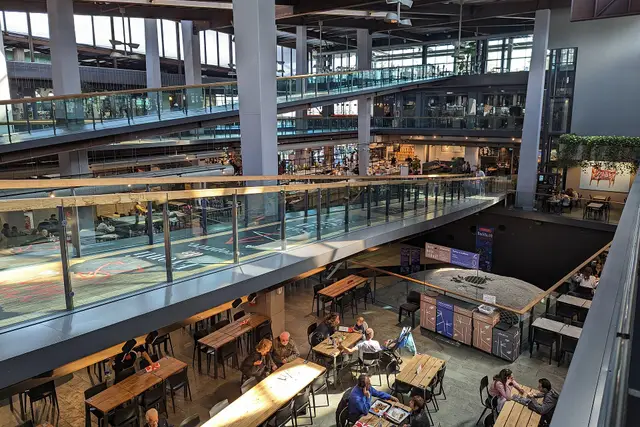
- Lingotto opened in 1923 as a Fiat car factory. Cars were assembled floor by floor and test-driven on a track on the roof.
- Renzo Piano converted it into a mixed-use complex, with shops, a hotel, a congress centre and exhibition halls.
- The rooftop track survives, and Lingotto is one of Turin’s most photographed buildings.
Check the official route map for the exact streets. Course details can change between editions.
Getting a race entry
You don’t buy a ticket for this race. You register as a runner. Entry is handled through the organisers, and the official site lists the categories, the fees and the deadlines. Watching from the roadside is free and open to anyone.
Italian road races have one rule that catches foreign runners out. Competitive events in Italy generally require proof of medical fitness. For Italian residents that means a sports medical certificate (certificato medico agonistico). Runners who don’t belong to the Italian athletics federation (FIDAL) are usually asked for a RUNCARD membership as well.
Requirements for non-resident international runners differ from race to race. Read the official registration rules carefully and get any paperwork done well before you travel. Bib collection usually means a visit to a race expo in person, so plan to arrive in Turin the day before.
Reaching Turin and the start
Turin has two main railway stations. Porta Nuova is the closer one to the start, and Porta Susa is on the high-speed lines. Fast trains link both to Milan, and international flights land at Milan’s airports or at Turin Airport in Caselle, north of the city.
From Porta Nuova you can walk to Piazza Castello in a straight line up Via Roma. The street is arcaded nearly the whole way and passes through Piazza San Carlo. It takes about 15 minutes at an easy pace, which doubles as a warm-up.
Metro Line 1 runs through Porta Nuova and Porta Susa and continues south to Lingotto. That makes it handy for spectators who want to see runners in the centre and again out on the industrial stretch. Road closures on race day mean surface buses will be diverted. Check the transport operator’s notices before you rely on one.
Running Turin in late November
The marathon sits at the end of the autumn racing calendar. Late November in Turin is usually cold, and fog off the Po valley is common in the mornings. A flat course, cool air and no traffic make good conditions for a fast time. The cost is a chilly wait before the start.
Pack for the wait as well as the race:
- A throwaway layer for the start pen, such as an old fleece or a bin bag.
- Gloves and a hat you don’t mind ditching or tucking into your waistband.
- A dry change of clothes in your bag-drop bag for the finish in Piazza Castello.
- Warm shoes for afterwards. Turin’s stone pavements hold the cold.
Days are short at this time of year. If you plan to sightsee the day before, do the outdoor parts in the afternoon light.
Cheering on the Torinese side
Spectating in Turin has its own habits. The arcades along Via Roma, Via Po and the streets around Piazza Castello give you dry, covered spots right beside the road. Locals use them on bad-weather days. Pick a pillar and hold on to it.
Italian supporters shout “Dai!” or “Forza!”, and you can join in. Write a runner’s first name on their bib or shirt and strangers will shout it too. To see someone at two points, watch them in the centre, then take Metro Line 1 south toward Lingotto. Do it quickly, because the metro gets busy on race day.
Bars along the route serve coffee standing at the counter. In Italy the usual system is to pay at the till first and then hand your receipt to the barista. Cards are widely accepted, but keep a few coins for small purchases. Tipping isn’t expected for a quick coffee.
Bicerin, agnolotti and the recovery walk
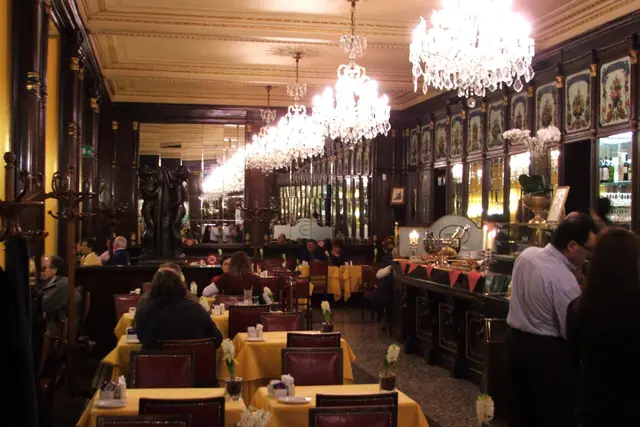
Turin knows how to feed someone who has just run a marathon. The city’s signature drink is the bicerin, layers of espresso, drinking chocolate and cream served in a small glass. Caffè Al Bicerin, near the Santuario della Consolata, has served it since 1763 and is a short walk from Piazza Castello.
The Piedmontese food to look out for:
- Agnolotti del plin, small pinched pasta parcels filled with meat, usually served with butter and sage or a roast-meat jus.
- Tajarin, thin egg pasta made rich with yolks.
- Gianduiotti, the boat-shaped hazelnut chocolates invented in Turin.
- Bagna cauda, a hot garlic-and-anchovy dip for vegetables, made in the cold months.
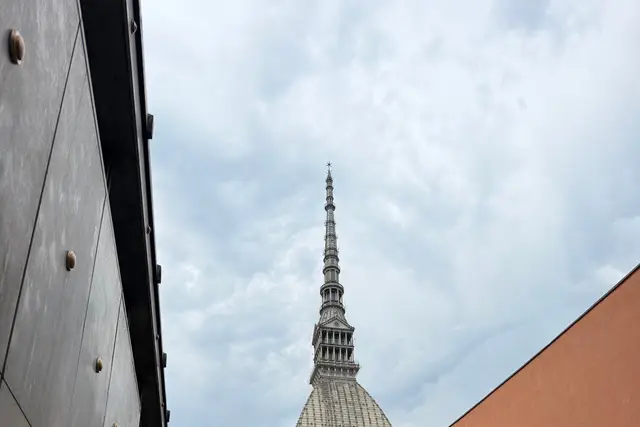
Your legs will be stiff the next day. A slow walk down Via Po to the Gran Madre church across the river is a good way to loosen them. You can also go and see the Mole Antonelliana, the tall spire that houses the National Museum of Cinema. Confirm timing, registration and race-day logistics on the official Torino City Marathon site.
Frequently asked questions
When is the Torino City Marathon in 2026?
The announced date is November 29, 2026. Confirm wave start times and the race-weekend schedule on the official site.
Where does the Torino City Marathon start and finish?
It starts and finishes in Piazza Castello, Turin's main historic square. Palazzo Madama stands in the middle of the square and the Palazzo Reale is on its northern side. From Porta Nuova station it's about a 15-minute walk straight up the arcaded Via Roma.
Is the Torino City Marathon course fast?
Yes, it's a good course for a fast time. It's flat, closed to traffic and AIMS-certified, so the distance is measured to international standards. The cool late-November weather usually helps too. The route goes past royal landmarks and out to the Lingotto factory.
Do foreign runners need a medical certificate to enter?
Italian road races generally require proof of medical fitness. Runners who don't belong to the Italian athletics federation often need a RUNCARD as well. The rules for non-resident runners vary, so check the race's official registration rules and sort out the paperwork before you travel.
How can spectators see runners at more than one point?
Watch from the arcades near Piazza Castello or along Via Roma, then take Metro Line 1 south toward Lingotto to catch runners on the industrial part of the course. Surface buses are diverted on race day, so the metro is the more reliable option.
Plan your trip to Turin
Italy eSIM & staying connected →
Some links above are affiliate links — if you book through them, Wander Atlas earns a small commission at no extra cost to you. It's how we keep every guide free.