Ubud Palace: Travel Guide (4.3★)
At a glance
Opening hours
- Monday: 7:00 AM – 5:00 PM
- Tuesday: 7:00 AM – 5:00 PM
- Wednesday: 7:00 AM – 5:00 PM
- Thursday: 7:00 AM – 5:00 PM
- Friday: 7:00 AM – 5:00 PM
- Saturday: 7:00 AM – 5:00 PM
- Sunday: 7:00 AM – 5:00 PM
How this guide is made
Produced with AI assistance and reviewed against live data sources. Facts such as hours, ratings, and location come from Google Places; images are licensed or public domain. Details can change — please verify before visiting. Editorial policy
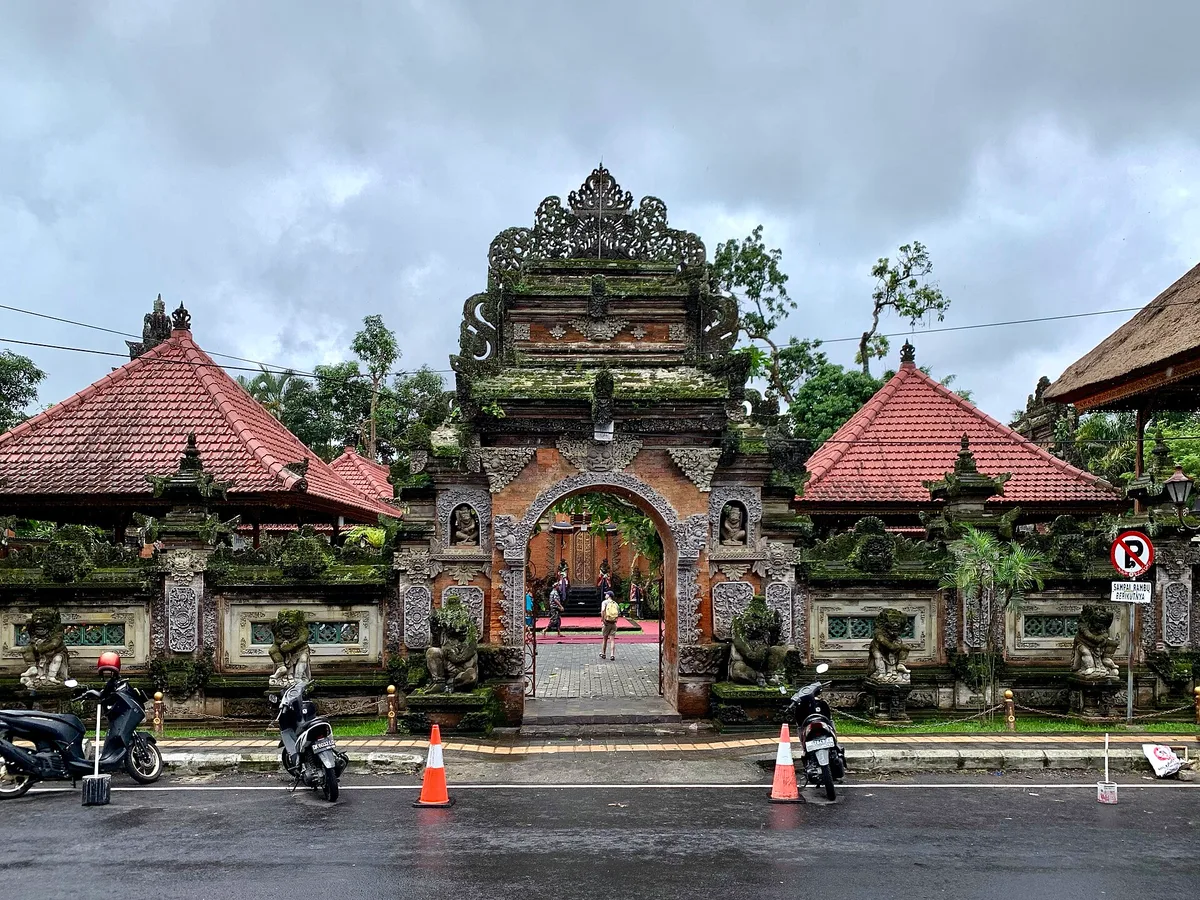
Ubud Palace occupies the corner where Jalan Raya Ubud meets Jalan Suweta, and it functions as both a functioning royal residence and an open courtyard you can walk into for free during the day. The Sukawati royal family, descendants of the Ubud kings, still lives in part of the complex, which is why some inner buildings stay roped off while the front pavilions remain open to anyone who wanders in off the street.
The palace was largely rebuilt after a 1917 earthquake destroyed much of the original 19th-century structure, so what you see today is a mix of restored and later construction, though it follows the same layout. Carved stone guardians flank the entrance gates, and the split gateway design (candi bentar) frames your first view of the inner courtyard.
The courtyard and its carvings
Walk through the main gate and you land in a paved courtyard ringed by open-sided pavilions (bale) with steep, multi-tiered thatched and tiled roofs. Look up at the roof beams and gate lintels: the sandstone carving here, done in the dense, curling style typical of Gianyar regency, covers nearly every surface.
A large banyan tree shades one corner of the grounds, and hibiscus and frangipani grow along the inner walls. Most people spend 20 to 30 minutes here during the day, enough time to circle the courtyard and read the small signage near the entrance.
Evening dance performances
Come back before the palace closes and it turns into a stage. Balinese dance troupes perform in the courtyard some afternoons, typically starting around 4pm, with legong and barong dance among the pieces most commonly staged here.
Tickets are sold at a booth near the entrance shortly before showtime rather than online, and prices have stayed modest by Western standards, though it’s worth confirming the current rate and that afternoon’s program when you arrive. Performances usually run about an hour, with gamelan musicians seated to one side of the courtyard.

Timing your visit around the crowds
Ubud Palace draws a steady stream of visitors year-round, and its position at Ubud’s central intersection means tour groups pass through constantly between mid-morning and late afternoon. Because it’s one of the busiest single sights in town, arriving right at 7am when it opens is the most reliable way to get the courtyard close to empty.
The next best window is the last hour before closing, around 4pm, when day-tour buses have usually moved on to their next stop. Midday, especially between 11am and 2pm, tends to be the most congested, so treat that stretch as one to avoid if photographs without a crowd matter to you.
Getting there and what’s nearby
The palace sits directly on Ubud’s main street, an easy walk from most central Ubud hotels and guesthouses. It faces Ubud Market across the road, so many visitors combine a palace stop with browsing the market’s textiles and crafts stalls in the same outing.
- Puri Lukisan Museum: a 5-minute walk west, good for Balinese painting
- Ubud Market: directly opposite, best for souvenirs and produce
- Jalan Suweta: runs north from the palace toward smaller temples and art shops
Metered taxis and ride-hailing apps can drop you right at the entrance, though traffic through central Ubud crawls during the day, so walking or a short scooter ride often beats a car if you’re staying nearby.
Dressing and moving through the grounds
No formal sarong or sash is required for the daytime courtyard visit, unlike at active temples, since the areas open to the public aren’t used for worship. Modest, casual clothing is fine, and comfortable shoes help since the paving stones are uneven in places.
Evening performances draw bigger seated crowds, so if you want a clear view of the dancers, arrive 20 to 30 minutes before the listed start time to claim a seat near the front. Photography is generally allowed throughout, though using flash during the dance can be distracting for performers and other visitors, so many people switch it off once the gamelan starts.
Frequently asked questions
What are Ubud Palace's opening hours?
It's open daily from 7am to 5pm for daytime courtyard visits. Dance performances are a separate ticketed event held in the late afternoon, usually starting around 4pm, before the palace closes at 5pm.
Is there an entrance fee?
Walking through the outer courtyards during the day is free. Dance performances require a ticket bought at a booth near the entrance shortly before showtime; confirm the current price on arrival.
When is the best time to visit to avoid crowds?
Go right at 7am when it opens or in the last hour before 5pm closing. Midday, roughly 11am to 2pm, is when tour groups pack the courtyard most.
How long should I spend there?
Most visitors spend 20 to 30 minutes on a daytime walk-through. If you stay for a dance performance, budget about an hour plus arrival time.
What's nearby if I want to combine this with other sights?
Ubud Market sits directly across the street, and Puri Lukisan Museum is about a 5-minute walk west. Central Ubud's shops and cafes along Jalan Raya Ubud are all within easy walking distance.
Plan your trip to Ubud
Some links above are affiliate links — if you book through them, Wander Atlas earns a small commission at no extra cost to you. It's how we keep every guide free.