Museo de las Ciencias Príncipe Felipe: Valencia Travel Guide
When to visit Spain: month-by-month weather, crowds and holidays →
✓ Facts verified via Google Places · Aug 5, 2026
At a glance
Live foot-traffic data via BestTime.app
How this guide is made
Produced with AI assistance and reviewed against live data sources. Facts such as hours, ratings, and location come from Google Places; images are licensed or public domain. Details can change — please verify before visiting. Editorial policy
Why go
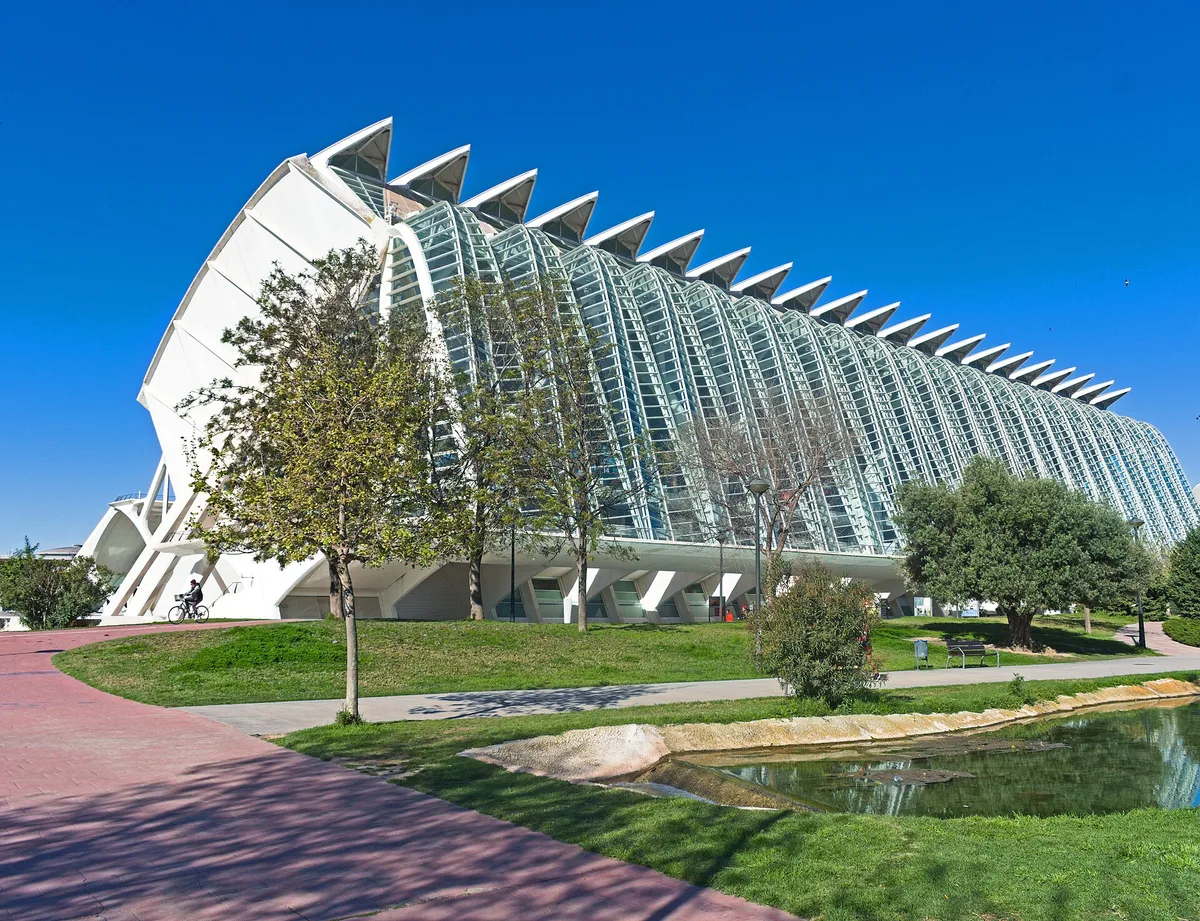
Long before you reach the entrance, the building itself starts the show. Félix Candela and Santiago Calatrava designed it to look like the bleached skeleton of a whale, and up close the resemblance holds: white ribs of concrete arch over a glass shell, casting long slatted shadows across the plaza in the afternoon sun. Locals call the whole science-museum-plus-planetarium-plus-oceanarium complex simply “the City of Arts and Sciences,” and the Príncipe Felipe is its intellectual heart, three floors of exhibits built for touching, cranking, and pressing buttons rather than reading wall text.
What to see and do
Inside, the museum trades hushed reverence for noise and motion. You’ll find a foucault pendulum swinging slowly in the atrium, a genetics gallery where you can trace DNA models by hand, and a hall dedicated to the physics of everyday motion (gyroscopes, pulleys, levers) that keeps kids occupied for a solid hour. Look for the Chromosome Forest, a permanent installation of oversized glass chromosome sculptures that’s become one of the building’s quiet signature images.
Temporary exhibitions rotate through a large hall near the entrance and often focus on space exploration, the human body, or climate science, with English-language signage alongside Spanish and Valencian. Budget two to three hours minimum; families with curious kids often stretch that to a full half-day, especially if you pair it with the neighboring Oceanogràfic or Hemisfèric planetarium, both a short walk across the plaza.

Getting there
The museum sits inside the Ciudad de las Artes y de las Ciencias complex, on Avenida del Professor López Piñero in the Quatre Carreres district, southeast of Valencia’s historic center. The most reliable route is Metro Línea 3 or Línea 5 to Alameda station, followed by a flat, shaded 20-minute walk along the Jardín del Turia, the long, sunken park built in the old riverbed, which is itself worth the stroll past fountains and orange trees.
If you’d rather not walk, city buses run directly to the complex from the center, and taxis or rideshares take about 10–15 minutes from the Ciutat Vella. Drivers will find paid parking on-site, though spaces fill quickly on weekends.
When to go
The museum’s own foot-traffic patterns make the timing decision easy. On weekdays, crowds stay manageable across the entire 10am–10pm stretch, so there’s no real rush-hour to dodge. Arrive whenever suits your schedule. Weekends are the opposite story: between 11am and 7pm the halls fill with families and tour groups, and the interactive stations queue up fast. If a weekend is your only option, aim for the evening window of 7pm to 10pm, when the crowds thin noticeably and you can actually get your hands on the exhibits without waiting.
Spring and early autumn bring the most comfortable temperatures for the walk over from Alameda; midsummer afternoons in Valencia get hot enough that the shaded riverbed park route is worth timing for morning or evening.
How to visit like a local
Buy timed-entry tickets online in advance rather than queuing at the door, the museum’s popularity (it’s one of the most-reviewed attractions in the city) means walk-up lines build fast, especially on weekends and school holidays. Combo tickets bundling the science museum with the Oceanogràfic and Hemisfèric are usually the better value if you’re visiting more than one venue, so decide your itinerary before you buy.
Inside, most visitors pay by card or contactless mobile payment at the cafés and gift shop, cash isn’t necessary. The most common visitor mistake is treating this as a quick add-on stop after the Oceanogràfic; the exhibits reward slower exploration, and rushing through in under an hour means missing most of the hands-on stations. Locals with young kids often time visits for that quiet weekend evening window specifically, arriving after dinner rather than fighting the midday crush.
Wear comfortable shoes for the walk from Alameda, and if you’re visiting in July or August, start early or go in the cooler evening hours, the plaza’s white concrete reflects a lot of heat by midafternoon.
Frequently asked questions
How long should I spend at the Museo de las Ciencias Príncipe Felipe?
Plan on 2–3 hours for a solid visit; families with kids who want to try every interactive station often spend a half-day, especially if combining it with the Oceanogràfic next door.
What's the best time to visit to avoid crowds?
Weekdays are calm throughout the full 10am–10pm opening period. On weekends, avoid 11am–7pm when it's busiest and instead go between 7pm and 10pm, when crowds thin out considerably.
How do I get there by public transport?
Take Metro Línea 3 or Línea 5 to Alameda station, then walk about 20 minutes through the Jardín del Turia riverbed park to reach the Ciudad de las Artes y de las Ciencias complex.
Should I book tickets in advance?
Yes — given how heavily visited the museum is, buying timed-entry tickets online ahead of time avoids long queues, particularly on weekends and school holidays.
Is it worth combining with other attractions nearby?
Definitely — the Oceanogràfic aquarium and the Hemisfèric planetarium are both within the same complex, a short walk across the plaza, and many visitors buy combo tickets to see two or three venues in one day.
Plan your trip to Valencia
Some links above are affiliate links — if you book through them, Wander Atlas earns a small commission at no extra cost to you. It's how we keep every guide free.
Related guides
 attraction
 Ciudad de las Artes y las Ciencias: Valencia Travel Guide
 attraction
 La Lonja de la Seda de Valencia: Travel Guide
 attraction
 Torres de Serranos: Valencia Travel Guide (4.6★)
 restaurant