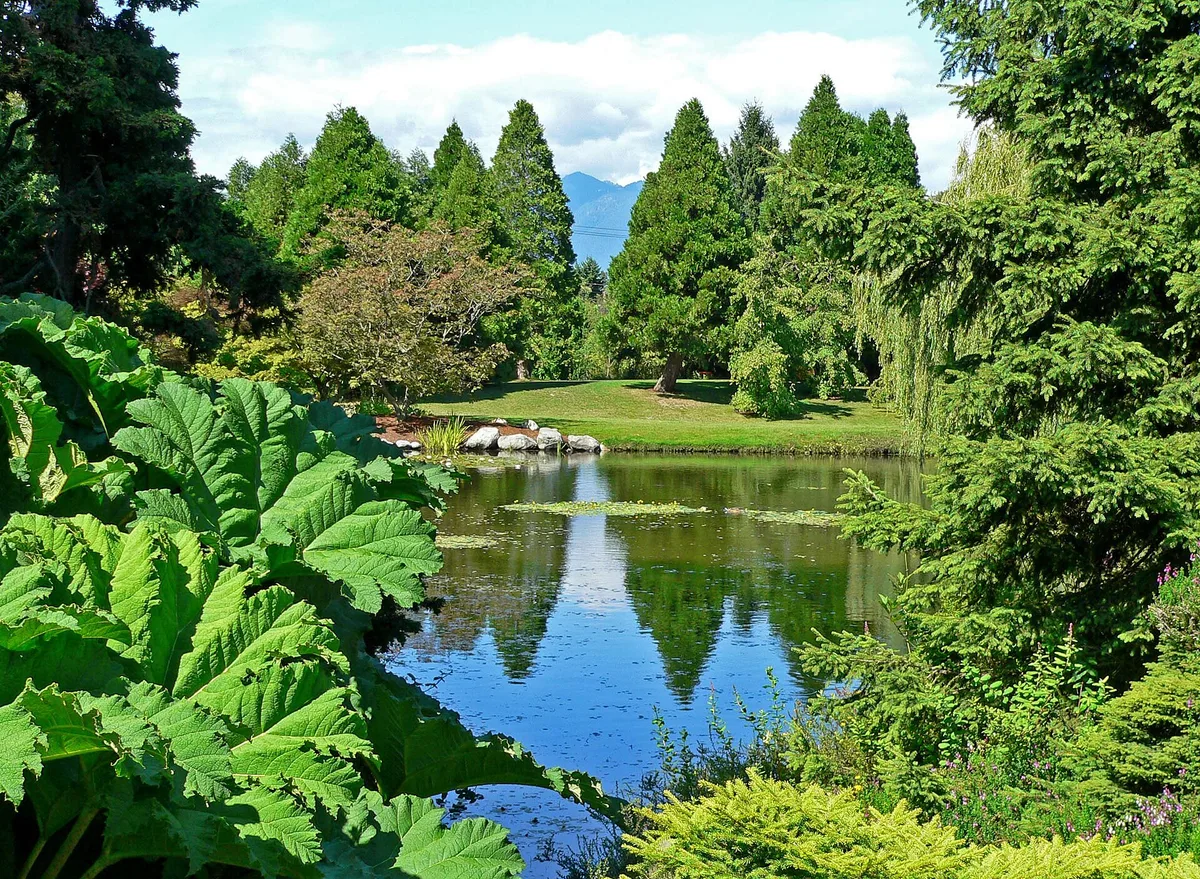
Fifty-five acres on an old golf course
VanDusen was not always a garden. The land was once part of the Shaughnessy Golf Course. Residents campaigned to keep it from becoming housing, and the garden opened in 1975. That history shows in the ground itself: long, rolling lawns, ponds where water hazards might have been, and room for paths to wander instead of marching in straight lines.
Today it covers roughly 55 acres at the corner of Oak Street and West 37th Avenue. The plantings are arranged by region and theme, so a single loop can take you from Himalayan rhododendrons to a stand of Pacific Northwest natives in a few minutes. Google’s summary sums up the mix: ever-changing greenery, flowers and art installations, plus fine dining and a casual café.
Working with a four-hour window
The schedule shapes the whole visit. At the moment Google lists the garden as open 10am–2pm every day of the week. That is a short window, and it usually reflects the darker months, so hours shift through the year. Check the official VanDusen site for this month’s times before you set out.
With four hours, arrive close to opening. It’s calmest between 10am and 11am on weekdays, which also gives you the full stretch before the gates close. On weekends, try not to arrive after 11am; from then until the 2pm close is when the paths, café and maze fill up.
A comfortable visit takes two to three hours. That covers the main loop, a stop at the maze and a coffee, and still leaves time to wander off toward whatever is flowering that week.
The Elizabethan maze
Most people ask about the maze first. VanDusen’s Elizabethan hedge maze is planted in cedar, with walls tall enough that small children can’t see over them. Adults mostly can. It sits toward the garden’s southern side and is clearly marked on the site map.
It’s small enough to solve in ten minutes and still worth doing. Families tend to cluster here from late morning onward, so on a busy weekend go there first and leave the quieter gardens for later.

What’s in flower, season by season
There’s no off-season, just a change of focus. The highlights move through the year:
- Spring: rhododendrons and azaleas are the garden’s backbone, plus magnolias and flowering cherries.
- Late May: the Laburnum Walk, a tunnel of golden chain trees hanging in yellow clusters, is the most photographed spot in the garden for a couple of weeks.
- Summer: roses, perennial borders and waterlilies on the ponds.
- Autumn: maples and the deciduous trees around the lakes change colour.
- Winter: bark, berries, conifers and winter-flowering shrubs, plus the December Festival of Lights.
The Festival of Lights is an evening event with its own ticketing and dates. Don’t rely on regular daytime hours for it; the official site posts the schedule each year.
Getting to Oak and 37th
You can get here easily without a car. The garden’s address is 5251 Oak St, on the west side of the street between 33rd and 37th Avenues.
- Bus: the 17 Oak runs along Oak Street and stops near the entrance. It’s the most direct option from downtown.
- SkyTrain: Canada Line to Oakridge–41st Avenue, then walk about 15–20 minutes west and north through quiet residential streets.
- Car: there is an on-site parking lot off the main entrance. It fills on weekend middays, which is one more reason to come early.
Queen Elizabeth Park, with the Bloedel Conservatory dome on its summit, is a short walk east along 33rd Avenue. Pairing the two makes a full green day, but plan VanDusen first because of its early close.
Moving through the garden without the crowd
Doing it in the right order makes the visit easier. Pick up a map at the entrance; the paths loop and fork, and the signage names collections rather than directions. Ask at the front desk what is in bloom that week. Staff and volunteers track it closely, and it’s the best way to decide where to spend your limited hours.
A few habits that help:
- Stay on the paths and off the planted beds. Labels at the base of plants are there for reading, not moving.
- Dogs are generally not allowed in the garden, apart from service animals. Confirm current rules before bringing one.
- Pay for admission by card at the entrance. Current prices are posted at the gate and on the official website.
- If you plan to visit more than once in a year, ask about membership at the desk before buying a single ticket.
Picnics on the lawns are part of the Vancouver garden habit. Bring a jacket outside summer, as the lake areas sit open to the wind.
Eating on site
Two options sit near the entrance: a casual café for coffee, soup and something quick, and a fine-dining restaurant for a proper sit-down meal. With a 2pm close, the café is the practical choice. Eat early or after your loop, rather than losing your quiet 10am window to a table.
If you want the restaurant, book ahead and check that its service hours suit your visit, since they may differ from the garden’s. For a wider choice of food afterwards, Oakridge and the shops along Cambie Street are a short bus ride or walk east.
Frequently asked questions
When is the quietest time to visit VanDusen Botanical Garden?
Weekdays between 10am and 11am are typically the calmest. On weekends, the busiest stretch is 11am–2pm, so arrive right at the 10am opening if you can only come on a Saturday or Sunday.
What are VanDusen's opening hours?
Google currently lists 10am–2pm every day, but hours change through the year and the Festival of Lights runs on its own evening schedule. Check the official VanDusen website for this month's times.
How do I get to VanDusen without a car?
Take the 17 Oak bus, which stops close to the entrance at 5251 Oak St. Or ride the Canada Line to Oakridge–41st Avenue and walk about 15–20 minutes west and north.
How long should I spend at VanDusen?
Plan on two to three hours. That's enough for the main loop, the Elizabethan hedge maze and a café stop within the current four-hour opening window.
What else is nearby?
Queen Elizabeth Park and the Bloedel Conservatory are a short walk east along 33rd Avenue. Visit VanDusen first because of its early closing time.
Plan your trip to Vancouver
Canada eSIM & staying connected →
Some links above are affiliate links — if you book through them, Wander Atlas earns a small commission at no extra cost to you. It's how we keep every guide free.
Related guides
 hidden gem
Gastown Steam Clock: Vancouver Travel Guide (4.5★)
 attraction
Granville Island Public Market: Vancouver Travel Guide
 attraction
Stanley Park Seawall Path: Vancouver Travel Guide
 attraction