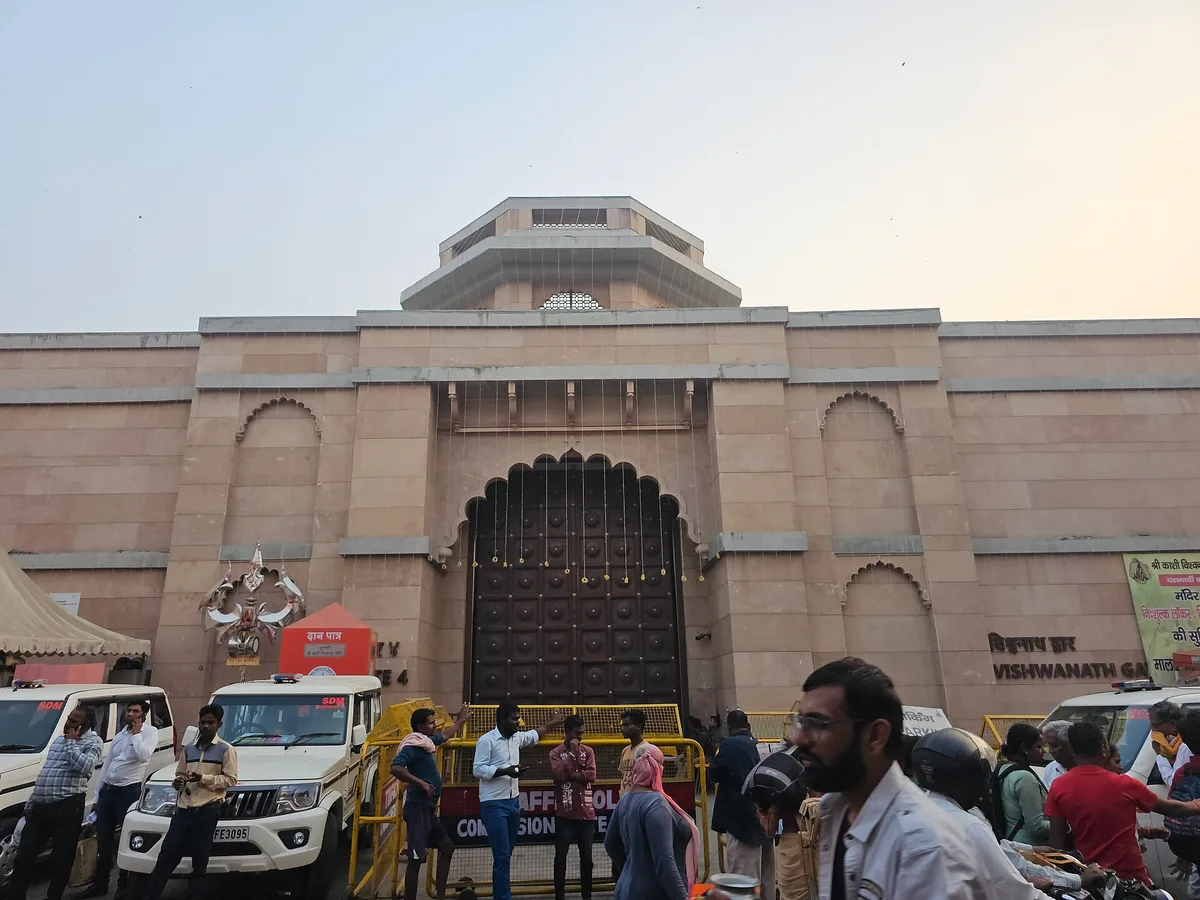
Why this temple matters
Kashi Vishwanath is one of the twelve Jyotirlingas, the sites believed to house a self-manifested form of Shiva’s light, and for millions of pilgrims it’s the reason to come to Varanasi at all. The current structure dates to the 1780s, rebuilt by Ahilyabai Holkar of Indore after earlier temples on the site were destroyed, and its spire is sheathed in roughly 800 kilograms of gold donated by Maharaja Ranjit Singh in the 1830s.
You feel the weight of that history before you even see the spire: the streets tighten, the air thickens with incense and marigold, and the sound of temple bells starts bleeding into the general roar of the lanes around Vishwanath Gali.
Getting there and getting in
The temple sits in Lahori Tola, in the old city’s tangle of lanes near Lalita Ghat on the Ganges, cars can’t reach it, so the last stretch is on foot. Varanasi Junction (Varanasi Cantt) railway station and Lal Bahadur Shastri International Airport both connect easily to the Vishwanath Gali area by auto-rickshaw or taxi, which will drop you at Maidagin or Gyan Vapi crossing, from where it’s a 10-15 minute walk through narrow, shop-lined alleys.
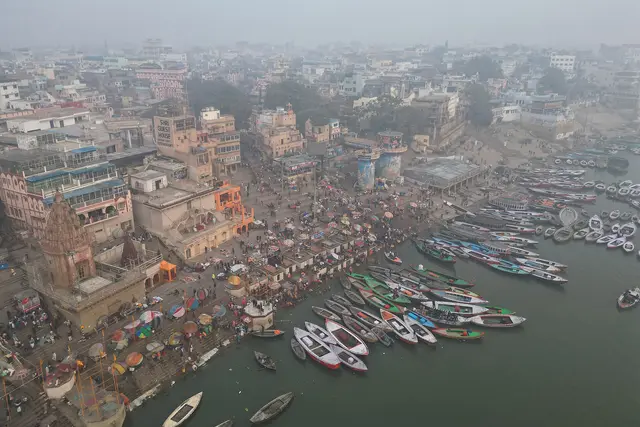
Since 2021, the Kashi Vishwanath Dham corridor has opened a wide, paved approach directly from the ghats, so many visitors now arrive by boat or on foot along the river and enter through the corridor’s stone gateways rather than the old bazaar lanes.
Security is serious and worth planning around: bags, phones, cameras, and leather items aren’t allowed inside, and there are cloakrooms nearby (and lockers along the corridor) where you leave belongings before joining the queue. Carry only what you need, an ID, a bit of cash, and nothing electronic.
What you’ll actually see and do
Inside, the sanctum holds the black stone lingam under a silver-plated altar, sheltered by that gold spire visible from the river. Pilgrims queue to touch the lingam, pour water or milk (Jal/Doodh abhishek) over it, and offer bilva leaves, following a ritual sequence rather than wandering freely. The flow is managed by temple staff and barriers, especially during peak hours.
Just outside the main shrine is the Gyan Vapi well, considered sacred though not usually open for visitors to approach closely due to the sensitivities and security around the adjacent mosque site. The wider Kashi Vishwanath Dham corridor now includes courtyards, a Ganga-view gallery, a Vedic study center, and several subsidiary shrines to deities like Kaal Bhairav and Shani, making the complex feel more like a small campus than a single temple building.
When to go
Mornings start with Mangala Aarti in the very early hours (roughly 3am), a ritual so significant that dedicated tickets are sometimes required for it. Check current timing before you go, as it shifts seasonally. Mid-morning to early afternoon tends to be steadier and less frantic than the evening rush, when Saptarishi Aarti and the general pull of Ganga aarti at nearby ghats draws thick crowds through the lanes.
Weekdays are calmer than weekends and far calmer than Shivratri or Kartik Purnima, when queues can stretch for hours. Winter mornings (November-February) are cool and comfortable for the walk; by May-June the midday heat in the shadeless corridor courtyards is brutal.
How to visit like a local
Regular worshippers arrive at dawn specifically to avoid both the heat and the queues that build by mid-morning, and they dress simply, men often bare-chested or in a plain kurta near the sanctum, women in modest saris or salwar suits, since strict traditional dress is expected close to the lingam. Offerings (flowers, bilva leaves, small sweets) are bought from stalls right outside, so it’s worth carrying cash in small denominations.
There’s no single “VIP” shortcut open to everyone, but a paid Sugam Darshan ticket, bought at counters near the complex, lets you skip the general queue during busy periods; it’s the standard way both locals and visitors avoid the multi-hour wait. The mistake most first-timers make is arriving mid-morning with a bag full of phone, camera, and wallet, only to backtrack to a cloakroom and lose an hour, sort your belongings before you even enter Vishwanath Gali.
Budget at least an hour inside once you’ve cleared security, more if you want to sit by the Ganga-facing gallery afterward and watch the river.
Frequently asked questions
What's the quietest time to visit Kashi Vishwanath Temple?
Very early morning at opening (around the 3am Mangala Aarti) or the early afternoon lull are calmer than the mid-morning and evening rush; weekdays outside festival dates are always easier than weekends.
How do I get to the temple from Varanasi Junction station?
Take an auto-rickshaw or taxi to Maidagin or Gyan Vapi crossing (about 15-20 minutes), then walk the last stretch through Vishwanath Gali, or continue to the ghats and approach via the Kashi Vishwanath Dham corridor on foot.
What can't I bring inside?
Phones, cameras, bags, and leather goods are not permitted in the sanctum area. Use one of the cloakrooms or lockers near the entrance before joining the queue.
How long should I plan to spend there?
Budget at least an hour once past security for darshan; add more time if you want to explore the wider Dham corridor, its galleries and subsidiary shrines, or sit by the Ganga-facing viewpoint.
Is there a way to skip the queue?
Yes — a paid Sugam Darshan ticket, available at counters near the complex, lets you bypass the general line during busy periods; confirm current pricing and process on arrival since it can change.
Plan your trip to Varanasi
India eSIM & staying connected →
Some links above are affiliate links — if you book through them, Wander Atlas earns a small commission at no extra cost to you. It's how we keep every guide free.