
Five nights, one river
Diwali in Varanasi spans November 6-10, 2026. The sequence follows the standard five-day order: Dhanteras, Choti Diwali, Lakshmi Puja on November 8, Govardhan Puja, then Bhai Dooj. Each night adds more clay oil lamps, called diyas, to doorsteps, temple ledges and the stepped ghats.
Lakshmi Puja is the peak. Families and shopkeepers worship the goddess of prosperity at home and in their shops. Afterwards the lanes fill with firecrackers until late.
The day after, Kashi Vishwanath Temple marks Annakut, when the deity is offered a mountain of cooked food.
Diwali versus Dev Deepawali
Many visitors mix up these two festivals. Diwali is the national festival, and Varanasi observes it mostly in homes, markets and temples. Dev Deepawali, the “Diwali of the gods”, falls on Kartik Purnima, roughly a fortnight later.
On Dev Deepawali the whole crescent of ghats is lined with diyas, step after step. It is the event behind most photographs of Varanasi glowing along the water. Travellers who come for both usually stay through the two weeks between them.
Where the light gathers
There is no single venue and nothing to buy at a gate. These are the places visitors usually head:
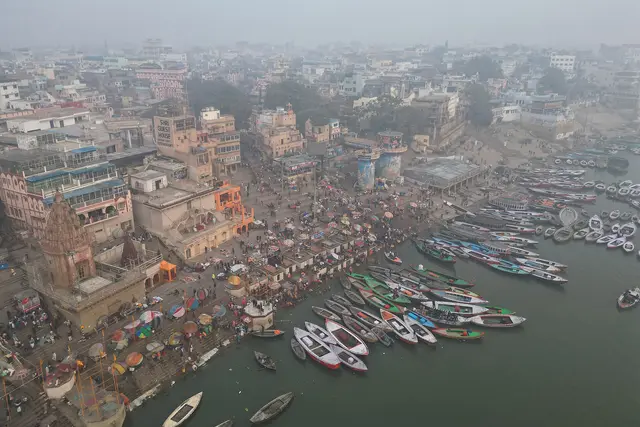
- Dashashwamedh Ghat: the nightly Ganga Aarti, with priests swinging tiered brass lamps in unison. It draws the densest crowd.
- Assi Ghat: the southern end, with a morning aarti and a looser, student-heavy feel.
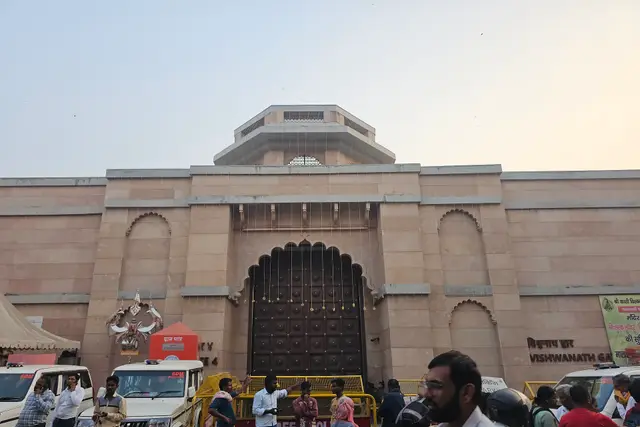
- Vishwanath Gali: the narrow lane up to Kashi Vishwanath Temple, packed with sweet shops and puja stalls.
- Godowlia market: the commercial knot where Dhanteras shoppers buy brass, silver and clay lamps.
- Manikarnika Ghat: the cremation ghat, where the fires keep burning through every festival night.
The city’s airport is Lal Bahadur Shastri International at Babatpur, northwest of town. Trains arrive at Varanasi Junction, also called Cantt. Cycle-rickshaws and walking take over near the river, because cars cannot get into the old-city lanes.
Moving through the ghats on festival nights
Boats are the main “ticket” here. Oarsmen and motorboat operators wait at the ghats, and fares are agreed face to face with no posted rate. Groups usually fix the route first, such as Assi to Manikarnika and back, and set a clear duration before stepping aboard.
- Shoes: they come off at temple entrances, and Kashi Vishwanath has strict security that bans phones inside the shrine.
- Cremation ghats: photographing the pyres is considered deeply disrespectful. Visitors watch from a distance and keep cameras down.
- Floating lamps: leaf-cup diyas with marigolds are sold on the steps. Releasing one onto the water is welcome for anyone.
- Sweets: exchanging mithai is central to Diwali. Kaju katli and laddoos are stacked high in every shop along Godowlia.
The ghat steps are steep and uneven, worn by centuries of use. On Diwali night they are also scattered with firecracker debris and dripping oil. Visitors who want to watch the aarti usually claim a spot on the steps or a boat well before it starts. Once it begins, the crowd at Dashashwamedh becomes hard to move through.
Air quality across north India often drops sharply around Diwali because of fireworks smoke and seasonal haze. Travellers with breathing problems often carry a mask.
Frequently asked questions
When is Diwali in Varanasi in 2026?
The festival runs November 6-10, 2026. The main Lakshmi Puja night is November 8.
Do I need tickets for Diwali in Varanasi?
No. The celebrations happen on public ghats, in markets and at temples. The only paid element is usually a boat on the Ganges, and the fare is agreed directly with the boatman at the ghat.
Is Dev Deepawali the same as Diwali?
No. Dev Deepawali falls on Kartik Purnima, about two weeks after Diwali. That is the night when all of Varanasi's ghats are lined with oil lamps.
Where is the best place to watch the celebrations?
The Ganga Aarti at Dashashwamedh Ghat is the focal point. A boat along the river shows the full curve of lit ghats. Assi Ghat is less packed.
How do I get to Varanasi?
Fly into Lal Bahadur Shastri International Airport at Babatpur, or take a train to Varanasi Junction (Cantt). Near the river you walk or take a cycle-rickshaw, because cars cannot enter the old lanes.
Plan your trip to Varanasi
India eSIM & staying connected →
Some links above are affiliate links — if you book through them, Wander Atlas earns a small commission at no extra cost to you. It's how we keep every guide free.
Related guides
 hidden gem
 Chet Singh Ghat, (Varanasi): Travel Guide
 attraction
 Dashashwamedh Ghat: Varanasi Travel Guide (4.6★)
 attraction
 Shri Kashi Vishwanath Temple: Varanasi Travel Guide
 Ended
Ended