Dashashwamedh Ghat: Varanasi Travel Guide (4.6★)

✓ Facts verified via Google Places · Sep 13, 2026
At a glance
Live foot-traffic data via BestTime.app
How this guide is made
Produced with AI assistance and reviewed against live data sources. Facts such as hours, ratings, and location come from Google Places; images are licensed or public domain. Details can change — please verify before visiting. Editorial policy
What this ghat actually is
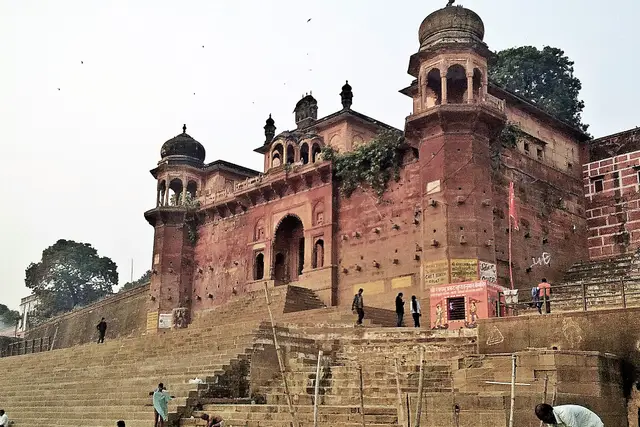
Dashashwamedh Ghat sits at the river end of Dashashwamedh Ghat Road, a five-minute walk from Godowlia crossing. Hindu tradition holds that Brahma sacrificed ten horses here, which gives the ghat its name: “dasha” (ten) “ashwa” (horse) “medh” (sacrifice). It’s the widest, busiest of Varanasi’s roughly 88 ghats, a broad stone staircase running down to the Ganges. Priests, boatmen, flower-sellers and pilgrims occupy it from before sunrise to well past midnight, every day, all year.
Dawn ritual, evening fire
Two very different scenes happen here on the same steps. Before sunrise, pandits sit under bamboo umbrellas performing puja while bathers wade into the river; boatmen wait to row visitors out for a sunrise view of the ghats lit gold. Book a boat directly at the water’s edge and agree the price before stepping in.
After dark, the Ganga Aarti takes over. Seven young priests on a raised platform swing brass multi-tiered oil lamps in unison to drums and bells, facing the river, watched from the steps and from boats anchored just offshore. It runs nightly, roughly 45 minutes, timed to sunset so the start shifts slightly through the year.
- Sunrise boat rides: arrive by 5:30-6am for a quiet river
- Ganga Aarti: arrive 30-45 minutes early for a steps seat
- Boat-based Aarti viewing: costs more but skips the crowd crush

Beating the evening crush
This is one of Varanasi’s most visited sights, not a quiet corner, and weekend evenings between 4pm and 10pm are the peak. If you want breathing room, come for the morning rituals instead, when the crowd is thinner and the light is better for photos anyway.
For the Aarti itself, arriving early is the only real trick: the platform seating and front steps fill fast, and latecomers end up watching over shoulders. Alternatively, hire a boat an hour before the ceremony starts and watch from the water, which also means an easy exit before the crowd disperses.
Priests will offer to perform a puja or tie a thread for a “donation”: agreeing a figure upfront, or declining outright, avoids the haggling that follows if you don’t.
Getting oriented and moving on
Godowlia is the nearest landmark and rickshaw drop-off point; from there it’s a narrow, shop-lined lane on foot to the ghat, since vehicles can’t get closer. The ghat connects along the riverfront to Manikarnika Ghat, Varanasi’s main cremation ghat, a 10-15 minute walk north along the steps, and to Kedar Ghat to the south.
Keep shoes and cash handy; the steps get wet and vendors along the lane rarely take cards. Sunscreen or a scarf helps at midday, when the stone reflects heat with no shade over most of the staircase.
Frequently asked questions
Is there an entry fee for Dashashwamedh Ghat?
No, the ghat itself is free and open 24 hours. You only pay for extras like a boat ride, a guided puja, or a spot on the Ganga Aarti viewing platform.
What time is the Ganga Aarti ceremony?
It starts around sunset, so the exact time shifts through the year, typically between 6pm and 7pm. Arrive 30-45 minutes early to get a steps-side seat.
When is the quietest time to visit?
Early morning, before 7am, is calmest and best for photos and boat rides. Try to avoid weekend evenings between 4pm and 10pm, when the ghat is at its busiest.
How do I get to Dashashwamedh Ghat?
Take a rickshaw or taxi to Godowlia crossing, then walk the narrow lane down to the river; vehicles can't reach the ghat itself.
How long should I spend here?
Plan 1-2 hours for the ghat and Aarti, or add a 30-45 minute sunrise boat ride if you want the river view.
Plan your trip to Varanasi
Some links above are affiliate links — if you book through them, Wander Atlas earns a small commission at no extra cost to you. It's how we keep every guide free.