Starting from the cable car
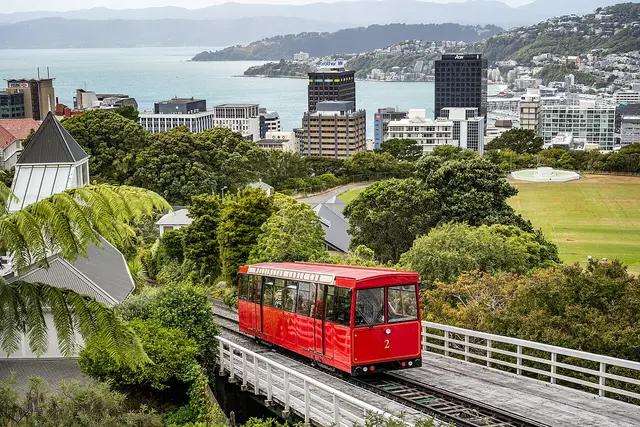
Start at the top and let gravity do the work. The red Wellington Cable Car has climbed from Lambton Quay to Kelburn since 1902. Its upper station opens onto a lookout over the harbour and the central city, and the garden’s gates are right beside it.
The garden takes up a steep 61-acre slope. Paths drop through it to the main entrance at 101 Glenmore Street and on towards Thorndon. Going down is an easy stroll. Coming back up from Glenmore Street is a proper climb, so plan your route in one direction.
What grows where
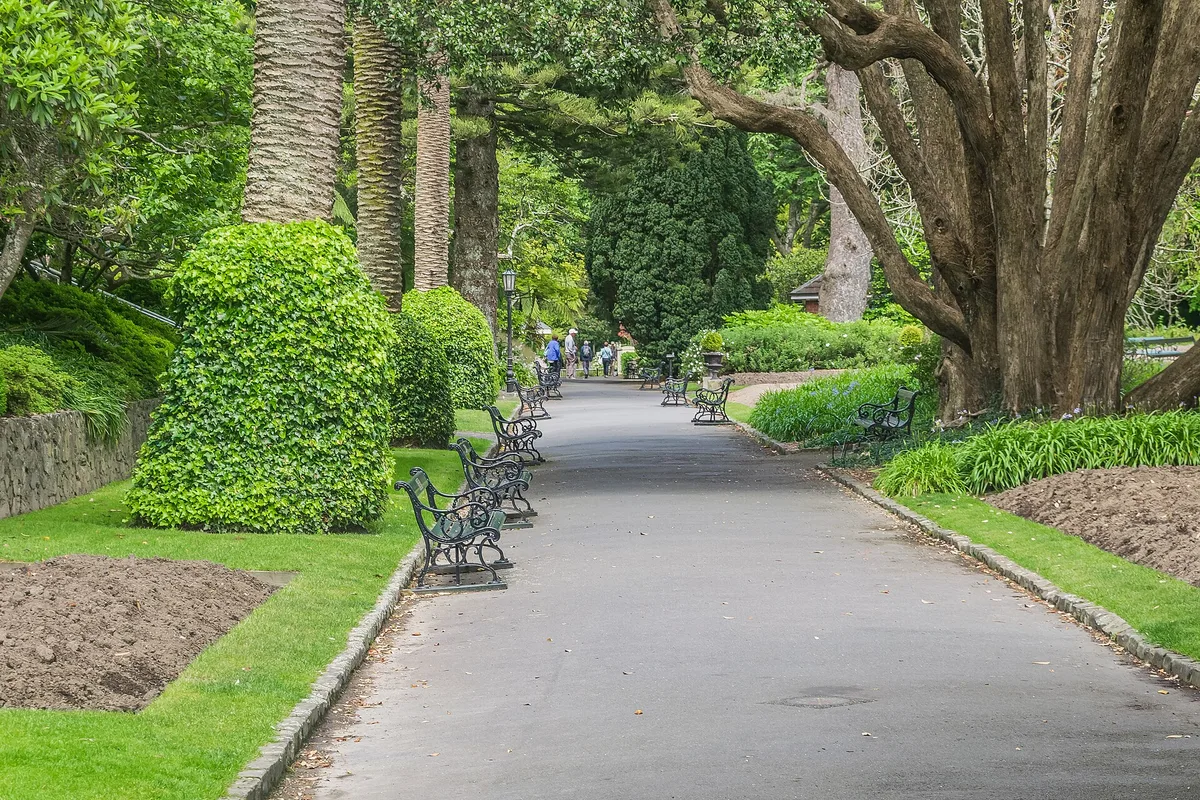
The garden was planted in 1868, and the older trees show it. Native bush and tall conifers fill the gullies, and formal beds sit on the flatter ground lower down. Most people come for these:
- Lady Norwood Rose Garden: geometric beds laid out in a wheel near the lower end, at their best from late spring through summer.
- Begonia House: the tropical greenhouse next to the rose garden. It’s warm and humid inside, a good place to get out of the Wellington wind.
- Native bush tracks: shaded paths under the canopy, where you’ll hear tūī more often than you’ll see them.
- Seasonal beds: tulips and spring bulbs in September and October, followed by summer bedding.
- Duck pond and stream: a flat, open stretch that children head straight for.
You need about an hour to walk from the cable car down to the rose garden. Allow two hours or more if you want to go inside the greenhouse and wander off onto the bush tracks.

Beating the crowds on the slope
The garden draws very large numbers, so when you go matters more than where you walk. It’s calmest from 7am to 8am every day. At that hour you’ll mostly meet joggers and dog walkers, and the rose beds are empty. Weekends are usually busiest from 10am to 10pm, so if Saturday is your only day, go early.
At the moment Google lists the grounds as open 24 hours. The Begonia House and any café keep shorter hours of their own, and these change with the seasons. Check this month’s times on the Wellington City Council’s garden page before you plan around them.
Some practical points:
- The cable car sells tickets at its stations. Expect a queue at the Lambton Quay end around midday when cruise ships are in port.
- Bring a windproof layer. The ridge at the top is often much windier than Lambton Quay below.
- Keep to the marked paths. The slopes are steep and some of the bush tracks get slippery after rain.
- Take your rubbish with you. There aren’t many bins on the upper tracks.
Nearby, uphill and down
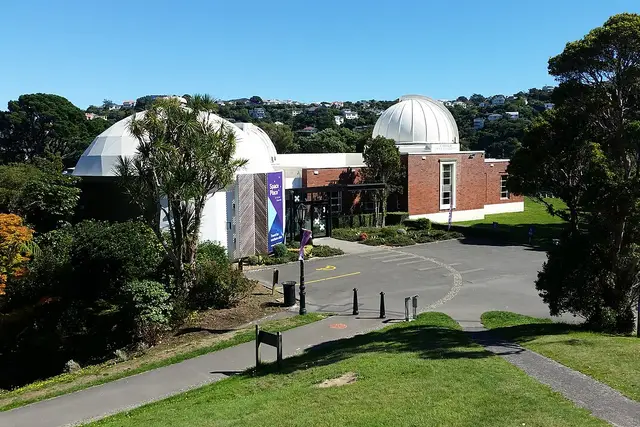
The garden links several of Wellington’s sights along one walk. At the top, Space Place at Carter Observatory runs a planetarium and holds evening stargazing sessions, which makes the hilltop worth a second visit after dark.
At the bottom, a footbridge over the motorway takes you into Bolton Street Cemetery, the city’s earliest burial ground. Its headstones go back to the colonial settlement years. Keep walking downhill and you reach Thorndon, with Parliament and the Beehive close by.
Done in that order, it’s a half-day loop that’s downhill nearly all the way: cable car up, garden, cemetery, then Parliament.
Frequently asked questions
How do I get to Wellington Botanic Garden?
Take the Wellington Cable Car from Lambton Quay up to Kelburn. The top station sits right beside the garden. You can also walk in at the main entrance, 101 Glenmore Street, though reaching the upper garden from there is a steep climb.
When is the quietest time to visit?
7am–8am, on both weekdays and weekends. Weekends are usually busiest from 10am to 10pm.
How long should I spend there?
About an hour for the walk down from the cable car to the rose garden. Give it two hours or more to include the Begonia House and the native bush tracks.
When is the best season to visit?
Spring (September–October) for tulips and bulbs, and late spring into summer for the Lady Norwood Rose Garden. The native bush is green all year round.
What's nearby?
Space Place at Carter Observatory and the Kelburn lookout are at the top of the garden. Bolton Street Cemetery, Thorndon and Parliament are below it, all within walking distance.
Plan your trip to Wellington
New Zealand eSIM & staying connected →
Some links above are affiliate links — if you book through them, Wander Atlas earns a small commission at no extra cost to you. It's how we keep every guide free.
Related guides
 attraction
Space Place at Carter Observatory: Wellington Travel Guide
 attraction
Wellington Cable Car: Travel Guide (4.6★)
 attraction
Wellington Museum: Travel Guide (4.6★)
 attraction