Xi'an Museum: Travel Guide (4.6★)

When to visit China: month-by-month weather, crowds and holidays →
✓ Facts verified via Google Places · Aug 5, 2026
At a glance
How this guide is made
Produced with AI assistance and reviewed against live data sources. Facts such as hours, ratings, and location come from Google Places; images are licensed or public domain. Details can change — please verify before visiting. Editorial policy
Why go
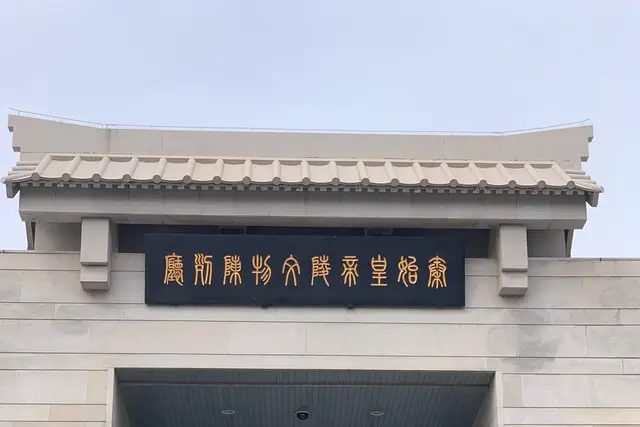
Xi’an has no shortage of history stops, but this is one of the few places where the story is told in the right order, in one visit. The museum building itself is deliberately modern (grey stone, a low domed roofline meant to echo a bronze mirror), and it sits inside a genuinely old religious complex, the Jianfu Temple grounds, which have stood here since the 7th century.
You walk in expecting one museum and leave having covered a full arc: prehistoric Guanzhong pottery, Han and Tang capital-city artifacts, and then out the back door into a still-functioning Buddhist temple garden with a 45-meter brick pagoda that predates the museum by well over a millennium. Few sites in Xi’an let you feel that jump, from climate-controlled display case to actual weathered stone, in the space of ten minutes.
Getting there
The museum sits at 72 Youyi Xi Lu (友谊西路), in Beilin District, just south and slightly west of the old city wall, an easy taxi or rideshare from the Bell Tower or Muslim Quarter, roughly 15-20 minutes depending on traffic. If you’re using the metro, Xiaozhai station (Lines 2 and 3) is the nearest useful stop, followed by a short taxi ride or a 20-minute walk north.
Many visitors pair this trip with the Small Wild Goose Pagoda park itself, since the pagoda is inside the same grounds as the museum. You don’t need to plan them as two separate outings.
What to see inside
The permanent collection is organized roughly chronologically, tracing Xi’an’s run as capital of over a dozen dynasties, with the Han and Tang sections doing the heavy lifting, gilt bronze figures, glazed Tang tomb ceramics, and everyday objects (coins, mirrors, ceramic pillows) that do more to humanize the era than another rack of imperial artifacts would. Labels are bilingual (Chinese/English), which isn’t a given at every civic museum in the city, and the layout doesn’t force you into a single one-way loop, so you can double back to a case that caught your eye.
Give the galleries a genuine hour if history is your reason for coming; 30-40 minutes is enough for a lighter pass.
The pagoda and gardens
Step outside the exhibition halls and the mood changes completely. The grounds around the Little Wild Goose Pagoda are landscaped with reflecting pools, clipped hedges, and old cypress trees, and the pagoda (dating to 707 CE, built to house Buddhist scriptures) still has its slightly asymmetric silhouette from earthquake damage centuries ago, a detail that’s easy to miss unless you look up and really study the tiers.
Locals use these gardens the way you’d use any city park: morning tai chi, a slow lap after lunch, grandparents with kids feeding the koi. It’s worth resisting the urge to rush from museum door to museum door and instead just sit by one of the pools for ten minutes.
When to go
Xi’an’s spring (April-May) and autumn (late September-October) offer the mildest air and the best light on the pagoda’s brickwork; summer is intensely humid and the gardens offer little shade at midday. Weekday mornings, shortly after opening, are consistently the calmest, tour buses tend to arrive from late morning onward, particularly on weekends and around Chinese public holidays, when both the galleries and courtyards fill up fast. If your schedule is flexible, that first hour of the day is the one to claim.
How to visit like a local
Chinese state and municipal museums, including this one, are typically free to enter, but almost all now require you to reserve a timed ticket in advance online (via the museum’s official WeChat account or a booking platform) rather than simply walking up. Bring your passport, since foreign visitors usually register with it at the gate. Cash is barely used anywhere in Xi’an now; have a mobile payment app or your passport ready, and don’t expect the ticket counter to be your main entry point.
Move at a local’s pace once inside: Chinese visitors here tend to linger longest in the Tang gallery and then treat the outdoor pagoda garden as a genuine rest stop, not just a photo backdrop, so don’t feel rushed to do both halves in one continuous march. The most common visitor mistake is treating this purely as “the pagoda place” and rushing the museum, or vice versa. The two halves were built to be seen together, and skipping either shortchanges the visit.
Frequently asked questions
How much does it cost to enter Xi'an Museum?
Entry is typically free, as with most Chinese state museums, but you'll usually need to book a timed slot in advance online and bring your passport for registration at the entrance — confirm the current booking process before you go, as it can change.
How long should I spend there?
Plan on 2 to 2.5 hours total: roughly an hour in the galleries and the rest wandering the pagoda grounds and gardens. A quick pass through just the museum can be done in 30-40 minutes if you're short on time.
What's the best time to visit to avoid crowds?
Weekday mornings shortly after opening are the calmest, before tour groups typically arrive later in the day. Weekends and Chinese public holidays get noticeably busier in both the exhibition halls and the outdoor gardens.
How do I get there from the Bell Tower or Muslim Quarter?
It's about a 15-20 minute taxi or rideshare ride south to Youyi Xi Lu in Beilin District. By metro, take Line 2 or 3 to Xiaozhai station, then a short taxi ride or roughly 20-minute walk north.
Is the Little Wild Goose Pagoda included in the same visit?
Yes — the pagoda and its garden grounds are part of the same complex as the museum, so you can see both in a single trip without planning separate visits.
Plan your trip to Xi'an
Some links above are affiliate links — if you book through them, Wander Atlas earns a small commission at no extra cost to you. It's how we keep every guide free.