Stand at the north face of the Drum Tower and look up the lane in front of you. Grey brick shopfronts with dark timber eaves line both sides, red lanterns hang in rows, and the paving runs straight north. That lane is Beiyuanmen, the main spine of Xi’an’s Hui Muslim Quarter.
Plenty of visitors reach it without learning its name. They follow the crowd off the Bell Tower plaza and eat their way through. Stop and look up, though, and the street has more to show you than its food stalls.
The street behind the Drum Tower
Beiyuanmen is short and walkable. It runs from the Drum Tower’s northern side up toward the northern part of the old walled city. The buildings are two storeys, rebuilt in a Ming and Qing style. Upper floors carry carved wooden screens, and the ground floors open straight onto the street as kitchens and counters.
Side lanes branch off both sides. The most important is Xiyangshi, which cuts west and is lined with even more snack stalls. Beiyuanmen itself is broader and more open, so you can walk it without being carried along by the crowd.
A governor’s gate and an empress in retreat
The name means “North Courtyard Gate”. In the Qing dynasty the Shaanxi governor’s offices stood here, and the street led up to the northern compound. In 1900, when foreign armies took Beijing during the Boxer Uprising, Empress Dowager Cixi and the Guangxu Emperor fled west. They stayed in this northern courtyard.
That history mostly survives in the name, but one house lets you step inside it. The Gao Family Mansion, at No. 144 Beiyuanmen, is a restored courtyard home with a run of inner courtyards, halls and carved brickwork. It gives you a sense of how a well-off Xi’an family lived behind these shopfronts. Check its opening times before you go.
What to eat on the way north
The Hui community has lived and cooked in this quarter for centuries, and the food is halal. Look for these:
- Roujiamo: chopped stewed beef or lamb stuffed into a flat, crisp-edged bun.
- Yangrou paomo: flatbread torn into small pieces and simmered in mutton broth, the dish the city is known for.
- Biangbiang noodles: thick, belt-wide hand-pulled noodles under chilli oil.
- Persimmon cakes (shizi bing): small fried discs of persimmon dough with a sweet filling.
- Jingao: steamed glutinous rice layered with red dates, sliced to order from a big block.
- Liangpi: cold, slippery wheat or rice noodles with vinegar and chilli.
You’ll also pass stalls pounding sesame or walnut candy with wooden mallets, and counters stacked with dried fruit and nuts.
Getting to Beiyuanmen
Take Metro Line 2 or Line 6 to Zhonglou (Bell Tower) Station. Come up on the plaza between the Bell Tower and the Drum Tower, then walk west to the Drum Tower. Beiyuanmen starts on the far side of it, about ten minutes on foot.
If you’re walking inside the city wall, the Bell Tower is the easiest landmark. Every main avenue in the old city points toward it.
Doing Beiyuanmen the Hui Quarter way
A few habits make the street easier:
- Pay by phone. Almost every stall takes Alipay or WeChat Pay. Link a foreign card to Alipay before you arrive. Carry some cash for the odd stall that won’t take a card-linked account.
- Tear your own paomo. At a paomo restaurant you’re handed bread and a bowl. You break it into pieces the size of a fingernail, then hand it back to the kitchen for broth. Smaller pieces soak up more.
- Leave out pork and alcohol. This is a Muslim neighbourhood. Don’t bring either onto the street, and don’t expect to find them.
- Haggle on souvenirs, not food. Snack prices are posted on the stall. Shadow puppets and trinkets are open to bargaining.
- Dress modestly for the mosque. Cover your shoulders and knees if you’re heading to the Great Mosque.
For timing, think about how the street works. In the morning shutters are still opening and the facades are easy to see. By evening the lanterns are lit and the grills are going, and that’s when most visitors pile in. Pick whichever you came for.
Around the corner
Everything nearby is within a short walk:
- Great Mosque of Xi’an: down Huajue Lane west of the Drum Tower. It’s built like a Chinese temple, with courtyards and pavilions rather than domes.
- Drum Tower and Bell Tower: at the south end of Beiyuanmen. Both can be climbed.
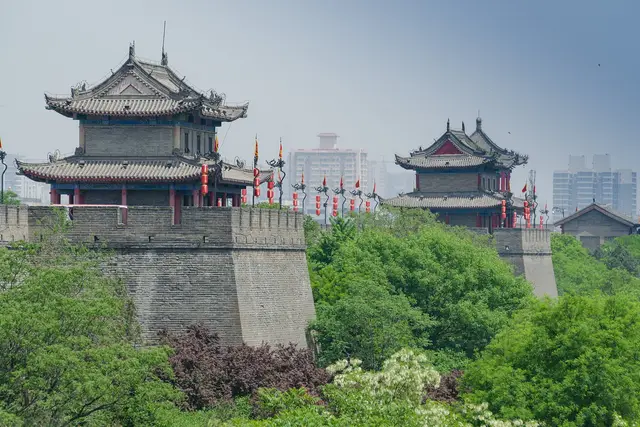
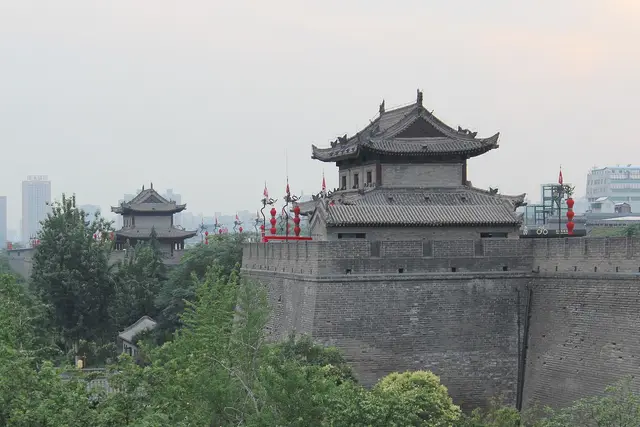
- Xi’an City Wall: a short taxi ride or a longer walk away, and you can walk or cycle along the top.
Walking Beiyuanmen, stopping at the Gao Family Mansion and ending at the mosque fills a relaxed half day.
Frequently asked questions
Where exactly is Beiyuanmen in Xi'an?
It runs north from the Drum Tower in Lianhu District, inside the city wall. It's the main street of the Muslim Quarter, near the Bell Tower.
What's the nearest metro station?
Zhonglou (Bell Tower) Station, on Lines 2 and 6. From the Bell Tower plaza, walk west to the Drum Tower. Beiyuanmen starts on its northern side, about ten minutes away.
How long should I spend on Beiyuanmen?
One to two hours covers the street, snacks and the Gao Family Mansion. Add the Great Mosque and the Drum Tower and you have a relaxed half day.
Is it better to go in the morning or the evening?
Go in the morning for the old facades and the Gao Family Mansion, while stalls are still opening. Go in the evening for lanterns and food stalls in full swing, which is also when most visitors arrive.
Can I pay with a foreign credit card?
Most stalls use Alipay or WeChat Pay rather than card machines. Link your foreign card to Alipay before the trip, and carry a little cash as backup.
Plan your trip to Xi'an
Some links above are affiliate links — if you book through them, Wander Atlas earns a small commission at no extra cost to you. It's how we keep every guide free.