Fortifications of Xi'an: Travel Guide
At a glance
How this guide is made
Produced with AI assistance and reviewed against live data sources. Facts such as hours, ratings, and location come from Google Places; images are licensed or public domain. Details can change — please verify before visiting. Editorial policy
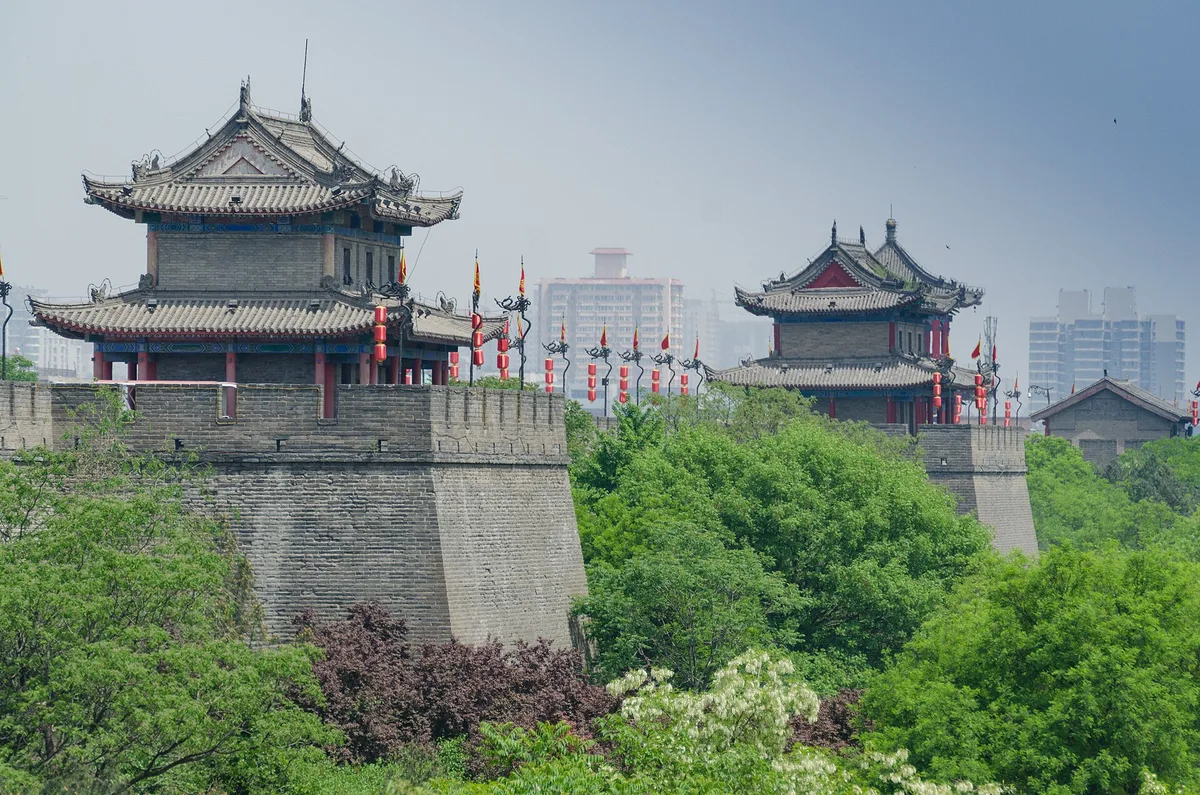
You come up the ramp expecting a ruin and instead find a fully intact rampart wide enough to drive a bus down. That’s the first surprise of Xi’an’s city wall: it isn’t a fragment behind glass, it’s a continuous, walkable fortress loop encircling the entire old city, thick grey brick underfoot, crenellations marching off in both directions until they disappear around a curve you can’t see the end of.
Why it’s worth your time
Most Chinese cities tore their walls down in the 20th century to build ring roads. Xi’an didn’t, and what survives is the largest and best-preserved city wall in the country, a rectangle roughly 13.7 kilometers around, built on Tang-dynasty foundations and rebuilt to its current form under the early Ming emperors in the 1370s. Outside the wall runs a wide moat; inside it, watchtowers, ramp gates, and a surprisingly green parkland strip where locals do tai chi at dawn.
It’s a working monument, not a museum piece, and that’s what makes an hour or two up top feel different from most “ancient wall” stops elsewhere in Asia.
Getting there and getting up
The wall rings the entire city center, so you don’t so much “arrive” as pick an entrance. The four main gates align with the compass (Yongningmen (South Gate), Anyuanmen (North), Changlemen (East), and Andingmen (West)), and South Gate is the most atmospheric, with a restored barbican, drawbridge, and moat crossing that gives you a sense of what an approaching army would have faced.
Xi’an’s metro Line 2 stops at Yongningmen (South Gate) station, putting you a short walk from the ramp. Line 2 and Line 1 also brush the Bell Tower area a few minutes’ walk from the wall’s inner ring. Access points with ticket booths and stairs or ramps up onto the wall are spaced around the loop, so you can choose an entrance close to wherever else you’re staying in the old town.
What to actually do up there
Once you’re on top, the wall itself is the attraction: wide enough (12-14 meters) that it was historically used as a parade and defense platform, now used for a dedicated cycling path and pedestrian walkway. Renting a bike at the gate and riding a stretch, or the full loop if you have the stamina, is the classic way to experience it; electric golf carts are also available for those who don’t want to walk or pedal far.
Watchtowers and corner turrets punctuate the route at intervals, and gaps between the crenellations were originally arrow slits for archers. Look down on the inner side and you’ll see the moat gardens and the low rooftops of the old city; look toward the center and the Bell Tower and Drum Tower rise above the rooftops, illuminated gold after dark.
When to go
Early morning brings soft light and locals exercising along the ramparts; late afternoon into early evening brings warm light on the brick and, after dusk, the wall and moat are lit up, which is when photographs of the gates look their best. Spring (March-May) and autumn (September-November) give you mild temperatures for the exposed, shade-free walk or ride, summer up there is hot with no real cover, and midday sun reflecting off the stone makes an already long loop feel longer.
How to visit like a local
This is a well-preserved landmark rather than a secret, but it’s genuinely under the visited-by-tourists radar compared to the Terracotta Army or Muslim Quarter, so you can still get a stretch of wall almost to yourself, especially away from South Gate. Buy your entry ticket at whichever gate you pick, South Gate and East Gate tend to have the steadiest ticket-counter lines, and confirm current opening hours and ticket prices before you go, since they can shift seasonally.
Locals doing their morning walk or tai chi routine tend to use the wall as a park, not a photo op, so keep to the outer edge if you’re not moving fast on a bike. If you rent a bicycle, note the return points are fixed at specific gates, not wherever you stop, so plan your loop distance around getting back to a rental station rather than pushing on impulsively.
Bring a portable charger and water; there’s little shade and few shops once you’re up on the ramparts, and the flat brick surface makes the distances deceptively longer on foot than they look from ground level.
Frequently asked questions
How do I get to the Xi'an City Wall?
Take metro Line 2 to Yongningmen (South Gate) station and walk up to the South Gate entrance, the most atmospheric of the four main gates. Other access points ring the whole wall near the old city center, close to the Bell Tower.
How long should I plan to spend there?
Walking a short stretch and taking photos takes under an hour; renting a bike and doing the full 13.7km loop takes roughly 2-3 hours including stops at watchtowers.
Is it better to walk or cycle?
Cycling is the classic way to experience the wall and is far less tiring given the loop's length; bikes and electric carts are rented at the gates, with fixed return points, so plan your route around getting back to a rental station.
What's the best time of day to visit?
Early morning is quiet and cool with locals exercising along the ramparts; late afternoon into evening gives the best light and, after dark, the wall and moat are illuminated for photos.
Is the City Wall crowded like other Xi'an sights?
It's well regarded but still relatively under the radar compared to the Terracotta Army or Muslim Quarter, so you can usually find quieter stretches away from South Gate even during the day.
Plan your trip to Xi'an
Some links above are affiliate links — if you book through them, Wander Atlas earns a small commission at no extra cost to you. It's how we keep every guide free.
Related guides




More Xi'an guides: 2026 Xi'an Grand Prix (Snooker)