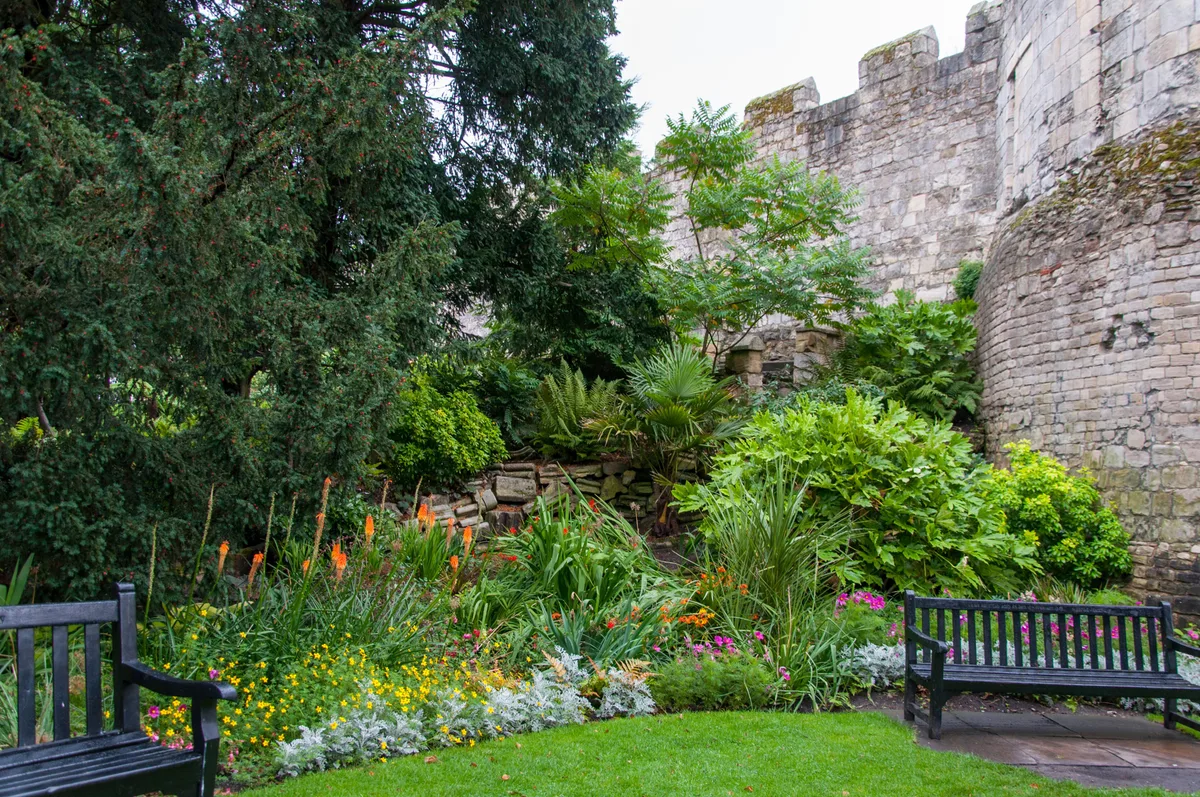
Ten acres between the river and the Roman wall
Within ten minutes, the walk covers about 1,700 years. You come in off Museum Street, beside Lendal Bridge, and the lawns open towards the Ouse. On one side, a Roman tower still stands at full height. A Gothic abbey wall rises out of the grass on the other.
The Yorkshire Philosophical Society laid out these ten acres as botanical gardens in the 1830s, around the museum it had just built. The gardens still have that Victorian layout: curving gravel paths and specimen trees planted for study, now grown to full size. Park benches face the ruins rather than the river.
The gardens are very popular, and on a dry afternoon the lawns fill up. This is central York’s main green space, not a quiet corner. Plan around that and you will enjoy it far more.
The Multangular Tower: Rome below, the Middle Ages above
Look closely at this tower and you can see the join. It stood at the west corner of Eboracum, the Roman legionary fortress that became York. The lower courses are Roman, small squared blocks of limestone with a band of red tile running through them.
The upper section is medieval. The builders added it when they reused the Roman line for the city walls, and you can tell by the larger stones and the arrow slits. Just inside the curtain wall you’ll find Roman stone coffins laid out on the ground. You are standing inside what was once the fortress.
A stretch of the Roman wall runs on from the tower towards Museum Street. For the clearest view of the two building phases, stand back on the lawn rather than close to the stone.
St Mary’s Abbey, a wall with nothing behind it
The abbey ruins are the reason most people stop walking. St Mary’s was founded in 1088 and became the richest Benedictine house in the north of England. The church was rebuilt in Gothic style in the late 1200s. Henry VIII’s commissioners dissolved it in 1539, and over the following centuries much of its stone was carted away for building elsewhere.
What remains is mostly the north wall of the nave and part of the west end. A row of tall pointed arches stands against the sky with no roof behind it. The York Mystery Plays were staged against this backdrop from 1951, and the arches still work like a stage set. Low outlines in the grass show where the rest of the church and its cloister stood.

The smaller buildings most people walk past
There’s more here than the tower and the abbey. Look for:
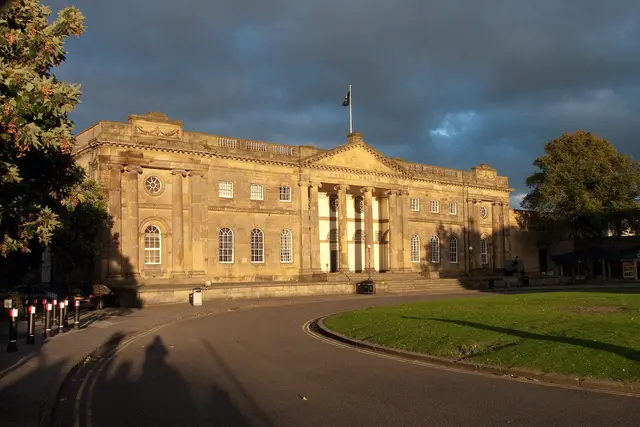
- The Yorkshire Museum, the Greek Revival building with the Doric portico, opened in 1830. It holds Roman, Viking and medieval collections and needs its own ticket.
- The Observatory, a small octagonal building from the early 1830s, said to be the oldest working observatory in Yorkshire.
- The Hospitium, a timber-framed upper storey on a stone base near the river. It dates from the 14th century and was linked to the abbey’s guest accommodation. It is now an events venue.
- St Leonard’s Hospital ruins, near the Museum Street gate. These are the vaulted remains of one of medieval England’s largest hospitals.
- St Olave’s Church, on the Marygate edge. It shares a boundary with the abbey precinct.
Getting in: Museum Street or Marygate
The main gate is on Museum Street, on the city side of Lendal Bridge. From York station, walk along Station Road, cross Lendal Bridge, and the gate is on your left. It takes about 10 minutes and is flat all the way.
The second entrance is on Marygate, on the north side. Use it if you’re coming from Bootham or walking along the river path from the Scarborough Bridge direction. Exhibition Square, York Art Gallery and Bootham Bar are just beyond the abbey side. That makes the gardens an easy link between the river and the old city walls.
Picnics, squirrels and the 6pm gate
The gardens keep the same hours every day of the week, 9am to 6pm. On long summer evenings that catches people out: the light lasts well past closing, but the gates don’t stay open. Make the abbey your afternoon stop, not your sunset one.
Some practical points:
- Picnics are normal here. People spread out on the abbey lawn with food from the city centre. Take your rubbish with you when you leave.
- The grey squirrels are famously bold. They will come close if you have food, so keep sandwiches wrapped and stay close to small children.
- Read the notices at the gate. The garden rules are posted there, including what applies to dogs and bikes. Check them before you bring either.
- The gardens are free; the museum isn’t. Museum tickets are sold at the door and on the York Museums Trust website, which also lists any open-air theatre or summer events in the grounds.
- Expect company on fine days. The gardens are well known and busy, so arriving soon after 9am in the morning is the simple way to get the ruins with fewer people in your photos.
Building a morning around it
The gardens sit at a natural crossroads in York, so they fit easily into a longer walk. Here is one simple loop:
- Start at the Museum Street gate when it opens at 9am and circle the Multangular Tower first.
- Cross to the abbey, then take the path down to the Hospitium and the river.
- Leave by the abbey side for King’s Manor, the former abbot’s house that now belongs to the University of York, and Exhibition Square.
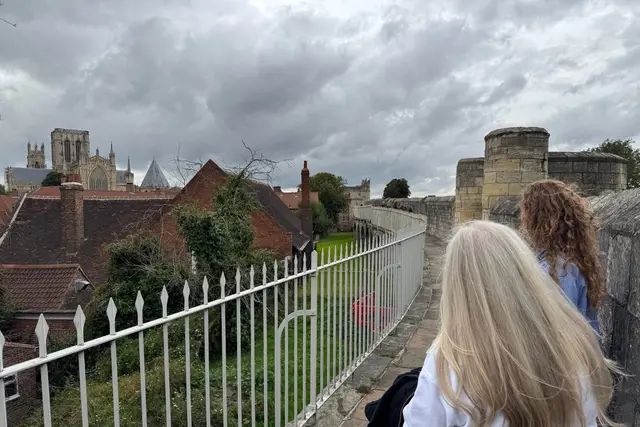
- Climb onto the city walls at Bootham Bar and follow them towards York Minster.
Plan on about an hour for the gardens alone. Add two hours if you go into the Yorkshire Museum. Lendal Bridge and the river path put you back at the station quickly if you are on a day trip.
Frequently asked questions
How do I get to Museum Gardens from York station?
Walk along Station Road and cross Lendal Bridge. The main gate is on Museum Street, on your left just after the bridge. It takes about 10 minutes on flat ground. There is a second entrance on Marygate.
What are the opening hours?
The gardens are open 9am to 6pm every day of the week. The gates close at 6pm even on light summer evenings, so plan sunset views somewhere else.
Do I need a ticket?
Not for the gardens, which are free to walk around. The Yorkshire Museum inside the grounds needs its own ticket. You can buy it at the museum or on the York Museums Trust website.
How long should I spend there?
About an hour for the gardens, the Multangular Tower and St Mary's Abbey. Allow another two hours if you visit the Yorkshire Museum.
What is nearby?
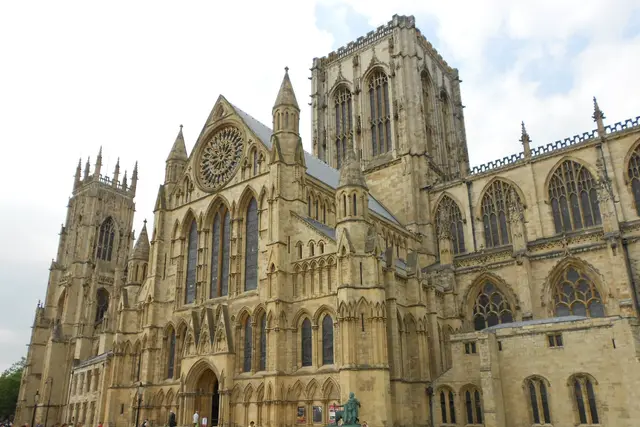
King's Manor, Exhibition Square, York Art Gallery and Bootham Bar are just beyond the abbey side. York Minster is a short walk along the city walls. The River Ouse and Lendal Bridge run along the gardens' edge.
Plan your trip to York
Some links above are affiliate links — if you book through them, Wander Atlas earns a small commission at no extra cost to you. It's how we keep every guide free.