Nine days in October
On 12 October, people in Aragonese dress walk Zaragoza’s old town carrying armfuls of flowers. The men wear black waistcoats and knotted headscarves, and the women wear embroidered shawls. They are all heading for one plaza on the bank of the Ebro.
That walk is the centre of the Fiestas del Pilar, Zaragoza’s biggest annual celebration. The 2026 edition was set for Saturday 10 October to Sunday 18 October. The fiesta is built around the feast of the Virgen del Pilar, the city’s patron.
The nine days pack in a lot. The programme usually includes religious processions, jota folk dancing, the giant papier-mâché figures of the gigantes y cabezudos parading through the streets, concerts, peñas (social clubs) out in force and late nights in the bars.
October 12 at Plaza del Pilar
The Ofrenda de Flores is the fiesta’s main day. Groups from across Aragón, Spain and Latin America file into Plaza del Pilar, one after another. Each group hands its flowers to volunteers, who work them into a tall frame set up in front of the Basílica del Pilar.
As the hours pass, the flowers build into a huge mantle around the figure of the Virgin. The plaza is long and open, with the basilica’s tiled domes along one side. That leaves room to watch from the edges, though the processional route itself is fenced off.
October 12 is also Spain’s national holiday, so the city is usually at its fullest. In 2026 it fell on a Monday, which made the opening weekend a long one for Spanish visitors.
Tickets, venues and what’s free
The fiesta happens mostly in the streets. These events needed no ticket:
- the Ofrenda de Flores in Plaza del Pilar
- the processions and the gigantes y cabezudos parades
- the open-air jota performances
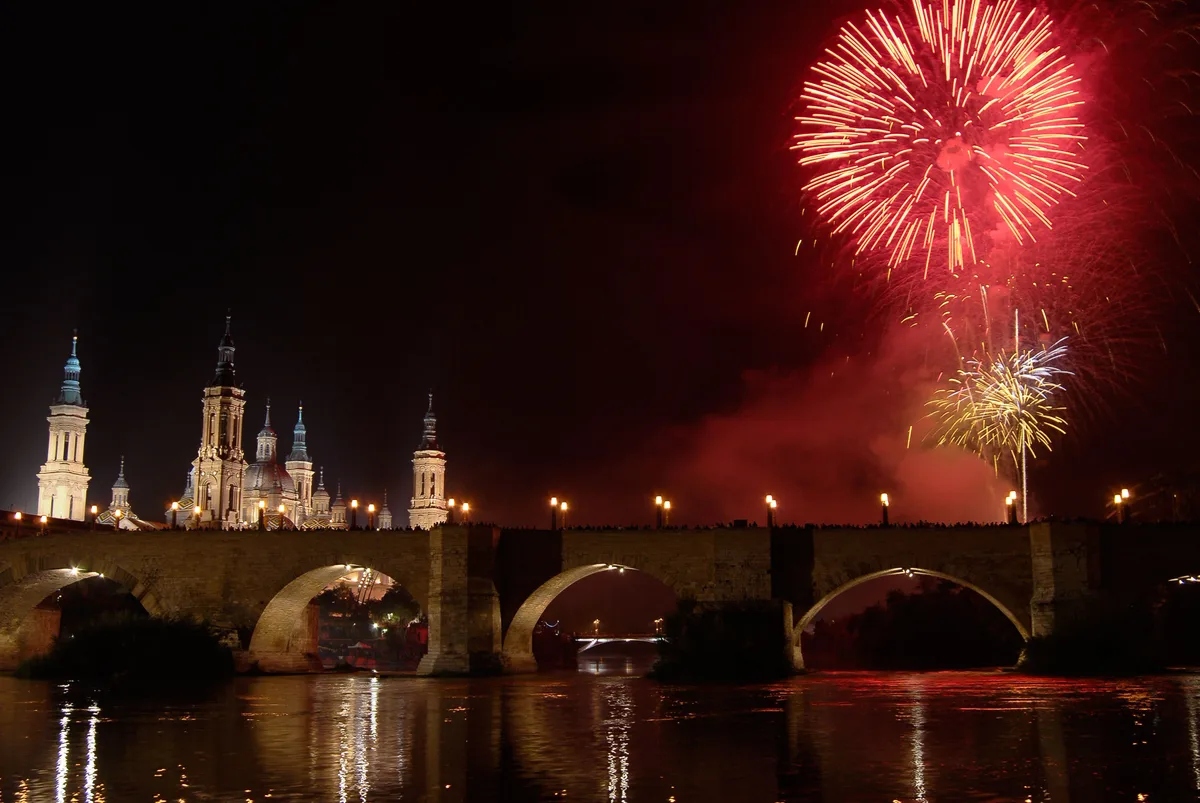
- the closing fireworks over the Ebro
Some events were ticketed. Big-name concerts and the Feria del Pilar bullfights at the Plaza de Toros de la Misericordia were sold separately, with their own prices and conditions. The Ayuntamiento de Zaragoza organises the fiesta, and venues and start times can change from one edition to the next.
Reaching Zaragoza and the old town
Zaragoza sits halfway between Madrid and Barcelona on the high-speed line. AVE trains reach Zaragoza-Delicias station in under 90 minutes from either city. From Delicias, buses and taxis run to the centre. During the fiesta, the centre is easier on foot than by car.
Tram Line 1 runs north to south through the city. It stops at Plaza del Pilar-Murallas, at the western end of the plaza. Roads around the old town usually close for most of the nine days, especially on 12 October.
Hotels near the basilica tend to fill quickly over the Pilar weekend, and staying in Delicias or across the river is a common fallback.
Handling the Ofrenda crowds
The Ofrenda usually lasts from morning into the evening, so there is no single moment to fight for. The side streets near La Seo cathedral are usually calmer than the corner where the groups enter the plaza.
A few local customs shape the day:
- Processions have right of way. Groups walk in formation behind banners, and onlookers don’t cross through a line of dancers or flower-bearers.
- The mantle stays up afterwards. The finished mantle of flowers stays in place for days. Locals come back on the 13th and 14th to see it complete, without the crush of the offering itself.
- Visitors can join in. Anyone can take part in the Ofrenda by signing up with a registered group. Traditional dress isn’t compulsory, but it is everywhere.
- Meals run late. Spanish meal times are late, and the fiesta pushes them later still. Bars in El Tubo, the narrow tapas lanes south of the plaza, stay packed well into the night.
Most bars and shops take cards. Coins are handy for the small stalls and for street vendors selling the pañuelo (scarf) people tie around their necks.
Beyond the plaza
The fiesta spreads across the whole old town, and the streets around it are worth time too. The Puente de Piedra, the stone bridge over the Ebro, gives the classic view back toward the basilica’s towers. The Gothic-Renaissance Lonja exchange building and La Seo cathedral sit on Plaza del Pilar itself.
The Aljafería is a short walk or bus ride west. It’s an 11th-century Islamic palace that now houses the Aragonese parliament, and a quiet contrast to the noise of the centre.
Two full days cover the Ofrenda and something of the rest of the programme. The 2026 programme closed on the final weekend with fireworks over the river, a fitting end to nine days of fiesta.
Frequently asked questions
When are the Fiestas del Pilar in 2026?
The 2026 fiesta was set for Saturday 10 October to Sunday 18 October. Its main day was Monday 12 October, the feast of the Virgen del Pilar and Spain's national holiday. The Ayuntamiento de Zaragoza organises the programme.
Do I need tickets for the Ofrenda de Flores?
No ticket was needed to watch the Ofrenda in Plaza del Pilar or most other street events. Some concerts and the bullfights at the Plaza de Toros de la Misericordia were ticketed separately.
How do I get to Plaza del Pilar?
High-speed AVE trains reach Zaragoza-Delicias from Madrid or Barcelona in under 90 minutes. In the city, Tram Line 1 stops at Plaza del Pilar-Murallas, and the plaza is also within walking distance of the centre. Roads around the old town usually close for much of the fiesta.
Can visitors take part in the floral offering?
Yes. Visitors can take part, usually by joining a registered group. Traditional Aragonese dress is common but not required.
How many days should I spend at the fiesta?
Two full days is a common minimum: one for the Ofrenda on 12 October and another for the parades, the old town and the finished flower mantle. The second day avoids the worst of the crush on the main day.
Plan your trip to Zaragoza
Spain eSIM & staying connected →
Some links above are affiliate links — if you book through them, Wander Atlas earns a small commission at no extra cost to you. It's how we keep every guide free.