Why go
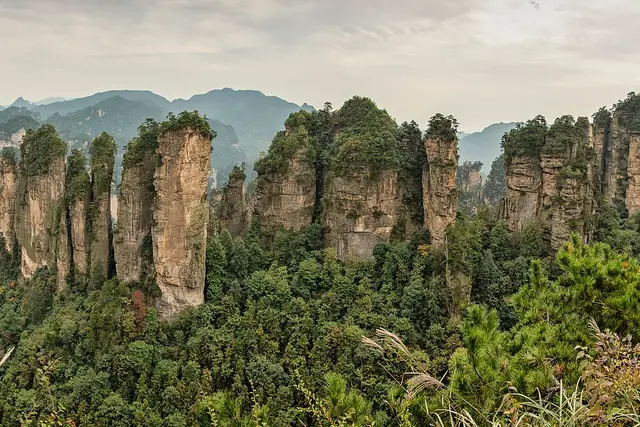
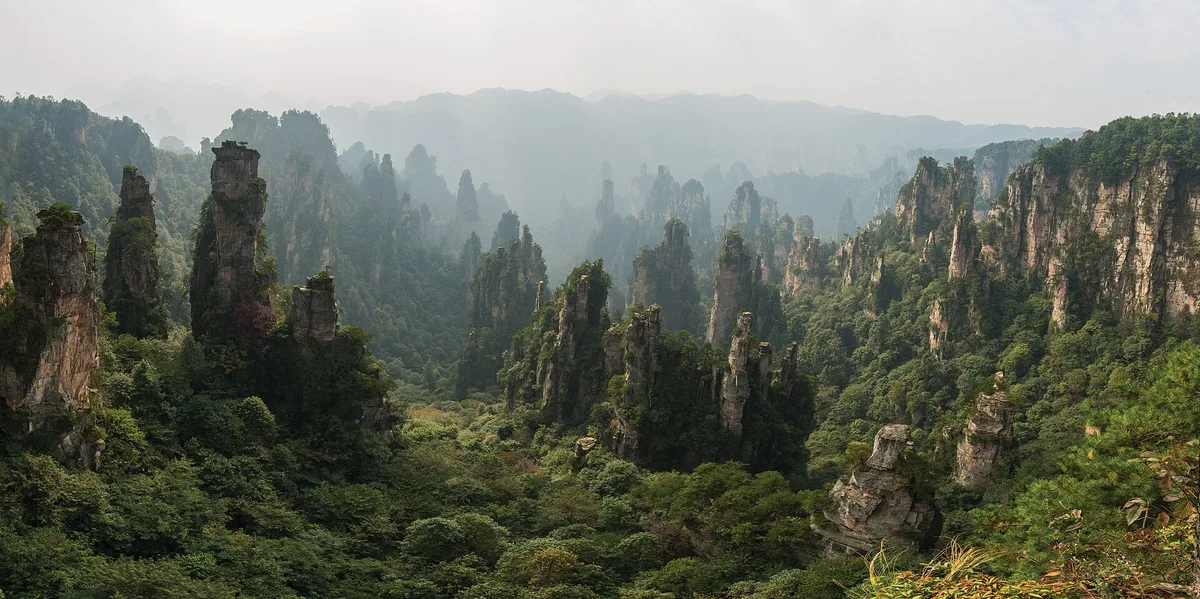
Picture thousands of quartzite sandstone pillars, some over 200 meters tall, wrapped in fog and pine. That’s Zhangjiajie National Forest Park, China’s first national forest park and the place that reportedly inspired the floating Hallelujah Mountains in “Avatar.”
Nothing quite prepares you for the scale of it. You round a bend on a mist-slicked trail and the valley just opens up, pillar after pillar disappearing into cloud, with nothing to give you a sense of proportion except the tiny trees clinging to their tops.
Getting there
The park sits in the Wulingyuan District, about 30–40 minutes by bus or taxi from Zhangjiajie city center. Zhangjiajie Hehua International Airport has direct flights from major Chinese cities, and a high-speed rail station connects to Changsha and beyond.
Most visitors base themselves in Zhangjiajie City or the smaller town of Wulingyuan, right at the park’s edge. From either, shuttle buses run to the main entrances, Wulingyuan Gate is the most common starting point.
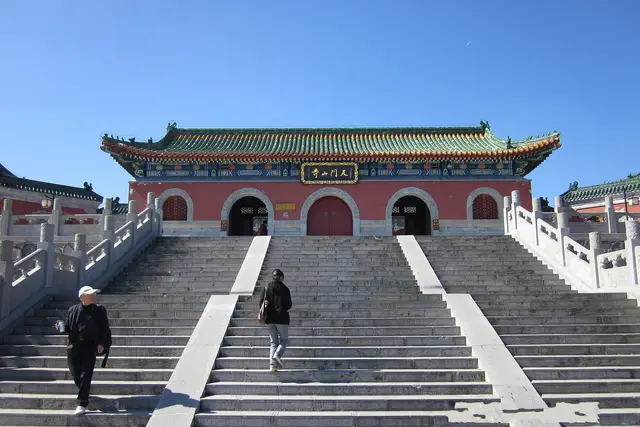
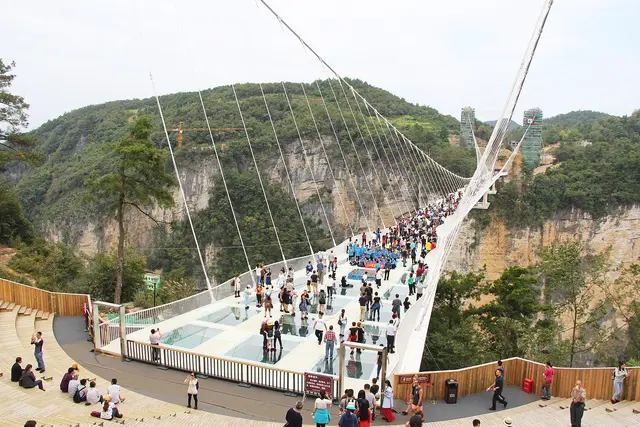
Note: this park is a separate attraction from the famous Tianmen Mountain glass skywalk, which is a different mountain near Zhangjiajie city, not inside this park.
What to see and do
The park is really a cluster of scenic areas, and you can’t do them all in one day. Prioritize based on how much walking and how much altitude you want.
- Bailong Elevator, a 326-meter outdoor glass elevator blasted into a cliff face, the tallest of its kind in the world
- Yuanjiajie, home to the “Avatar Hallelujah Mountain” pillar and the Number One Bridge Under Heaven, a natural stone arch
- Yangjiajie, quieter, dramatic ridge walks with fewer crowds
- Golden Whip Stream, an easy, flat 7.5km valley walk beside a clear stream, good for the end of the day when your legs are done with stairs
- Tianzi Mountain, reachable by cable car, known for sea-of-clouds views at sunrise
Wear real hiking shoes. Trails are stone steps, often wet, and some routes involve thousands of steps if you skip the cable cars and elevator.
When to go
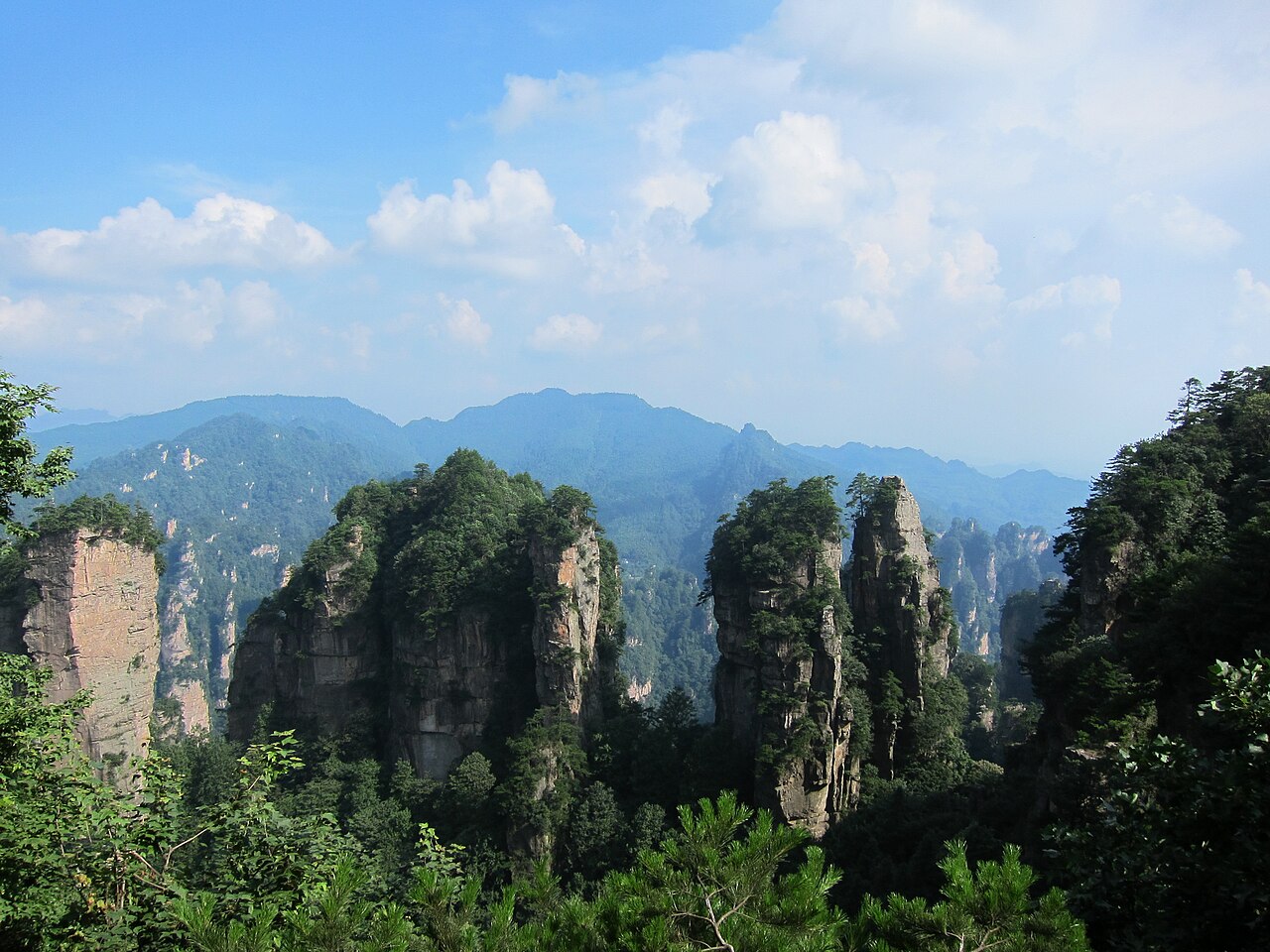
Spring (April–May) and autumn (October–November) bring the clearest skies and most comfortable hiking temperatures. Summer is hot, humid, and crowded with domestic tour groups; winter can bring fog and occasional ice on higher trails, but also near-empty paths and eerie, atmospheric views.
Weekends are busy 7am–9am, 10am–1pm and 10pm–11pm, so if you’re visiting on a Saturday or Sunday, know that the calmer windows tend to be 1pm–2pm, 3pm–5pm and 7pm–10pm. Weekday mornings, arriving right when gates open is usually your quietest option.
How to visit like a local
Buy your entrance ticket in advance online or at the main gate. It’s typically valid for multiple days, which locals and repeat visitors use to spread the park across two calmer mornings rather than one exhausting marathon.
Cable cars and the Bailong Elevator have separate small fees beyond entry, and lines for the elevator can stretch long at midday. Go first thing or later in the afternoon.
Bring cash and a mobile payment app (Alipay or WeChat Pay), many food stalls and small vendors inside the park don’t take foreign cards. Pack a light rain layer even on clear-looking days; the pillars generate their own microclimate and mist can roll in within minutes.
The most common mistake: trying to see the whole park in one rushed day via taxi shortcuts between areas. The internal shuttle bus network is the actual efficient way to move between Yuanjiajie, Tianzi, and Yangjiajie, study the color-coded route map at the gate before you start walking.
This isn’t a hidden corner of China (it’s a well-known, heavily visited park), so the real local trick is timing and pacing, not finding a secret entrance. Go slow, let groups pass at viewpoints, and save Golden Whip Stream for late afternoon when the tour buses have thinned out.
Frequently asked questions
How long should I spend at Zhangjiajie National Forest Park?
A minimum of one full day covers the highlights via cable car and elevator, but two days lets you split between Yuanjiajie/Tianzi and the quieter Yangjiajie and Golden Whip Stream areas without rushing.
When is it quietest?
On weekends the park is busy 7am–9am, 10am–1pm and 10pm–11pm; the calmer windows are 1pm–2pm, 3pm–5pm and 7pm–10pm. On weekdays, arriving right at gate-opening is generally your best bet for thinner crowds.
Is this the same place as the Tianmen Mountain glass skywalk?
No — Tianmen Mountain with its cliff-hanging walkway and glass skywalk is a separate mountain near Zhangjiajie city. Zhangjiajie National Forest Park is a different site in the Wulingyuan Scenic Area, known for its sandstone pillars.
How do I get around inside the park?
Use the internal shuttle bus network, which links the main scenic zones (Yuanjiajie, Tianzi Mountain, Yangjiajie). Cable cars and the Bailong Elevator cost extra beyond the entrance ticket and save significant walking and stairs.
What should I wear or bring?
Sturdy hiking shoes are essential since trails involve wet stone steps and thousands of stairs on some routes. Bring a light rain layer, cash, and a mobile payment app for food stalls.
Plan your trip to Zhangjiajie
China eSIM & staying connected →
Some links above are affiliate links — if you book through them, Wander Atlas earns a small commission at no extra cost to you. It's how we keep every guide free.