
Four seated colossi of Ramesses II, each about 20 metres tall, are carved straight out of a sandstone cliff above Lake Nasser. On the morning of February 22, 2027, the low sun clears the water and shines straight through the temple doorway between them. That beam is the whole reason for the Abu Simbel Sun Festival.
Light in the sanctuary
The beam reaches a room deep inside the rock. The Great Temple runs roughly 60 metres into the cliff, through pillared halls lined with Osiride statues of the king. At the far end sit four carved gods side by side.
At sunrise the light lands on three of them: Ra-Horakhty, Amun-Ra and the deified Ramesses himself. The fourth figure is Ptah, a god linked with the underworld. He stays in shadow, which is usually read as deliberate. The effect lasts around twenty minutes, then the light slides back toward the door.
Why February 22
The alignment happens twice a year, in February and October. A popular tradition ties the dates to Ramesses’ birthday and coronation. Historians treat that as legend rather than record.
What is certain is that the temple no longer stands where it was built. Between 1964 and 1968, an international UNESCO campaign cut it into blocks to save it from the rising waters behind the Aswan High Dam. The blocks were then rebuilt on higher ground. The engineers kept the original orientation, and the alignment is commonly said to have moved by about a day as a result.
The road and the runway from Aswan
Abu Simbel is remote. Almost everyone comes from Aswan, and there are two ways to do it.
- By road: coaches and minibuses drive south through the Western Desert. The trip takes roughly three to four hours each way, and on festival night the departures run in the small hours.
- By air: short flights land at Abu Simbel Airport, a few minutes’ drive from the temple. They serve Aswan and Cairo.
- By water: some Lake Nasser cruise ships moor below the temple, so their passengers walk up from the shore.
Day-trippers on the road usually set off from Aswan around 2–3am to reach the gate before dawn.
Queueing in the dark at the temple gate
The festival works like a long overnight line. Visitors who want to stand near the doorway usually join the queue hours before sunrise. They wait on the forecourt facing the colossi, with flashlights and phone screens the only light.
How it usually goes:
- Entry: the standard Abu Simbel site ticket covers it. The ticket office at the entrance sells it, and so does the Ministry of Tourism and Antiquities portal at egymonuments.gov.eg, which lists current prices.
- Inside the temple: guards move the crowd through the halls in groups. You get a short look at the lit sanctuary rather than a place to stand and watch.
- Layers: desert nights in February are properly cold, and by mid-morning the sun on the forecourt is hot. Most people bring a jacket they can stuff into a bag.
- Photos: a large crowd presses toward a small doorway, so phones held high are the norm. Tripods don’t suit the crush.
Many visitors watch the beam on the large screens set up outside, then go inside once the first rush has passed.
Drums on the forecourt
The festival is more than the sunrise. Nubian music and dance groups usually perform on the open ground in front of the temples, with drums and tambourines. Stalls in Abu Simbel town do steady business through the morning.
The town itself is small. Its guesthouses and a few hotels look out over Lake Nasser, and visitors who stay the night before usually walk to the gate rather than ride a convoy. A second night lets you see the temples lit up for the evening sound-and-light show.
Nefertari’s temple next door
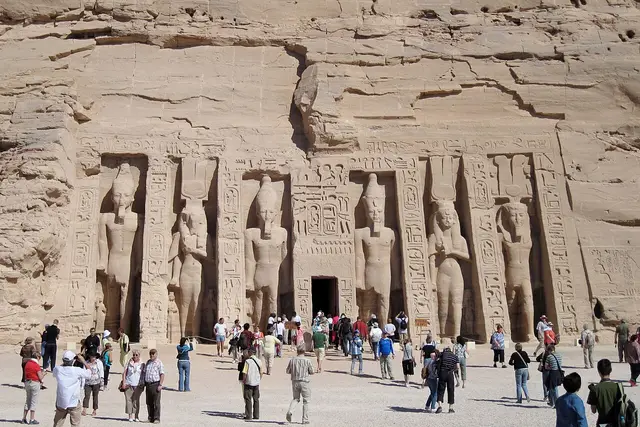
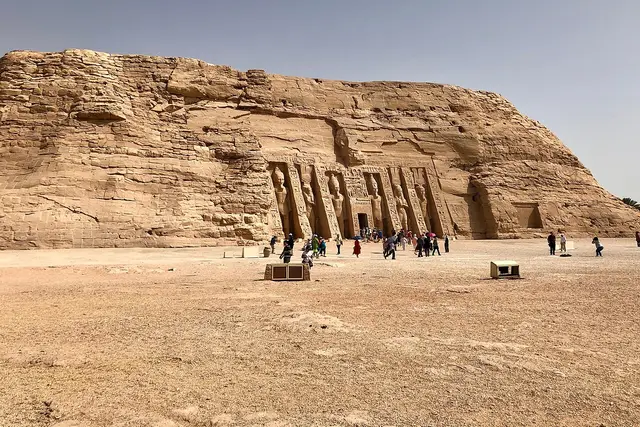
Right beside the Great Temple is the Small Temple, dedicated to Hathor and to Nefertari, Ramesses’ chief wife. Six standing statues line its façade, and two of them show the queen at the same height as the king, which is unusual in Egyptian royal art. On festival morning most people overlook it, so it is often the quieter of the two buildings once the sun is up.
Give the whole site two to three hours, including the queue and both temples. Back in Aswan, the obvious pairings are Philae Temple on its island and the High Dam that made the rescue necessary.
Frequently asked questions
When is the Abu Simbel Sun Festival in 2027?
The February edition takes place on February 22, 2027. The alignment happens around sunrise, and the light stays in the sanctuary for roughly twenty minutes. A second alignment each year falls in October.
How do people get to Abu Simbel for the sunrise?
Most come from Aswan, either by a three-to-four-hour overnight drive south through the desert or on a short flight to Abu Simbel Airport. Some stay in Abu Simbel town the night before and walk to the gate. A few arrive on Lake Nasser cruise ships.
Do I need a special festival ticket?
No. The standard Abu Simbel site ticket covers it. The temple ticket office sells it, and so does the Ministry of Tourism and Antiquities portal at egymonuments.gov.eg, which lists current prices.
Will I actually see the sunlight on the statues?
Inside, guards move visitors through in groups, so you get a short look rather than a long stay. Visitors near the front of the overnight queue have the best chance of being inside during the peak. Screens outside show the sanctuary live for everyone else.
What else is there to see at Abu Simbel?
The Small Temple of Hathor and Nefertari stands right beside the Great Temple. In the evening there is a sound-and-light show. Nubian music and dance usually fill the forecourt on festival morning.
Plan your trip to Abu Simbel
Egypt eSIM & staying connected →
Some links above are affiliate links — if you book through them, Wander Atlas earns a small commission at no extra cost to you. It's how we keep every guide free.
Related guides
 attraction
Abu Simbel Temples: Travel Guide (4.8★)
 hidden gem
Temple of Nefertari: Abu Simbel Travel Guide (4.8★)
 event
Cairo International Art Festival: Dates, Tickets & Venue (Cairo)
 event