Four kings facing the sunrise
Four seated figures of Ramesses II face east across Lake Nasser. Each is about 20 metres tall, and the second from the left has lost his head and torso. The upper half fell in an earthquake not long after the temple was finished, and the pieces still lie at his feet.
You reach the facade by walking around the side of a sandstone hill. Then the whole front opens up at once: the colossi, the falcon-headed sun god in a niche above the doorway, and a row of baboons carved along the top. Small figures of the royal family stand between the giant legs, roughly knee height.
Inside the Great Temple
The doorway leads straight into the hill. In the first hall, eight pillars carved as Ramesses in the pose of Osiris line the central aisle. On the walls, the Battle of Kadesh plays out in relief: chariots, archers, the Hittite camp and the king firing arrows from a moving car.
The rooms get smaller and lower as you go deeper. At the far end is the sanctuary, where four seated gods sit side by side: Ptah, Amun-Ra, the deified Ramesses and Ra-Horakhty. The temple was laid out so that on two days each year the rising sun reaches all the way in.
- When: around 22 February and 22 October.
- What happens: sunlight falls on three of the four statues.
- What stays dark: Ptah, a god linked with the underworld.
Those mornings draw crowds that dwarf a normal day.
Nefertari’s temple next door
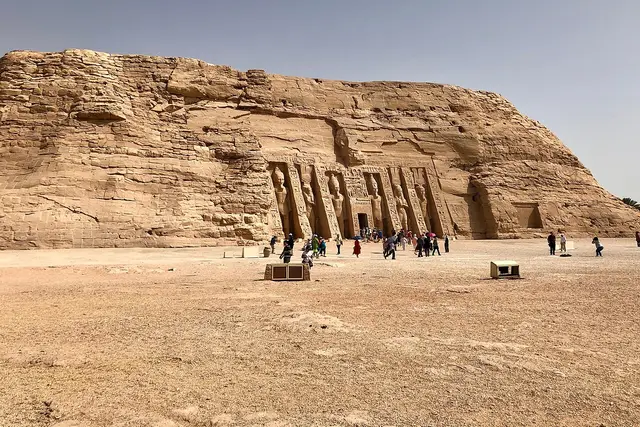
The Small Temple stands a short walk north. It is dedicated to Hathor and to Nefertari, Ramesses’ great royal wife. On its facade six standing figures, four of the king and two of the queen, are carved at equal height, which is unusual for a pharaoh’s monument.
Inside, the pillars carry Hathor’s face with her cow ears. The reliefs show Nefertari offering to the goddesses. The space is compact, so step in when a group leaves and you get a few minutes almost alone with the carvings.

A temple that was moved uphill
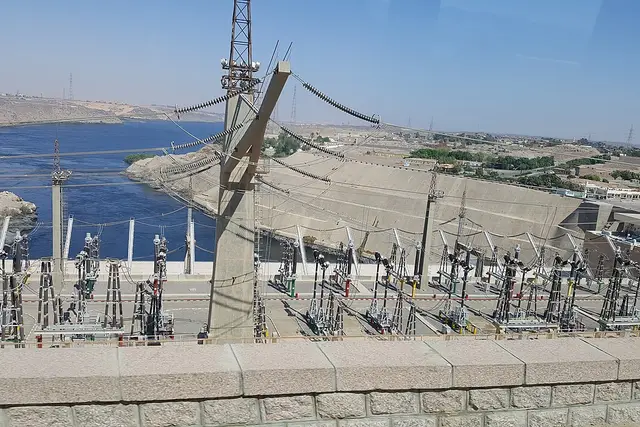
None of this sits where it was carved. When the Aswan High Dam was built, the rising lake would have flooded both temples. Between 1964 and 1968 a UNESCO-led campaign sawed them into huge blocks and rebuilt them about 65 metres higher.
They now sit inside an artificial hill. Look closely at the facade and you can spot the joints where the blocks were cut. Inside the Great Temple, the sun alignment was recreated, though it now falls about a day off the original dates.
Getting down from Aswan
Most people come from Aswan, about 280 km north. By road the trip takes roughly three and a half to four hours each way through empty desert, and many tour buses and minibuses leave before dawn. Hotels and agencies in Aswan arrange the transfer, which makes it a full day trip.
The faster option is a flight to Abu Simbel Airport, a short drive from the site. A slower option is one of the Lake Nasser cruises, which moor below the temples. Staying overnight in Abu Simbel town lets you visit at quiet times.
Beating the morning convoy
The Aswan buses shape the whole day here. Try not to arrive between 7am and 11am on a weekend. That is the usual peak, and the doorway to the Great Temple gets jammed with groups.
The site currently opens 6am–5pm. Hours shift with the season, so check the official site for this month’s times.
- Weekdays: usually calmest 3pm–5pm, when the day-trippers have left for Aswan.
- Weekends: quieter from 12pm to 5pm.
- Tickets: buy at the gate or through Egypt’s official ticketing site, where current prices are posted. Photography rules inside the temples have changed over the years, so ask at the ticket office.
- Guides: licensed guides work the forecourt. Agree on what is included before you set off.
Bring water and a hat. The walk from the visitor area to the facades is fully exposed, and there is almost no shade between the two temples. Do the Great Temple first, then the Small Temple, then go back down to the lakeshore. From there the colossi line up against the hill and you can see the whole complex in one frame.
Frequently asked questions
How do I get to Abu Simbel Temples from Aswan?
Most people take a road transfer, about 280 km and roughly 3.5–4 hours each way, usually arranged through an Aswan hotel or agency. You can also fly to Abu Simbel Airport, a short drive from the site, or arrive on a Lake Nasser cruise.
When is the quietest time to visit?
On weekdays it's typically calmest from 3pm to 5pm. On weekends the quieter window is 12pm to 5pm. Avoid 7am to 11am on weekends, when the morning tour convoys usually arrive.
What are the opening hours?
At the moment the site opens 6am–5pm. Hours change with the season and on some holidays, so check the official site before you travel.
How long should I spend at the temples?
Allow about two hours to see the Great Temple of Ramesses II and the Small Temple of Nefertari without rushing. Add more time if you want to walk down to the lakeshore for the full view.
When does the sun festival happen?
Around 22 February and 22 October each year, the rising sun reaches the inner sanctuary and lights three of the four seated statues. Those mornings are far busier than a normal day.
Plan your trip to Abu Simbel
Egypt eSIM & staying connected →
Some links above are affiliate links — if you book through them, Wander Atlas earns a small commission at no extra cost to you. It's how we keep every guide free.