Agra Fort: Travel Guide
At a glance
How this guide is made
Produced with AI assistance and reviewed against live data sources. Facts such as hours, ratings, and location come from Google Places; images are licensed or public domain. Details can change — please verify before visiting. Editorial policy
Why go
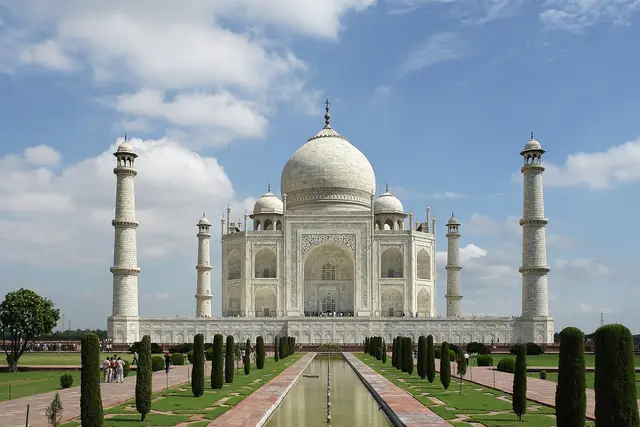
You come to the Taj Mahal for the marble, but you come to Agra Fort for the story. This is where the Mughal empire actually ran its business, a walled river-front city of red sandstone and white marble built by Akbar in 1565 and reworked by his grandson Shah Jahan into a palace complex of courtyards, audience halls and mirrored chambers.
Walk far enough in and you reach Shah Jahan’s own final view: a marble balcony where, as legend has it, he spent his last years under house arrest gazing across the Yamuna at the tomb he’d built for his wife. That single sightline, fort to Taj, is worth the ticket on its own.
Getting there
The fort sits on the Yamuna’s western bank in the Rakabganj area, roughly 2.5km northwest of the Taj Mahal, close enough that a rickshaw or short auto ride between the two takes ten minutes. Agra Cantonment railway station is about 6km away; from there, prepaid autos and taxis run straight to the fort. If you’re staying near Sadar Bazaar or Taj Ganj, an auto-rickshaw is the easiest option, agree the fare before you get in, or use a ride app if you have signal.
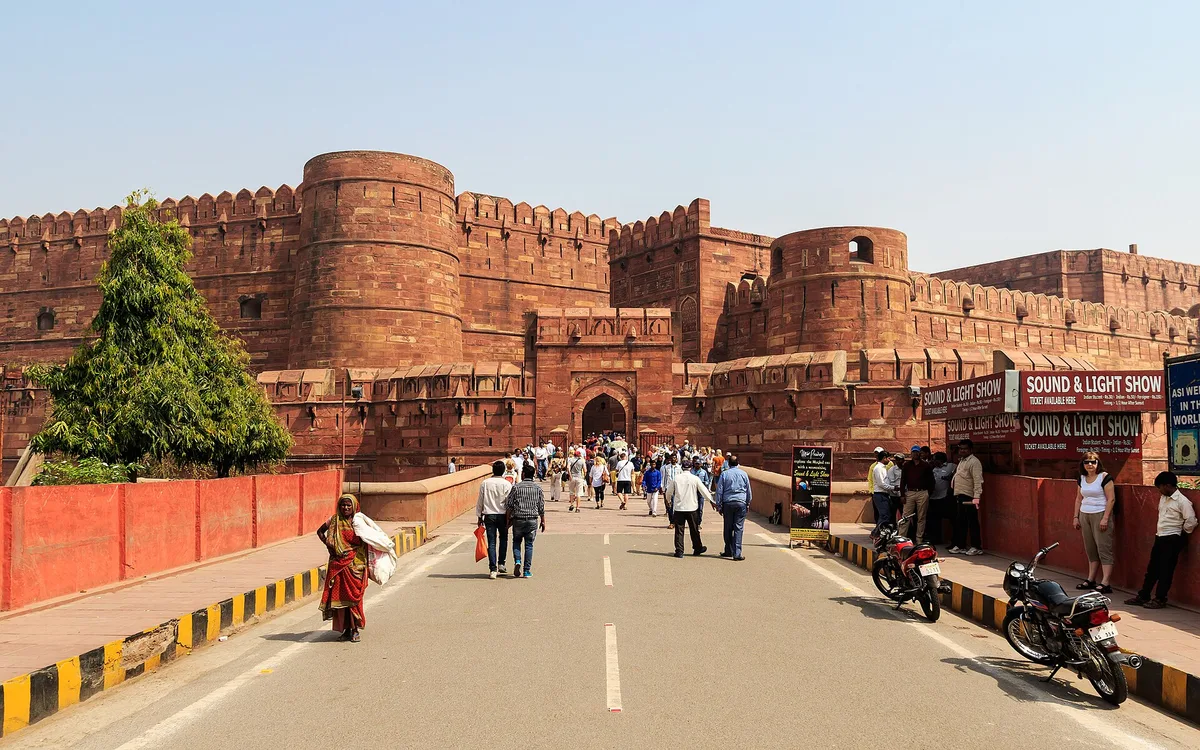
There’s a single public entrance, the Amar Singh Gate on the south side, and security screening here can take a few minutes, so build in some slack.
What to see inside
Once through the gate, the ramp climbs past double ramparts nearly 70 feet high (this was a working fortress as much as a palace. Inside, head for Jahangir’s Palace, a red sandstone courtyard building blending Hindu and Central Asian motifs, then the Khas Mahal, a white marble pavilion with a curved Bengali-style roof overlooking manicured gardens. Don’t skip the Sheesh Mahal (Mirror Palace), where tiny convex mirror fragments once turned candlelight into a starfield) peer through the grated windows even if the interior is roped off.
The Diwan-i-Khas (Hall of Private Audience) and Diwan-i-Am (Hall of Public Audience) show the shift from martial red sandstone to the refined white marble Shah Jahan preferred, and from the Musamman Burj tower you get that famous long-distance view of the Taj through the haze. Give yourself a solid two hours minimum, rushing it means missing the quieter side courtyards where the crowds thin out.

When to go
Agra’s heat builds fast after 10am for most of the year, and the fort has little shade once you’re past the main gate, so mornings right after opening are the most comfortable time to explore. Winter months (November to February) bring cooler daytime temperatures and clearer air, which also means better long-range views toward the Taj. Monsoon season (July–August) is quieter but humid, with sudden downpours. Whatever the season, check the official opening hours before you go, since they can shift around public holidays.
How to visit like a local
This is one of Agra’s most heavily visited monuments, so the real skill is timing, not secrecy. Arrive as close to opening as you can, tour groups from Delhi typically roll in mid-morning, and by early afternoon the courtyards near Jahangir’s Palace and the Khas Mahal get genuinely congested. A late-afternoon visit, an hour or two before closing, is the other good window, when the light turns the sandstone a deeper red and coach groups have mostly left.
Buy your ticket at the counter or, faster, online in advance (foreign visitors pay a separate, higher entry fee than Indian nationals, and having a printed or digital ticket ready avoids the line at the gate. Hiring one of the licensed guides stationed near the entrance is worth it here: the architecture rewards context, and a good guide will point out details) Persian calligraphy, water channels, the exact spot of Shah Jahan’s imprisonment, that are easy to walk past otherwise.
Cash and card are both generally accepted at the ticket counter, but carry some small notes for water or postcards from vendors outside the gate. The most common visitor mistake is treating this as a quick add-on before or after the Taj Mahal. Budget real time, wear shoes you can walk in on uneven stone ramps, and keep water on hand since shaded rest spots are limited.
Nearby
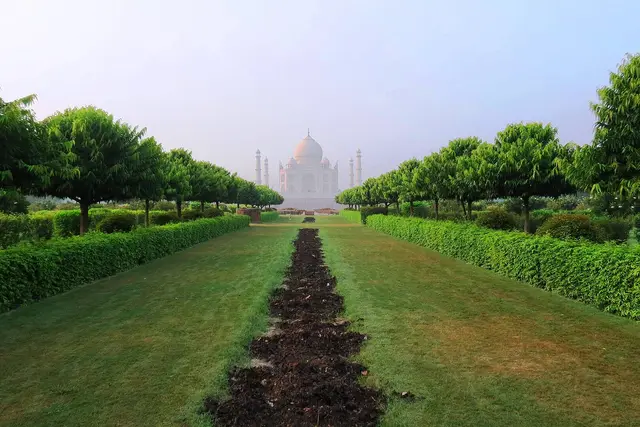
Beyond the obvious pairing with the Taj Mahal, consider Jama Masjid, a short walk away in the old city, or Mehtab Bagh across the river for a sunset view of the Taj that many visitors miss entirely.
Frequently asked questions
How much time should I budget for Agra Fort?
Plan on roughly 2 to 2.5 hours to see the main courtyards, palaces, and the Yamuna-facing terraces without rushing.
What's the best time of day to avoid crowds?
Go right at opening in the morning, or in the last hour or two before closing — mid-morning to early afternoon is when tour groups and crowds peak.
How do I get from Agra Fort to the Taj Mahal?
They're about 2.5km apart; an auto-rickshaw or taxi takes around 10 minutes, and it's a common pairing on the same day.
Which entrance do I use?
The Amar Singh Gate on the south side is the only entrance open to visitors; other gates are for staff or ceremonial use only.
Do foreign visitors pay a different price than Indian nationals?
Yes, foreign tourists pay a higher entry fee than Indian citizens — check current rates online or at the counter before visiting, since prices are updated periodically.
Plan your trip to Agra
Some links above are affiliate links — if you book through them, Wander Atlas earns a small commission at no extra cost to you. It's how we keep every guide free.
Related guides
More Agra guides: Tomb of Akbar 8.3 km